

A clear purchase request process helps growing SMEs review what is needed, why it is needed, how much should be bought, and which supplier should be considered before a purchase order is issued.
Why Buying Should Start With A Purchase Request
A purchase order should confirm an approved buying decision, not become the first place where that decision is discussed. When staff go directly from a message or verbal request to a purchase order, important questions may be missed: Is the item genuinely needed? Is the requested quantity reasonable? Has another team already requested the same item? Is there already enough stock available?
A purchase request gives the business an internal record of the need before any supplier order is prepared. It allows operations, procurement, and management teams to review the reason, quantity, timing, and expected cost in one place.
Informal Requests Make It Hard To See The Full Buying Picture
Many growing SMEs begin with WhatsApp messages, calls, or handwritten notes because the team is small. This becomes difficult when more departments start requesting stock, office supplies, tools, or replacement items at the same time.
For example, a warehouse supervisor may send an urgent request for 50 units of fast-moving stock. On the same day, a sales coordinator may request another 30 units because of an upcoming customer order. Without a shared purchase request record, procurement may treat them as separate needs and buy more than necessary.
Common problems include:
- Repeated requests for the same item
- Missing reasons or required dates
- Quantities that are not checked against available stock
- Office purchases made without comparing them with existing supplies
- Requests being forgotten inside group chats

Review Urgency, Quantity, And Budget Before Ordering
Every purchase request should provide enough information for a practical review. The goal is not to slow teams down, but to separate genuinely urgent needs from requests that can be combined, reduced, postponed, or fulfilled from existing stock.
A useful review can ask:
- What item or service is being requested?
- Why is it needed, and by when?
- How was the quantity calculated?
- Is there available stock or an open supplier order?
- What is the estimated cost?
- Does the purchase fit the current spending plan?
- Who should review the request before it becomes a purchase order?
For office purchases, this may reveal that two departments requested the same printer supplies. For stock purchases, it may show that a recent supplier order is already due to arrive. A simple budget check can also help managers decide whether to buy the full quantity now or split the purchase into stages.
Supplier Selection Should Follow The Reviewed Need
Once the item, quantity, timing, and budget are clear, procurement can assess the most suitable supplier. Starting with a reviewed purchase request makes this comparison more focused because the team knows exactly what must be purchased.
Supplier selection may consider:
- Current pricing
- Available stock
- Delivery timing
- Minimum order quantity
- Existing supplier commitments
- Previous orders for the same item
Repeated supplier orders should also be checked before a new purchase order is created. A team may discover that the supplier already has an open order covering part of the request, or that several small requests can be combined into one clearer order.
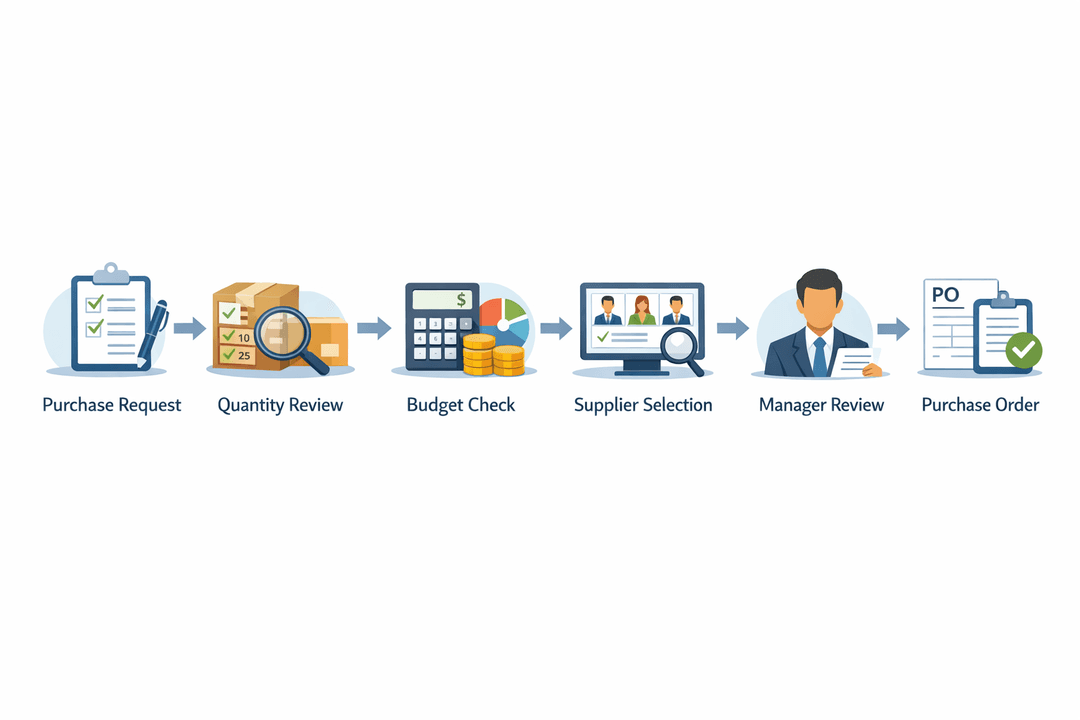
A Practical Purchase Request Workflow For Growing SMEs
SMEs moving away from informal chat-based buying can introduce structure gradually. The process should be simple enough for staff to follow while giving managers enough information to make a decision.
A practical workflow is:
- The requester records the item, quantity, reason, required date, and estimated cost.
- The relevant team checks existing stock, open orders, and similar requests.
- Procurement reviews supplier options and confirms whether requests can be combined.
- A manager reviews the business need and budget impact.
- Only reviewed requests are converted into purchase orders.
Clear ownership also matters. Staff should know who submits the request, who checks stock, who compares suppliers, and who completes the manager review. This reduces the chance of a request being approved in a chat but never properly handed over.

How TREX Grow Can Help Solve This
TREX Grow can help SMEs manage purchase requests as a structured step before purchase orders. Teams can record requested items, quantities, reasons, and required dates so procurement and managers have clearer information for review.
A connected workflow can make it easier to check requests, compare supplier needs, avoid repeated buying, and create purchase orders from decisions that have already been reviewed. This gives growing teams a more consistent way to manage urgent stock requests, office purchases, budget checks, and manager review without relying only on scattered messages.
Explore TREX Grow for a more controlled purchase request workflow that supports clearer buying decisions before purchase orders are issued.