

An accepted quotation confirms customer intent, but warehouse and operations teams still need a clear internal record before picking, packing, or delivery starts. A sales order captures the final items, quantities, payment terms, approvals, and responsible owner so fulfilment teams can work from confirmed instructions. This blueprint explains a practical sales-order workflow for distributors, wholesalers, and small manufacturers.
Why An Accepted Quotation Is Not Enough For Fulfilment
An accepted quotation shows that the customer has agreed to proceed, but it may not contain the final internal instructions needed by the warehouse or production team. Before fulfilment begins, the business should confirm exactly what will be supplied, in what quantity, under which payment terms, and who is responsible for moving the order forward.
For example, a customer may accept a quotation for 100 units and then request 120 units before picking starts. If warehouse staff work from the original quotation, they may prepare the wrong quantity. A sales order gives the team one confirmed record to follow after the latest changes have been reviewed.
What A Clear Sales Order Should Confirm
A useful sales order is not simply another copy of the quotation. It should capture the details that operations teams need to fulfil the order accurately.
Key information should include:
- Confirmed customer and delivery details
- Final item names, product codes, and quantities
- Agreed prices, discounts, taxes, and payment terms
- Delivery instructions or requested dates
- Sales-order status and approval outcome
- The person responsible for follow-up and handover
For distributors and wholesalers, this record helps separate customer discussion from fulfilment instructions. For small manufacturers, it can also provide a clearer basis for checking stock availability, production needs, or material requirements.

Review Changes Before Warehouse Work Begins
Changes made after quotation acceptance should be reviewed before the sales order is approved. Common examples include revised quantities, substituted items, updated payment terms, changed delivery locations, or additional remarks from the customer.
A practical review can follow four steps:
- Compare the accepted quotation with the latest customer confirmation.
- Update the sales order with any approved changes.
- Confirm payment terms, delivery expectations, and the responsible owner.
- Approve the sales order before generating warehouse instructions.
This prevents staff from relying on chat messages, old quotation PDFs, or verbal updates that may not reach everyone involved.
Use The Approved Sales Order To Prepare Picking
Once approved, the sales order should become the source for picking-list preparation. The warehouse team should be able to see which products to pick, the required quantities, relevant product codes, and any special handling notes.
For example, a wholesaler may receive an accepted quotation for several carton sizes. Before fulfilment, the customer changes one carton quantity and requests delivery in two batches. The updated and approved sales order should reflect these details before the picking list is prepared. This gives the warehouse supervisor a clearer handover and reduces the risk of picking from outdated information.

Build A Simple Sales-Order Handover Routine
Product-based SMEs do not need a complicated process. They need a consistent point where a customer-approved quotation becomes an operations-ready order.
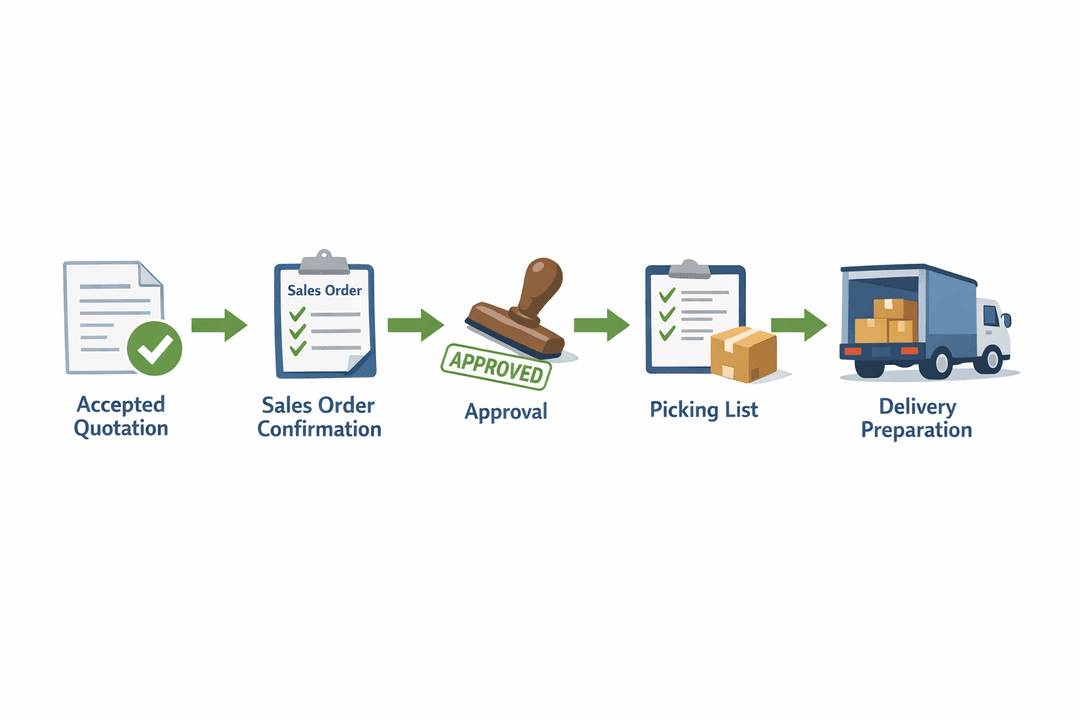
A practical routine is:
- Mark the quotation as accepted.
- Create the sales order from the accepted details.
- Review any quantity, item, payment-term, or delivery changes.
- Assign the person responsible for the order.
- Obtain the required internal approval.
- Generate the picking list only after approval.
- Keep later fulfilment updates linked to the same confirmed order.
This routine is useful for distributors managing repeat stock orders, wholesalers handling large item lists, and small manufacturers coordinating available stock with production.
How TREX Grow Can Help Solve This
TREX Grow can help teams turn accepted quotations into clearer sales orders before fulfilment starts. Sales coordinators can confirm final items, quantities, payment terms, ownership, and approval status in one operational record. Warehouse teams can then prepare picking activities from the confirmed order instead of checking multiple messages or document versions.
By keeping the quotation, sales order, and fulfilment steps connected, TREX Grow supports a more reliable handover between sales, operations, and warehouse teams. Explore TREX Grow for clearer confirmed-order handover across your daily sales and fulfilment workflow.