Buyer details arrive too late
Finance teams cannot issue documents smoothly if buyer details are collected only after the invoice is ready.

e-Invoice preparation is not only about tax submission. Malaysian SMEs need clean customer data, consistent invoice workflows, proper approvals, connected purchasing records and a clear process for handling corrections.
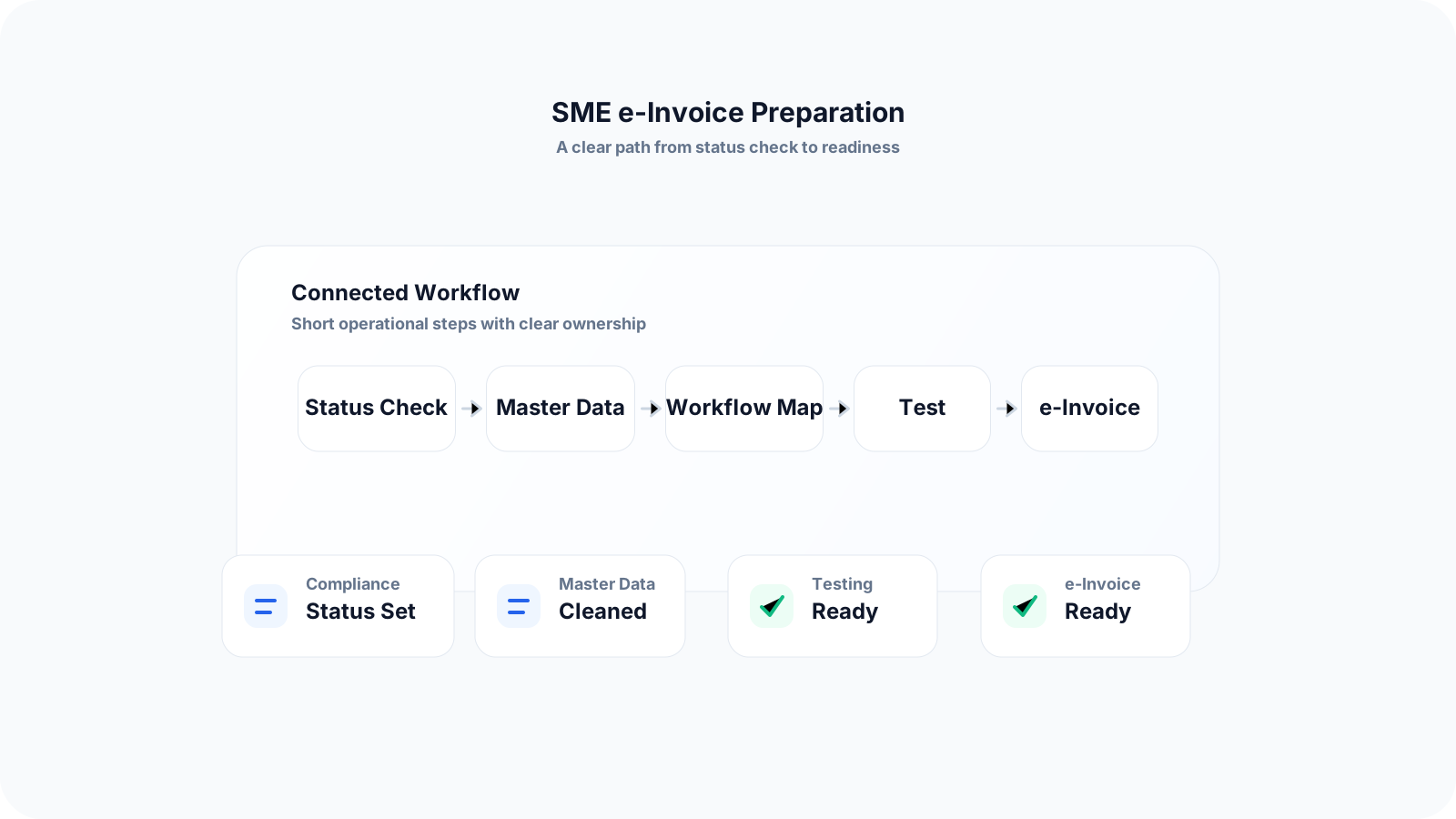
Many SMEs treat e-Invoice as something the accountant will handle at the end of the month. In practice, compliance starts much earlier, when a quotation is issued, a customer places an order, stock is delivered, a supplier invoice arrives or a payment is approved.
Operational pressure
When records live in different places, the person responsible has to reconstruct what happened before they can make a confident decision or follow up.
Finance teams cannot issue documents smoothly if buyer details are collected only after the invoice is ready.
Sales teams may issue quotations without knowing whether the customer needs an e-Invoice or which details should be collected.
Inventory teams may ship goods before the invoice and stock records are properly aligned.
Purchasing teams may receive supplier invoices without matching them against purchase orders or goods received.
Managers may approve discounts, credit notes or payment releases without a clear audit trail.
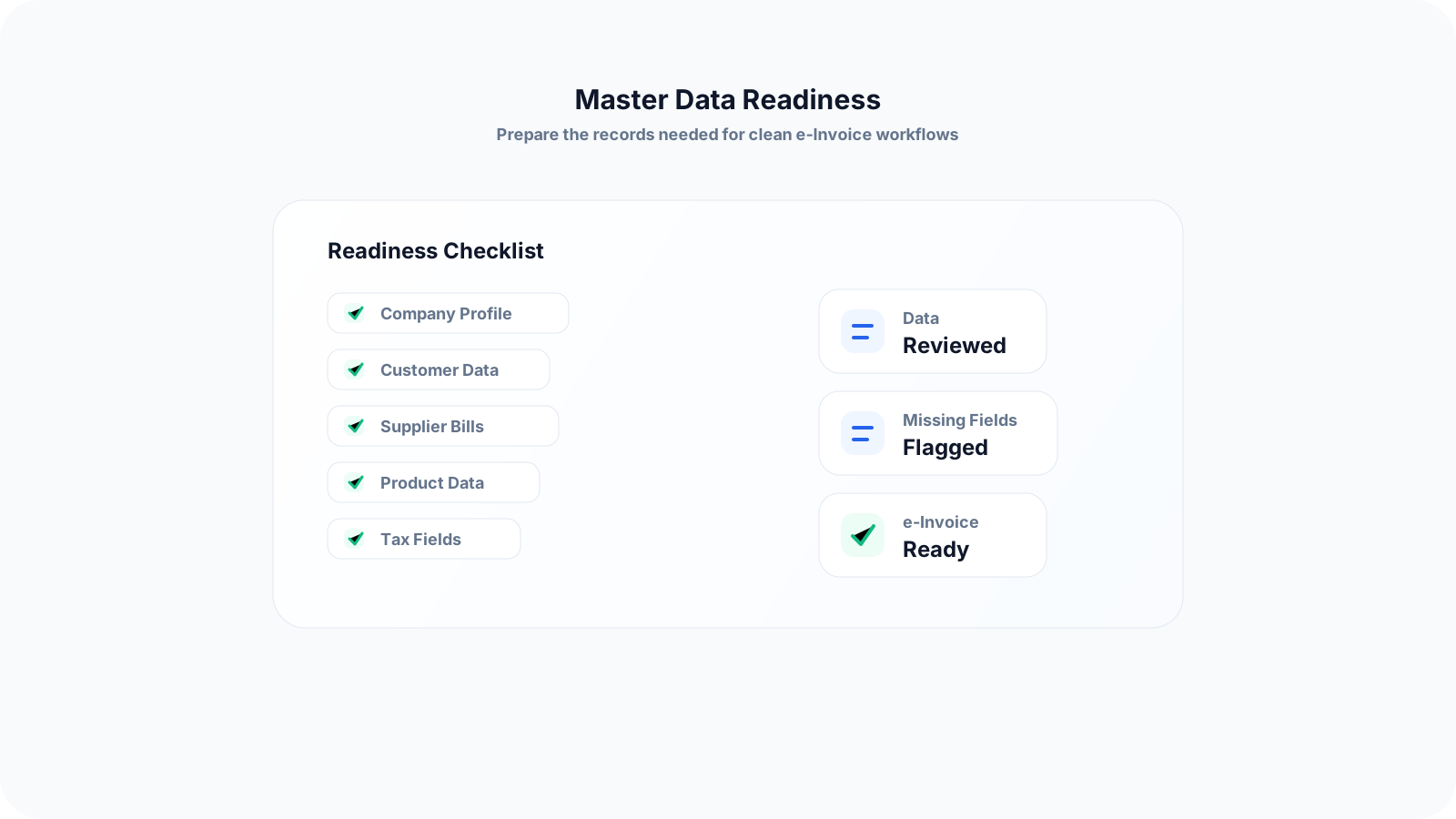
The main preparation work is to make invoice-related data accurate, consistent and traceable across your business. LHDN's current implementation timeline is phased by annual turnover or revenue, so SMEs should verify their own phase and status before relying on old checklists.
LHDN currently lists phased implementation dates by turnover, including taxpayers with annual turnover or revenue up to RM5 million from 1 January 2026, while taxpayers below RM1,000,000 are listed as exempted from e-Invoice implementation. Always check the latest official guidance before publishing or acting on a deadline.
Identify whether invoices start from quotations, sales orders, delivery orders, recurring billing, manual requests or supplier documents.
Prepare business names, registration numbers, tax identification details, addresses, contact details and other required fields based on the latest LHDN requirements.
Plan for B2B invoices, B2C sales, consolidated e-Invoices, credit notes, debit notes, refunds and supplier-related documents.
Sales should know what to collect, finance should know what to validate, operations should know what to match and management should know what requires approval.
Decide whether your team will use the MyInvois Portal, a connected system workflow or a combination depending on transaction volume and operational complexity.
A good preparation plan starts with your real business process, not with software alone. Use this workflow to map what happens from customer request to invoice validation, payment and recordkeeping.
Record the current facts in one shared place.
Confirm what is known and what needs attention.
Make the next decision or follow-up accountable.
Complete the next task and record the outcome.
Refresh the shared view when facts change.
A dependable workflow keeps the shared record and the next action aligned.
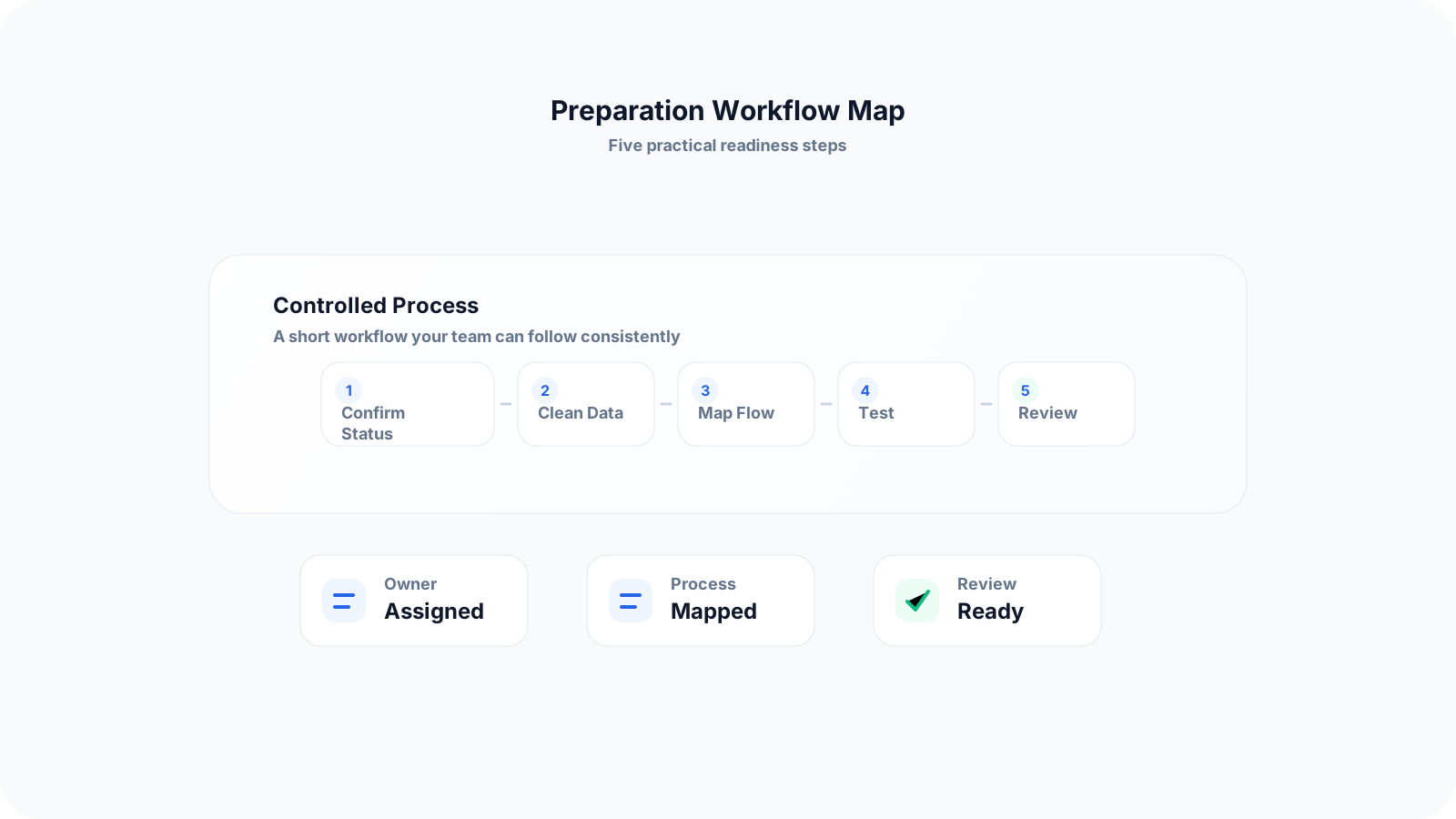
Step 1: Confirm your compliance status. Check your turnover threshold, implementation timing, business entities and branches, then assign one internal owner for e-Invoice readiness.
Step 2: Map your current documents. List every document your SME uses, including quotation, sales order, invoice, receipt, delivery order, purchase order, supplier invoice, credit note, debit note and payment voucher.
Step 3: Clean master data. Standardise customer, supplier, product, service, tax and payment information so teams are not retyping different versions of the same details.
Step 4: Define invoice triggers. Decide exactly when an invoice should be created, such as after quotation acceptance, after delivery, after service completion, after recurring billing cut-off or after management approval.
Step 5: Classify transactions. Identify which transactions need individual e-Invoices, which may be handled through allowed consolidation and which require special handling such as self-billed scenarios.
Step 6: Build approval rules. Set clear approval paths for discounts, unusual pricing, cancelled invoices, credit notes, supplier payments and changes after invoice issuance.
Step 7: Train front-line teams. Give sales, admin, purchasing and warehouse teams simple scripts and checklists so they know what data to collect before finance gets involved.
Step 8: Test before full reliance. Run sample transactions, check missing fields, review rejected or delayed documents, then improve the workflow before month-end pressure builds.
Most e-Invoice preparation issues come from broken internal workflow rather than lack of effort. Avoid these mistakes before they become daily admin problems.
Recurring issues usually point to workflow-control gaps, not one isolated data-entry mistake.
Waiting until the deadline before cleaning customer and supplier data creates avoidable pressure for finance and operations teams.
Assuming e-Invoice is only the finance department's responsibility ignores the sales, purchasing, warehouse and approval steps that create invoice data.
Letting every salesperson use different quotation and invoice formats makes checking, correction and reporting harder.
Collecting buyer details only after the invoice needs to be issued slows billing and increases rework.
Relying on manual copy-paste from Excel without validation or approval control increases missing-field and duplicate-entry risk.
Ignoring supplier-side workflows such as purchase orders, supplier invoices and payment approvals leaves expense records harder to match.
Not defining how to handle cancellations, corrections, rejected documents, credit notes and debit notes creates confusion when exceptions happen.
Keeping receipts, delivery orders and payment records in separate folders makes reconciliation and audit review slower.
A practical SME approach is to improve the workflow step by step. The goal is not to make the process complicated, but to reduce missing data, unclear ownership and duplicated work.
Create a one-page readiness checklist for customer data, supplier data, item details, invoice fields, approval rules and recordkeeping.
Use one source of truth for customer and supplier master data instead of separate Excel files owned by different departments.
Connect quotation, sales order, invoice, delivery and payment records so finance can understand the full transaction history.
Review purchase order, supplier invoice and payment workflows because e-Invoice compliance also affects expense documentation and supplier-side records.
Set approval limits for discounts, credit notes, payment release and document changes so exceptions are traceable.
Prepare a simple customer-facing message explaining what details are needed for e-Invoice requests.
Schedule a monthly review to check rejected documents, missing fields, duplicate records and manual workarounds.
Keep supporting documents organised so your team can answer questions without searching across email, WhatsApp and folders.
The best practice is to make the next action clear before the situation becomes urgent.
TREX Grow helps SMEs organise the operational side of e-Invoice preparation by connecting the documents and approvals that happen before and after invoicing. It is designed for SMEs that want a clearer workflow without turning the page into a hard sales process.
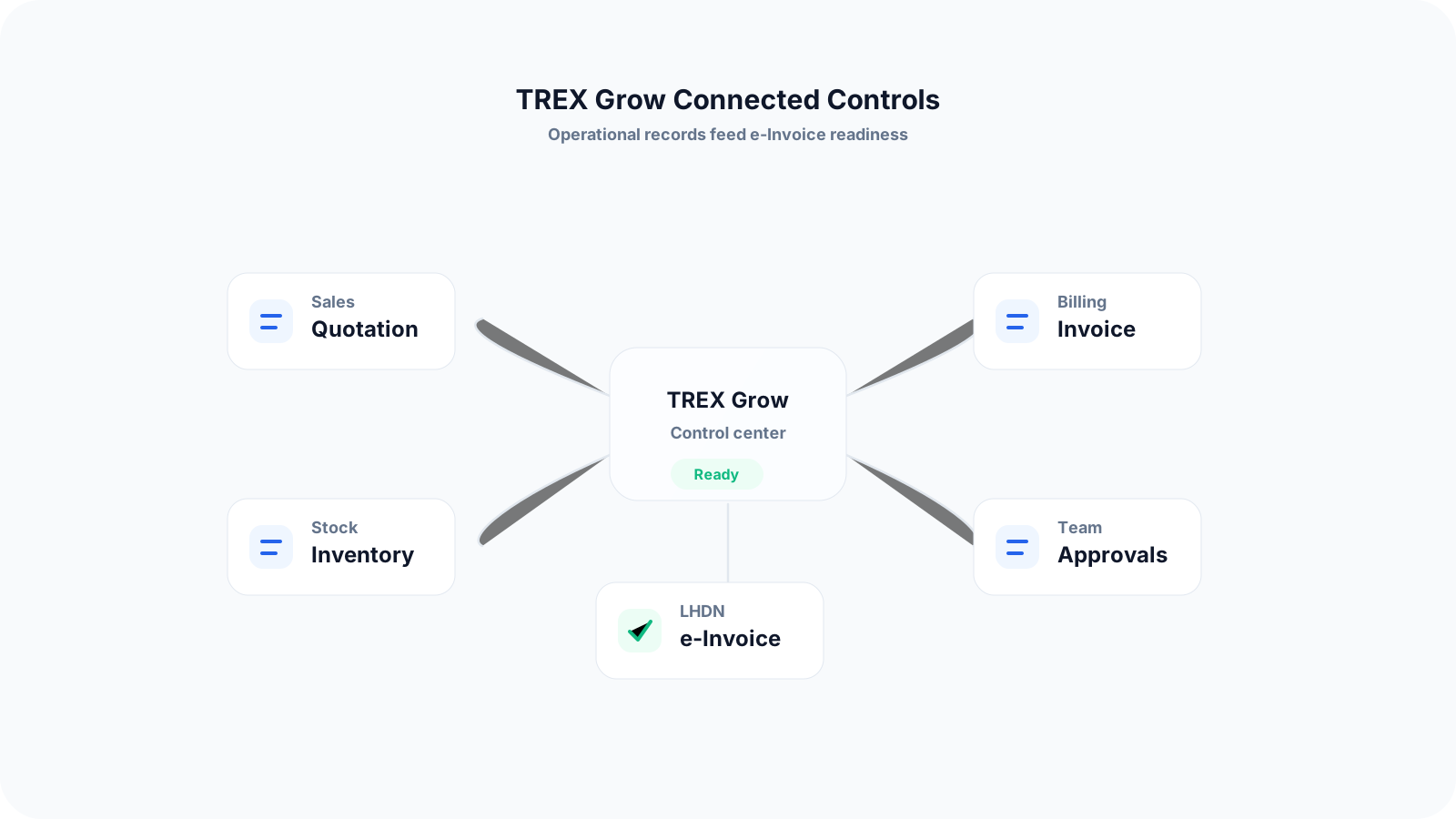
Connect quotation and invoice workflows so finance can issue documents from approved sales activity instead of retyping information.
Keep customer, supplier and product information more consistent across sales, purchasing, inventory and finance teams.
Link inventory movement with sales and purchasing records, making it easier to understand what was quoted, delivered, invoiced and paid.
Use purchase order and supplier payment workflows to improve expense tracking and reduce mismatches between PO, supplier invoice and payment.
Set approval flows for key actions such as pricing changes, invoice changes, purchase requests and supplier payments.
Support RFQ and product catalog workflows so item details are easier to manage before they appear in invoices.
Bring Malaysia LHDN e-Invoice workflows into a broader operations platform, so compliance preparation is connected to daily SME work.
You do not need to fix everything in one day. Start with customer data, invoice triggers, approval rules and document matching. When spreadsheets become hard to control, TREX Grow can help connect quotation, invoice, inventory, purchasing, approvals and e-Invoice workflows in one SME-friendly platform.
Start by confirming your implementation status, appointing an internal owner, cleaning customer and supplier data, and mapping how quotations, invoices, delivery records, purchase orders and payments currently flow through the business.