

Internal inventory transfers should be recorded as dedicated stock movements rather than informal messages or stock adjustments. This guide explains how transfer records improve inventory visibility, support warehouse teams, and help Malaysian SMEs maintain accurate stock availability across multiple locations.
Why Inventory Transfers Need Their Own Records
When stock moves between internal locations, it should be recorded as an inventory transfer instead of an unexplained stock adjustment or a message in a chat group. A transfer record preserves where the stock came from, where it went, how much was moved, and why the movement happened.
Without this information, teams may believe stock has disappeared from one location when it has simply been moved elsewhere. This can lead to unnecessary investigations, duplicate purchasing, or delays in fulfilling customer orders.
Common Situations Where Transfer Records Matter
Many SMEs move inventory internally every day. Recording these movements creates a clear audit trail without confusing them with stock gains or losses.
Examples include:
- Moving cartons from a bulk storage area into a picking area for daily fulfilment.
- Transferring display products from the warehouse into a showroom.
- Replenishing stock from the headquarters warehouse to a branch location.
- Moving returned products into a dedicated returns or inspection area before they become available for sale.
Each movement changes stock availability by location while keeping the overall inventory balance accurate.

Why Stock Adjustments Are Not the Right Alternative
Stock adjustments are intended to correct inventory discrepancies such as damaged goods, counting errors, or write-offs. They should not be used to represent normal location-to-location movement.
Using adjustments instead of transfer records removes valuable operational context. Teams can no longer see the source location, destination location, or the reason for the movement, making future investigations more difficult.
Instead, businesses should maintain a consistent stock movement workflow. Learn more about a practical stock movement workflow.
Practical Workflow Tips for Multi-Location SMEs
Distributors, retailers with back-of-house storage, and businesses operating multiple branches benefit from treating every internal movement as a controlled process.
Good practices include:
- Record every movement before or immediately after stock is physically transferred.
- Always identify both the source and destination locations.
- Record the quantity actually transferred instead of estimating it.
- Include a clear reason such as branch replenishment, showroom display, picking replenishment, or return inspection.
- Review stock availability at each location after the transfer has been completed.
These habits improve visibility without suggesting that inventory transfers eliminate every inventory discrepancy.

How TREX Grow Can Help Solve This
TREX Grow helps businesses maintain traceable inventory transfers between warehouse locations. A typical workflow includes:
- Create a new inventory transfer record.
- Select the source and destination WMS locations.
- Confirm the products and quantities being transferred.
- Record the business reason for the movement.
- Review updated stock availability after the transfer is completed.
This gives warehouse supervisors, branch managers, and inventory controllers greater confidence that stock movements are properly documented while preserving location history. Businesses managing multiple storage areas can also benefit from stronger warehouse locations and fulfilment controls.
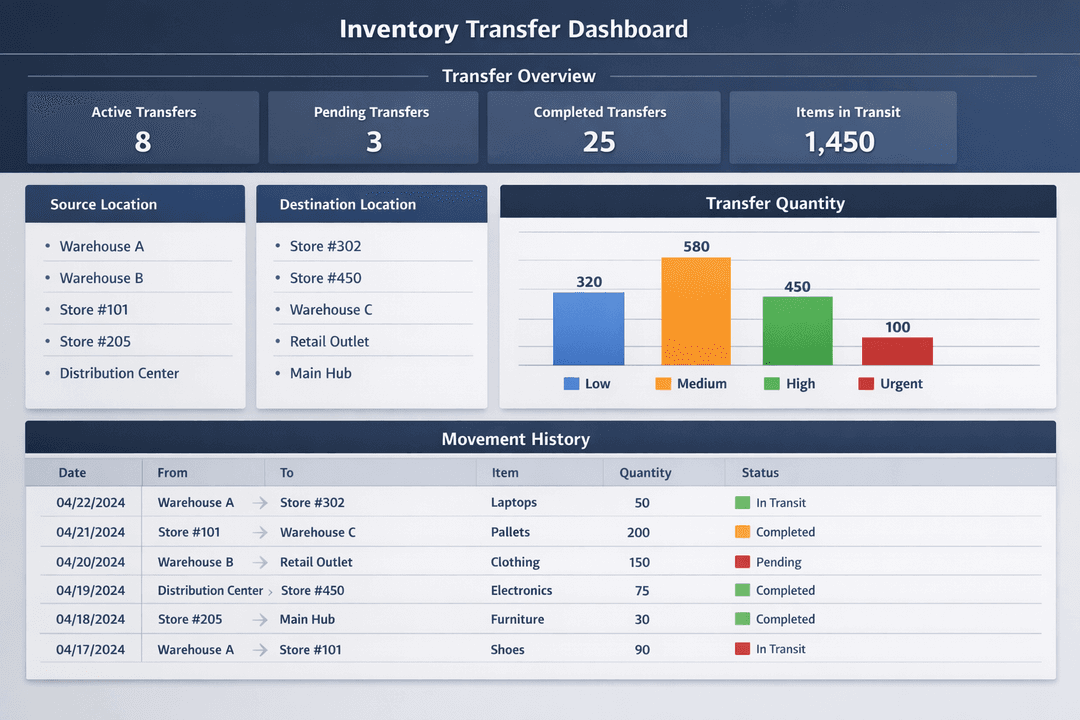
Build Better Visibility Across Every Stock Location
Internal stock movement is a normal part of daily operations, but it should never appear as unexplained inventory changes. Dedicated transfer records provide the context needed to understand where inventory moved, why it moved, and how much was transferred.
If your business operates multiple warehouses, branches, showrooms, or storage areas, consider exploring TREX Grow to create traceable location-to-location inventory transfers that support clearer operational visibility.