Invoice records are separated from payment updates
A finance admin may issue invoices from one file, check bank payments from another place, and update customer status manually. When updates are delayed, the unpaid invoice list becomes unreliable.

Unpaid invoices are easy to miss when your team uses separate spreadsheets, email threads, WhatsApp reminders, and manual payment checks. This guide explains how SMEs can organise invoice tracking, follow up overdue payments professionally, and keep better visibility over collections.
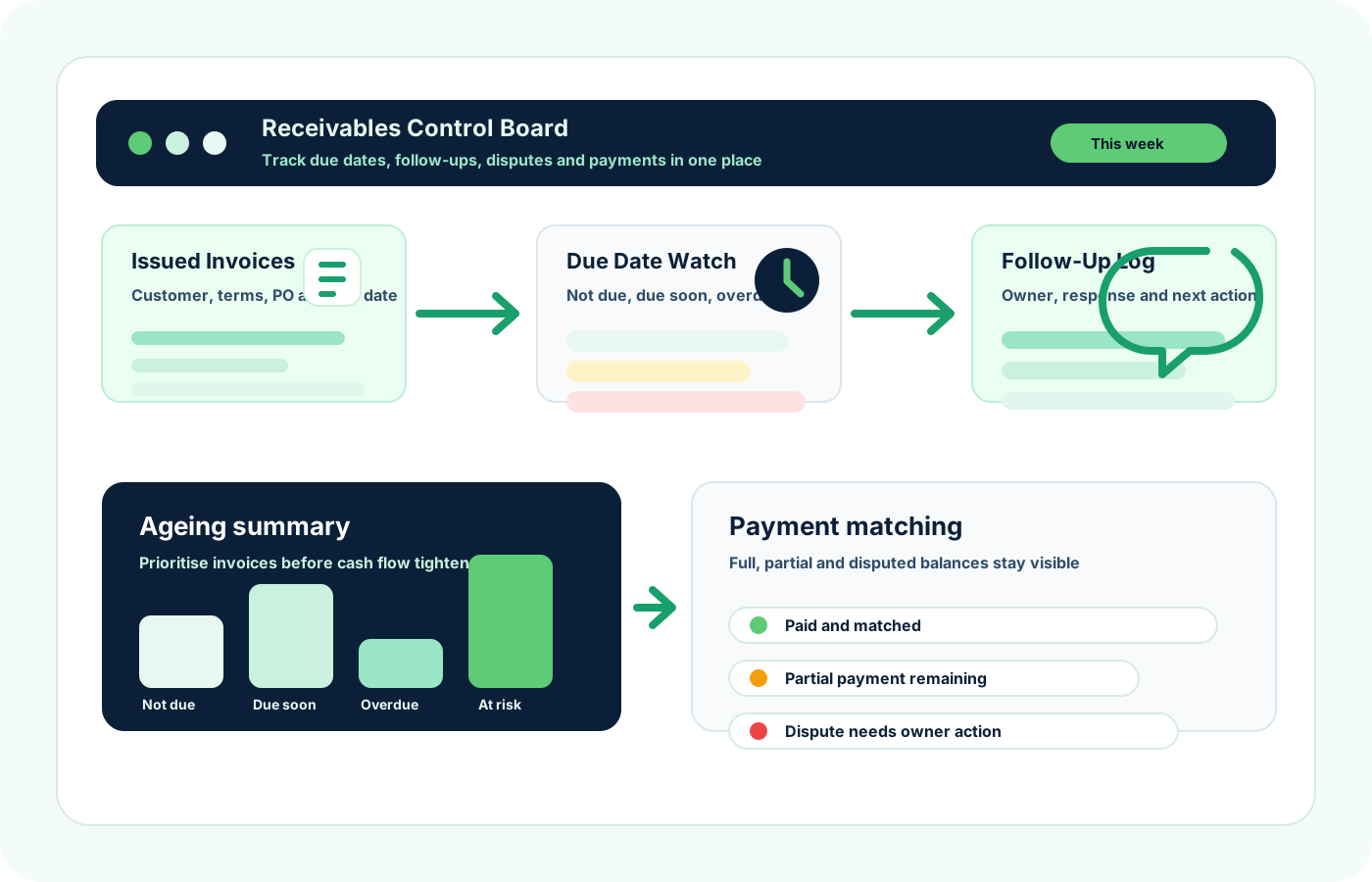
For many SMEs, the issue is not that invoices are ignored on purpose. The problem usually starts when invoice creation, delivery, payment checking, and customer follow-up are handled in different places.
Operational pressure
When records live in different places, the person responsible has to reconstruct what happened before they can make a confident decision or follow up.
A finance admin may issue invoices from one file, check bank payments from another place, and update customer status manually. When updates are delayed, the unpaid invoice list becomes unreliable.
Some businesses only check overdue invoices when they need money urgently. By then, the invoice may already be weeks late and harder to collect.
Sales may know the customer relationship, finance may know the invoice status, and operations may know whether goods were delivered. Without a shared view, follow-up becomes slow and inconsistent.
Customers may pay part of the invoice, offset against credit notes, or pay several invoices in one transaction. If this is not tracked clearly, the outstanding balance can be confusing.
Invoices with 7-day, 14-day, 30-day, or custom credit terms need different follow-up timing. Without due dates and ageing categories, all unpaid invoices look the same.
A good unpaid invoice tracking process should help your team answer the important questions quickly: who owes money, how much is outstanding, when it is due, and what action has already been taken.
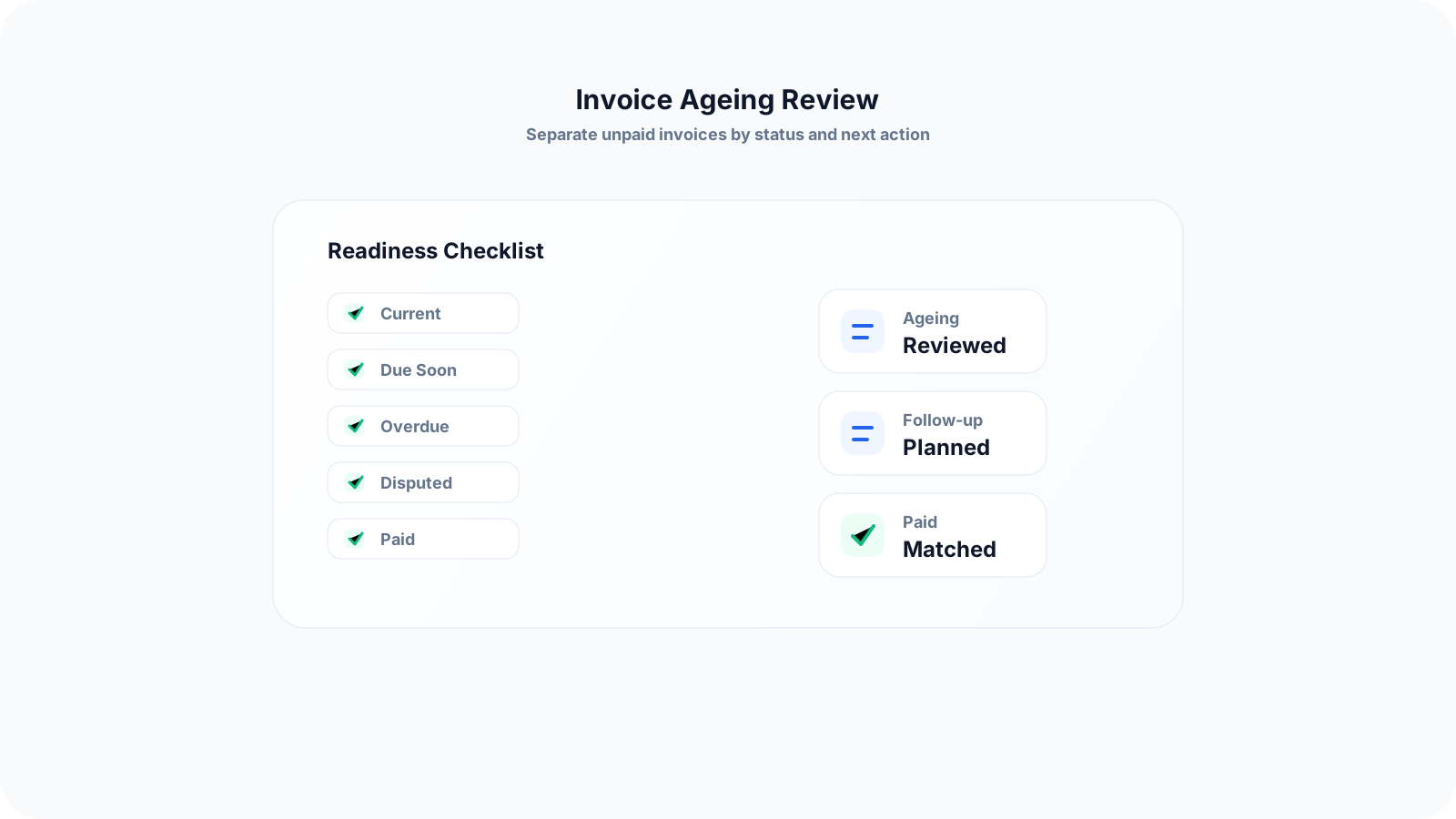
Every unpaid invoice should be traceable by invoice number, customer name, issue date, and due date. This makes it easier to search, resend, and discuss with customers.
Include the company name, billing contact, email, phone number, and any special payment instruction. This avoids wasting time asking who to follow up with.
Track both the full invoice amount and the remaining unpaid balance. This is important for partial payments, credit notes, discounts, and payment disputes.
Use clear statuses such as issued, sent, not due, due soon, overdue, partially paid, paid, disputed, or written off. Avoid vague labels that different staff may interpret differently.
Group unpaid invoices by ageing, such as current, 1 to 30 days overdue, 31 to 60 days overdue, and more than 60 days overdue. This helps prioritise collection work.
Record when the customer was contacted, who contacted them, what they replied, and the next planned action. This prevents repeated messages and missed promises.
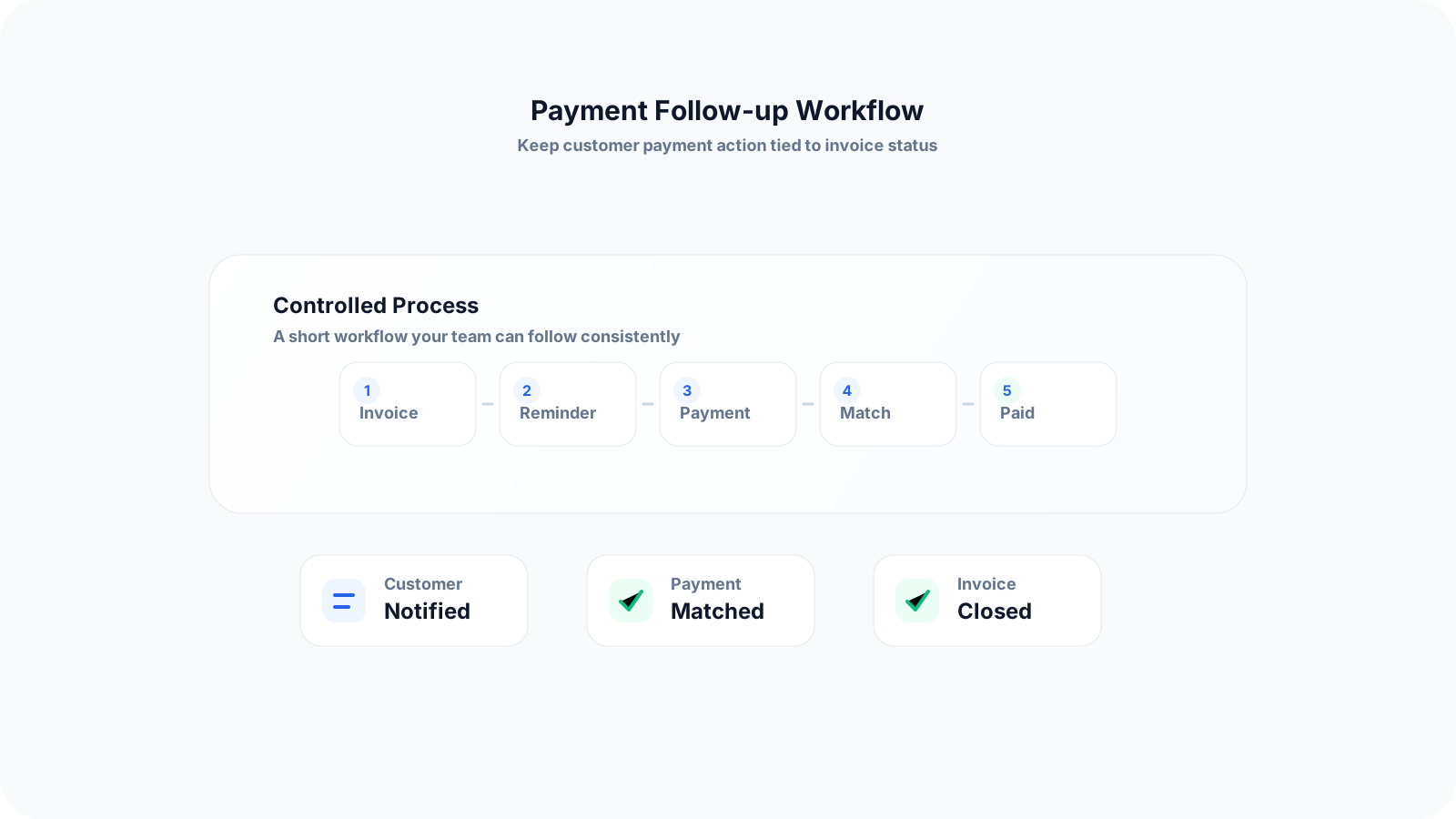
The best way to manage unpaid invoices is to build a routine that starts from invoice creation, not only after the invoice becomes overdue.
Record the current facts in one shared place.
Confirm what is known and what needs attention.
Make the next decision or follow-up accountable.
Complete the next task and record the outcome.
Refresh the shared view when facts change.
A dependable workflow keeps the shared record and the next action aligned.
Set payment terms before issuing the invoice: confirm whether the customer is COD, 7 days, 14 days, 30 days, or on another agreed term. Put the due date clearly on the invoice so there is less confusion later.
Send the invoice to the correct billing contact: make sure the invoice is sent to the customer contact who handles payment, not only to the salesperson or general inbox. Keep a record of when it was sent.
Update payment status regularly: check bank receipts, payment references, and customer remittance advice on a fixed schedule. Update the invoice status as paid, partially paid, or still outstanding.
Review the invoice ageing report weekly: separate invoices into not due, due soon, overdue, and long overdue. Focus first on high-value invoices and customers with repeated late payment patterns.
Follow up before the due date: for important invoices, send a polite reminder before the due date. This is especially useful when customers need internal approval before payment.
Escalate overdue invoices by stage: use a simple escalation process, from first reminder and second reminder to phone call, manager follow-up, credit hold, or further action if needed.
Record customer replies and promises: if a customer says payment will be made on a certain date, record it. The next follow-up should be based on that promise, not a fresh conversation from zero.
Reconcile payments and close invoices: once payment is received, match it to the correct invoice and mark the invoice as paid. This prevents unnecessary follow-up and keeps cashflow reporting accurate.
Unpaid invoice tracking becomes messy when the process depends too much on manual reminders, unclear ownership, or incomplete records.
Recurring issues usually point to workflow-control gaps, not one isolated data-entry mistake.
Monthly review is too slow for many SMEs. A weekly review helps your team catch payment issues earlier and keeps collection conversations fresh.
An invoice that is not due yet is different from one that is 45 days overdue. A single unpaid label does not show urgency or next action.
Without a clear outstanding balance, your team may chase the wrong amount or assume an invoice is settled when it is not.
If nobody is responsible for customer follow-up, everyone assumes someone else has handled it. Assign clear ownership for each overdue account.
Customers may have raised a dispute, requested documents, or promised a payment date. Following up without checking the history can damage trust.
Some customers delay payment by asking for proof of delivery, purchase order references, or service confirmation. Keeping these documents connected helps resolve issues faster.
A professional unpaid invoice process is not just about chasing customers. It is about giving your team the information and timing needed to collect payments without unnecessary friction.
Keep payment terms consistent by customer type or credit approval level. This reduces confusion and makes due dates easier to manage.
Use different reminder messages for due soon, first overdue, second overdue, and long overdue invoices. The tone can become firmer over time while staying professional.
Not every unpaid invoice needs the same attention. Focus on large amounts, repeat late payers, and invoices that affect monthly cashflow.
Have quotation, invoice, delivery order, purchase order, and customer approval records available. This helps answer payment queries quickly.
If a customer often pays late, consider shorter terms, deposit requirements, credit limits, or management approval before accepting new orders.
A disputed invoice needs problem resolution, not just payment reminders. Track the dispute reason, person in charge, and target resolution date.
Use unpaid invoice data to estimate expected collections for the week or month. This helps with supplier payments, payroll planning, and purchasing decisions.
The best practice is to make the next action clear before the situation becomes urgent.
TREX Grow helps SMEs reduce manual tracking by connecting sales documents, invoices, payment status, approvals, inventory, purchasing, and Malaysia LHDN e-Invoice workflows in one operations platform.
Turn approved quotations into invoices with better document continuity, so your team can trace customer orders, invoice details, and related records more easily.
Track invoice status and outstanding balances in a structured system instead of relying only on spreadsheets or scattered messages.
Finance, sales, and operations teams can work from the same customer and document context, making payment follow-up more consistent.
TREX Grow supports Malaysia LHDN e-Invoice workflows so SMEs can manage compliance-related invoice processes while still keeping attention on collection and operations.
For trading, distribution, and service SMEs, unpaid invoice tracking often connects to inventory, purchase orders, supplier payments, and approvals. TREX Grow brings these workflows closer together.
Start by improving your invoice tracking workflow. When your team is ready to move beyond manual spreadsheets, TREX Grow gives you a connected way to manage invoices, payments, approvals, inventory, purchasing, and e-Invoice workflows.
The best way is to maintain a clear invoice list with customer name, invoice number, issue date, due date, total amount, outstanding amount, payment status, ageing category, last follow-up, and next action. For SMEs, this should be reviewed weekly rather than only at month end.