Malaysia SME e-Invoice Readiness

What Small Businesses Need Before e-Invoice Implementation

e-Invoice implementation is not only about submitting documents to LHDN. For small businesses, the harder part is getting customer data, supplier records, sales documents, inventory, approvals and accounts workflows ready before go-live.

Small business e-Invoice readiness board with customer data, supplier records, documents and approvals

Primary keyword

e-Invoice implementation for small business

Audience

Malaysian SME owners, accounts staff, admin teams, finance managers, trading businesses, wholesalers, distributors, service companies, and growing small businesses preparing for e-Invoice implementation.

Goal

Help SMEs prepare operationally before choosing or using e-Invoice software. Position TREX Grow as a practical platform that connects day-to-day business documents with Malaysia e-Invoice workflows, without making the page feel like a hard sales pitch.

Problem

Why e-Invoice preparation is difficult for small businesses

Many SMEs only start thinking about e-Invoice when they hear about submission deadlines. But by then, the real problem is usually not the submission itself. It is messy business data, inconsistent documents, unclear staff responsibilities and disconnected workflows.

Operational pressure

The stress usually starts before submission.

When source records are scattered, the final invoice becomes the place where every missing field, unclear approval, and manual correction shows up.

Missing dataManual checkingAudit risk
High risk

Invoices are created after the work is already done

In many SMEs, quotations, delivery orders, invoices and receipts are prepared separately. When e-Invoice is added later, staff may need to re-check customer details, product descriptions, prices, tax information and payment status manually.

Customer information is incomplete

e-Invoice readiness requires accurate customer records. Businesses may need to confirm names, registration numbers, tax identification details, addresses, contact details and billing preferences before issuing documents.

Supplier and purchase records are not organised

Purchases, supplier bills, self-billed transactions and supplier payments can become difficult to track when supplier details are stored in WhatsApp chats, spreadsheets or paper files.

High risk

Inventory and sales documents do not match

For trading, wholesale and distribution businesses, product descriptions, quantities and pricing should be consistent across quotations, sales orders, delivery orders and invoices. If they are not connected, e-Invoice implementation may expose existing workflow gaps.

Approvals happen informally

Some SMEs approve discounts, credit terms, purchases and invoice changes through phone calls or chat messages. e-Invoice implementation works better when there is a clear record of who approved what and when.

Education

What e-Invoice readiness really means

Being ready for e-Invoice means your business can issue accurate documents consistently, keep the right records, and reduce manual checking before submission. It is a workflow preparation exercise, not only a tax or accounting task.

An e-Invoice is not just a PDF

It is a structured transaction record. The work is easier when the business prepares clean source data before the invoice reaches submission.

Structured transaction data
Submitted for validation
Kept for tax reporting records

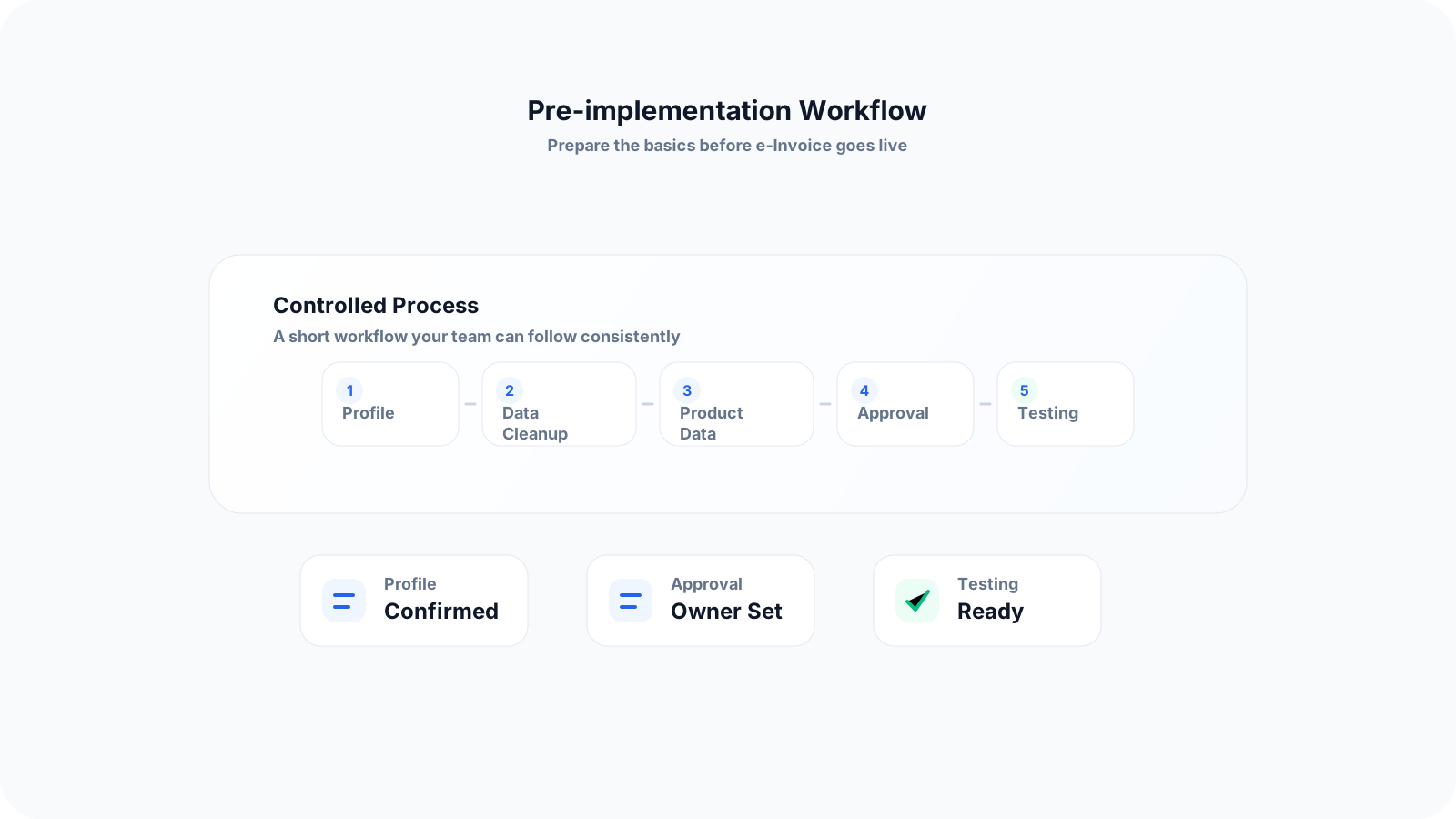
Readiness steps before your team starts submitting

1

Confirm your phase

  • - Know your timeline
  • - Review transaction types
2

Clean master data

  • - Buyer and supplier details
  • - Product and tax fields
3

Set team process

  • - Approval ownership
  • - Correction process

Know your implementation timing

LHDN implements e-Invoice in phases based on annual turnover or revenue. On the official LHDN timeline page reviewed on 15 May 2026, taxpayers with annual turnover or revenue of less than RM1,000,000 were listed as exempted from e-Invoice implementation, while taxpayers with annual turnover or revenue of up to RM5 million were listed from 1 January 2026. Check the latest official LHDN guidance before making compliance decisions.

Review the latest official guidelines

The official LHDN guideline page reviewed on 15 May 2026 listed e-Invoice Guideline Version 4.6 and e-Invoice Specific Guideline Version 4.7. Treat this page as workflow guidance, not legal or tax advice, and confirm current official requirements before rollout.

Understand your transaction types

List the common transactions in your business: B2B invoices, B2C sales, credit notes, debit notes, refunds, supplier purchases, self-billed transactions, recurring billing and deposits. This helps your team know which workflow needs attention first.

Clean up master data

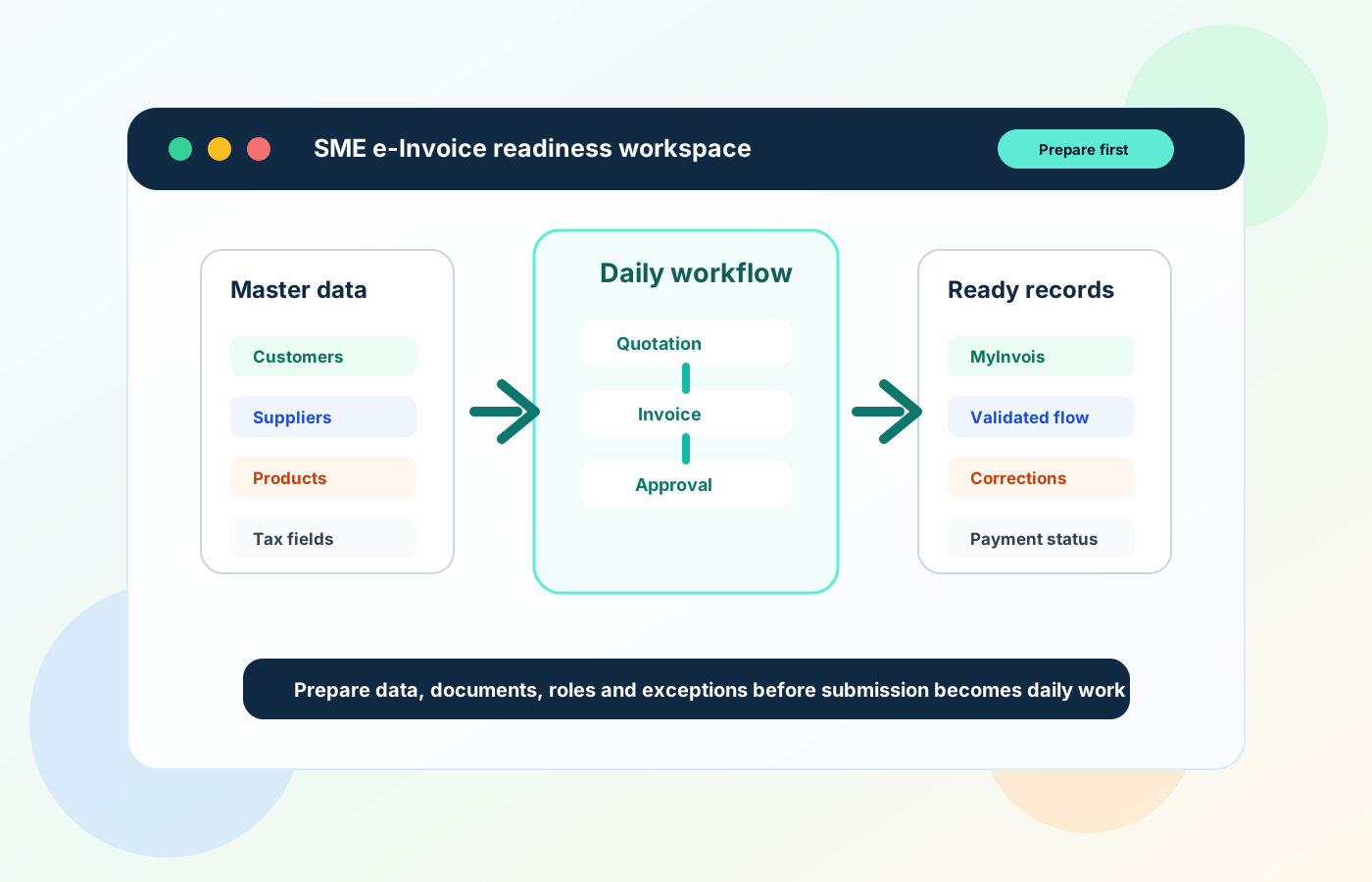
Master data includes customer records, supplier records, product or service lists, tax codes, unit prices, payment terms, branches, users and approval roles. Clean data makes e-Invoice implementation smoother.

Map your document flow

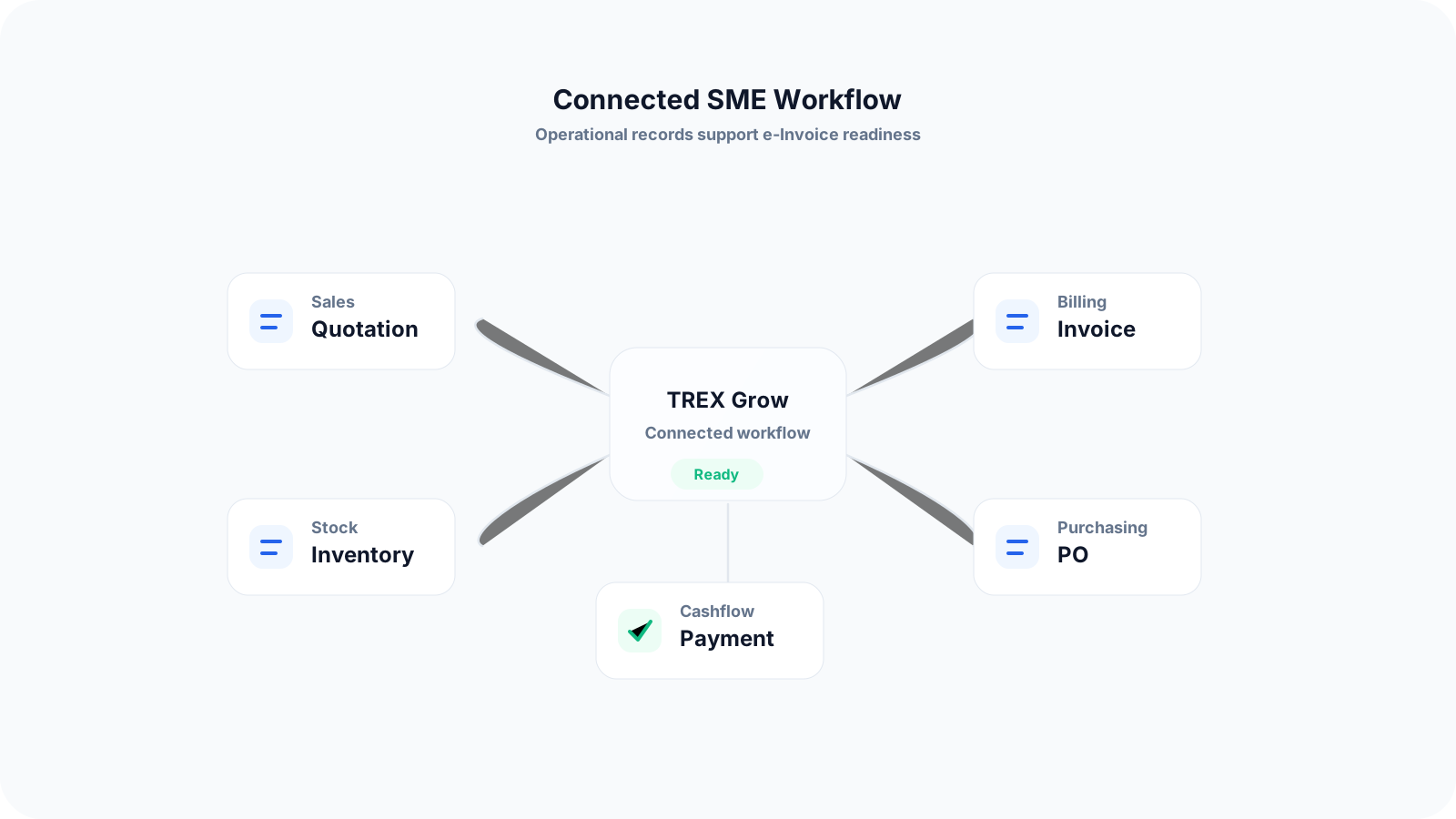
A practical SME document flow may start from quotation, then sales order, delivery order, invoice, e-Invoice validation, receipt and payment tracking. Purchasing may involve RFQ, purchase order, goods receiving, supplier invoice and supplier payment.

Decide how your team will work daily

Before implementation, decide who creates invoices, who reviews them, who handles rejected or cancelled documents, who updates customer details, and who monitors payments.

Workflow

A practical pre-implementation workflow for SMEs

Use this workflow before selecting, setting up or switching your e-Invoice system. It helps your team prepare the operational foundation first.

Operational e-Invoice workflow

Create

Prepare the invoice from clean records.

Check

Review buyer, tax, and item details.

Submit

Send structured data for validation.

Validate

Resolve validation issues at source.

Share

Send and keep the validated record.

If validation fails, fix the source data, not just the final invoice.

1

Step 1: Confirm your business profile and e-Invoice readiness date - Review your annual turnover or revenue, company structure, business type and latest LHDN guidance. Keep a simple internal note on whether your business is required to implement now, preparing voluntarily, or monitoring future changes.

2

Step 2: List every document your business uses - Write down all documents currently used in sales and purchasing, such as quotation, invoice, receipt, delivery order, purchase order, supplier bill, credit note, debit note and payment voucher.

3

Step 3: Clean customer and supplier records - Standardise names, registration details, billing addresses, contact persons, email addresses, payment terms and tax-related information. Assign someone to maintain this data going forward.

4

Step 4: Review product, service and pricing records - Check product names, SKUs, units of measurement, SST treatment, price lists, discounts, stock records and service descriptions. This is important because invoice accuracy depends on consistent item data.

5

Step 5: Define approval rules - Decide which documents require approval before issue. For example, quotation discounts above a certain amount, purchase orders above a budget, invoice cancellation, credit note issuance or supplier payment release.

6

Step 6: Choose the submission approach - Small businesses may use the MyInvois Portal for simpler needs or use connected software when document volume, inventory, approvals, quotations and purchasing workflows become harder to manage manually.

7

Step 7: Train the people doing the daily work - Do not train only the boss or accountant. Train the staff who create quotations, issue invoices, update customer details, receive supplier bills, check stock and follow up payments.

8

Step 8: Test with real business scenarios - Before full rollout, test common cases such as walk-in customers, repeat B2B customers, wrong customer details, item returns, partial payments, cancelled invoices, supplier purchases and month-end reconciliation.

Mistakes

Common mistakes before e-Invoice implementation

Most e-Invoice problems start before the invoice is submitted. They begin with unclear processes and poor data habits.

Most issues are not tax knowledge problems. They are workflow control problems.

Common

Waiting until the last minute

Small businesses often underestimate the time needed to clean records, train staff and test workflows. Start with document and data preparation even before final system setup.

High risk

Treating e-Invoice as only an accounting issue

Sales, admin, purchasing, inventory and management are all involved. If only the accounts team prepares, the business may still face errors from quotations, orders and supplier records.

Common

Keeping Excel as the main source of truth

Excel can be useful for planning, but it becomes risky when different staff use different versions for customer records, product pricing, invoice numbers and payment tracking.

High risk

Ignoring supplier workflows

Many SMEs focus only on sales invoices. Supplier payments, purchase orders, self-billed situations and expense records also need proper review.

Common

Not documenting who is responsible

Without clear ownership, staff may not know who updates customer details, fixes invoice errors, approves credit notes or checks rejected submissions.

High risk

Choosing software before understanding the workflow

A system helps only when the business understands its own document flow. Map your sales and purchasing process first, then choose tools that support it.

Best practices

Best practices for small business e-Invoice readiness

Good preparation reduces stress during implementation and helps your business improve daily operations at the same time.

Do this

Create one customer master list

Keep customer details in one controlled place. Avoid separate lists maintained by sales, accounts and admin teams.

Do this

Use standard item names and codes

Standard product or service records help prevent inconsistent descriptions, wrong pricing and confusion during invoice preparation.

Do this

Connect quotation to invoice

When a quotation is accepted, the invoice should not be recreated from scratch. A connected workflow reduces typing errors and saves time.

Do this

Review purchasing together with sales

For SMEs that buy and sell stock, e-Invoice readiness should include purchase orders, supplier bills, inventory updates and supplier payments.

Do this

Set simple approval limits

Approvals do not need to be complicated. Start with practical rules for discounts, large purchases, invoice changes and payment release.

Do this

Keep a correction process

Staff should know what to do when customer details are wrong, an invoice needs cancellation, a credit note is required, or a document needs review.

Do this

Prepare a small internal checklist

Before issuing an invoice, staff can check customer details, item accuracy, tax treatment, payment terms, approval status and supporting documents.

The best preparation is to fix the workflow before the invoice reaches submission.

Solution

How TREX Grow supports e-Invoice preparation

TREX Grow helps SMEs prepare for e-Invoice by connecting the operational documents that happen before and after invoicing. Instead of treating e-Invoice as a separate task, it helps businesses manage the workflow around it.

E-Invoice works better when operations are connected

Quotation to invoice workflow

Create quotations and convert them into invoices with consistent customer, item and pricing information, reducing repeated manual entry.

Inventory and product catalogue connection

Maintain product details, stock movement and item records so sales documents are based on cleaner operational data.

Purchase order and supplier payment tracking

Connect purchasing documents with supplier records and payments, helping SMEs manage both sales and supplier-side workflows.

TREX Grow Operations Hub

Approval control

Set practical approval flows for documents such as quotations, purchases, payments and invoice-related actions.

RFQ and supplier workflow support

Manage supplier requests, product catalogues and procurement steps more clearly before they become invoices or payments.

Malaysia e-Invoice workflow alignment

Support the documents, records and operational steps SMEs need around LHDN e-Invoice, while keeping the focus on daily business execution.

Next step

Prepare your SME workflow before e-Invoice becomes urgent

Start by organising your quotations, invoices, customer records, inventory, purchases, approvals and supplier payments in one connected workflow. TREX Grow helps small businesses prepare practically, not just technically.

Start Free

Start with customer records, supplier records, product or service lists, quotation and invoice workflows, approval rules, purchase documents, payment tracking and staff responsibilities. The goal is to make sure your daily business data is accurate before e-Invoice submission becomes part of the process.