
Customer payment guide for Malaysian SMEs

Customer Payment Tracking Workflow for SMEs

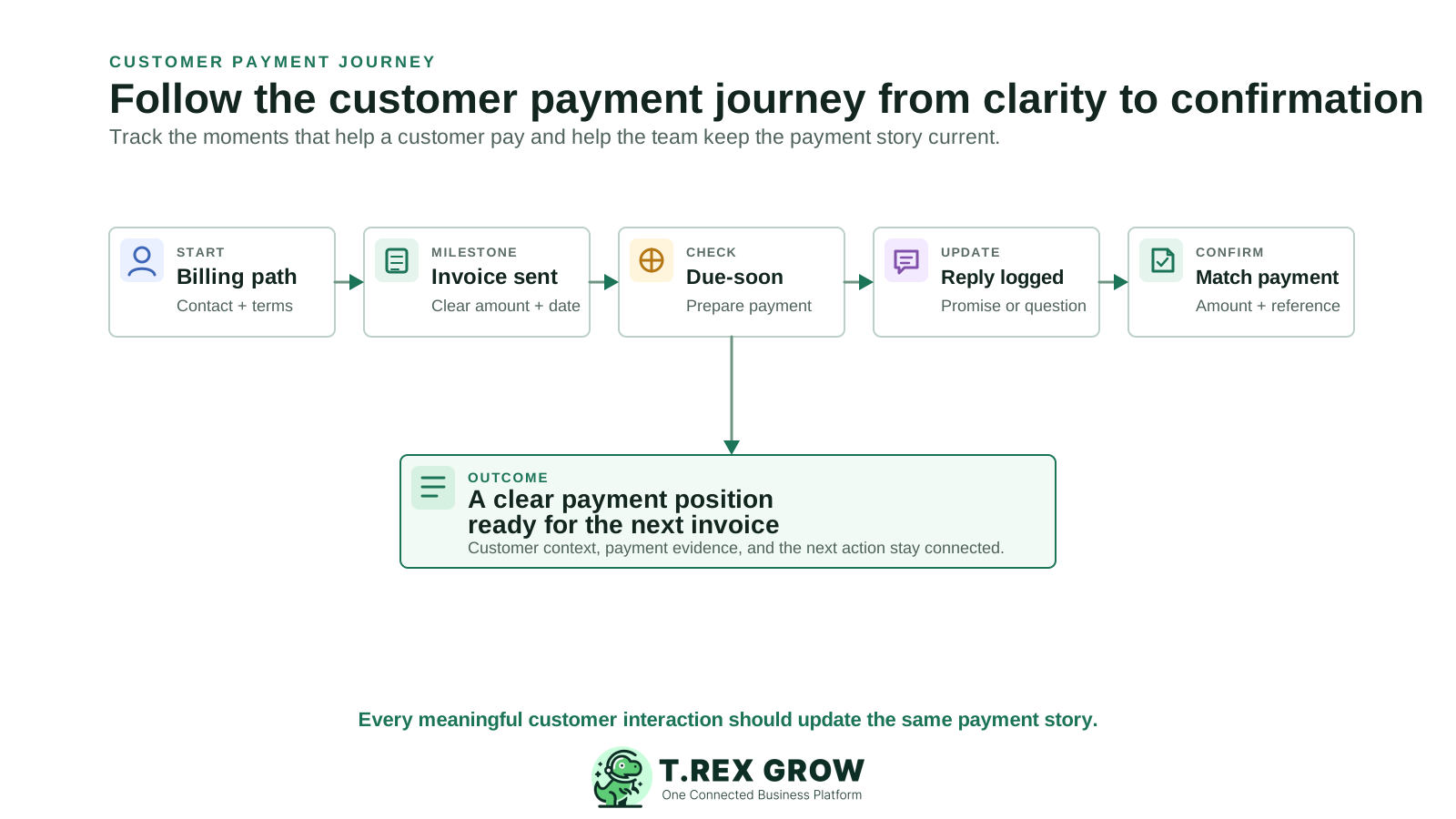
A dependable payment workflow makes the customer story visible from the moment an invoice is sent: who handles payment, what was agreed, when to check in, what the customer said, and whether the payment position is genuinely resolved.

Customer payment journey from billing contact and invoice delivery through due-date readiness, customer promise and payment confirmation

Primary keyword

customer payment tracking workflow

Audience

Malaysian SME owners, finance administrators, accounts assistants, sales coordinators, account managers, and operations teams that need a clearer shared process for tracking each customer payment journey from invoice issue through payment confirmation.

Goal

Teach Malaysian SMEs a customer-centred payment tracking workflow around billing contact, agreed terms, due-date readiness, customer conversations, payment confirmation, and account history before softly showing how TREX Grow can support connected operational records.

Problem

Why customer payment tracking breaks between teams

A payment delay is rarely only a finance problem. The customer may be waiting for the right document, internal approval, delivery proof, a corrected detail, or a conversation with the relationship owner. Tracking breaks when those facts do not travel with the invoice and the team reacts only after the due date has passed.

Operational pressure

The next action is easy to lose when context is scattered.

When records live in different places, the person responsible has to reconstruct what happened before they can make a confident decision or follow up.

Scattered recordsUnclear ownershipAvoidable surprises
High risk

The billing contact is assumed, not confirmed

An invoice can reach a generic inbox, a salesperson, or a contact who cannot approve payment. When the team does not record the right billing contact and process, the first follow-up starts with avoidable uncertainty.
Invoice delivery is treated as the end of the task

Sending a document does not confirm that the customer received it, understands the charge, has the supporting records they need, or knows the agreed payment date.

Due-date readiness is not visible

A customer may need a statement, purchase order reference, delivery evidence, or internal approval before payment. A due-soon check gives the team time to resolve that context before the date becomes a problem.

High risk

Customer replies are detached from the payment position

A promise, query, dispute, or request for a document can sit in a private message while the payment record still looks unchanged. The next colleague cannot tell what action is already underway.

Payment confirmation is incomplete

A customer may say payment was made, send a remittance advice, or pay only part of the balance. The team needs to match the evidence and remaining amount before treating the invoice as resolved.

The next invoice starts without useful history

When recurring payment patterns, preferred contacts, common blockers, and successful follow-up approaches are not retained, the team repeats the same discovery work for every invoice.

Education

The customer payment touchpoints your workflow should connect

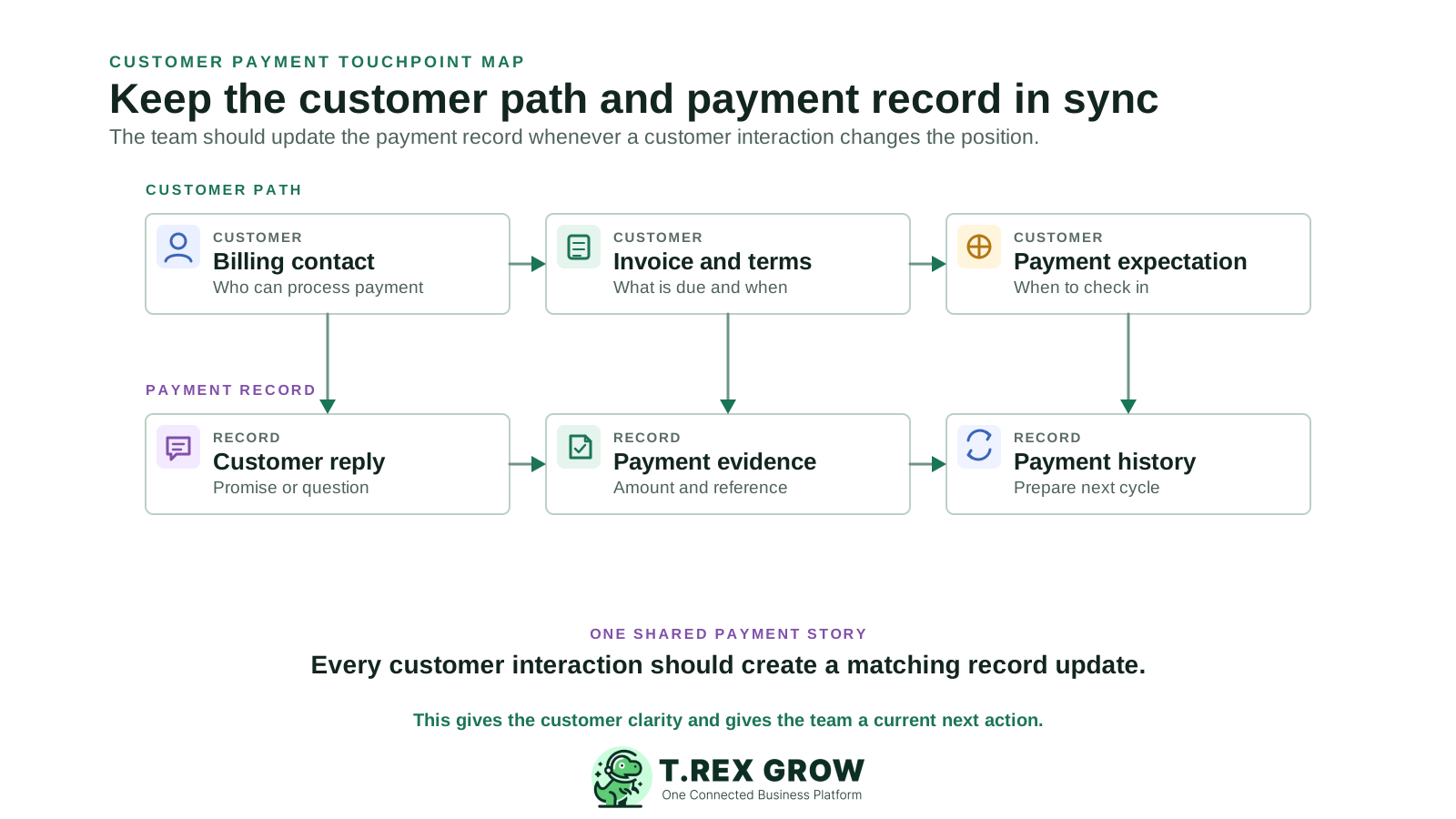
A strong workflow keeps the customer-facing path and the payment-record path in sync. Each touchpoint gives the customer what they need to pay while giving the team enough context to make the next decision with confidence.

A useful record supports the next decision

The work is easier when the team can see the current facts, the responsible person, and the next action without reconstructing the history from separate tools.

Shared operating context
Clear ownership and status
A visible next action

Set up the team view

1

Define the shared fields

  • - Use current facts
  • - Keep details consistent
2

Assign the next action

  • - Name an owner
  • - Set a review date
3

Keep it current

  • - Record changes
  • - Resolve exceptions
Two-lane customer payment touchpoint map connecting billing contact, invoice and due date with customer reply, payment evidence and payment history

Billing contact and payment process

Record who receives the invoice, who approves payment, which channel they prefer, and whether the customer needs a purchase order, statement, delivery proof, or another supporting item.

Invoice delivery and agreed terms

Keep the issue date, payment term, due date, amount, invoice reference, and source documents easy to retrieve so both the customer and the team can recognise the payment request.

Due-soon readiness

Before an important due date, check whether the customer has everything needed to process payment. The purpose is not to pressure the customer; it is to remove avoidable blockers while there is time.

Customer reply and payment promise

Record the latest meaningful reply, promised payment date, question, requested document, or reason for delay near the invoice. A promise should become a review point, not disappear into a message thread.

Payment evidence and balance

Keep payment references, received amounts, remittance advice, partial-payment details, and remaining balance visible until the position can be matched and resolved.

Customer payment history

Retain practical history such as preferred billing contact, common approval timing, recurring questions, and prior promises. Use it to prepare the next invoice cycle more thoughtfully.

Workflow

A six-step customer payment tracking workflow for SMEs

Use the same customer-centred sequence each time an invoice is issued. The workflow creates a shared way to prepare payment, respond to changes, and learn from the outcome without turning every customer interaction into a manual chase.

A repeatable operating workflow

Capture

Record the current facts in one shared place.

Check

Confirm what is known and what needs attention.

Assign

Make the next decision or follow-up accountable.

Act

Complete the next task and record the outcome.

Review

Refresh the shared view when facts change.

A dependable workflow keeps the shared record and the next action aligned.

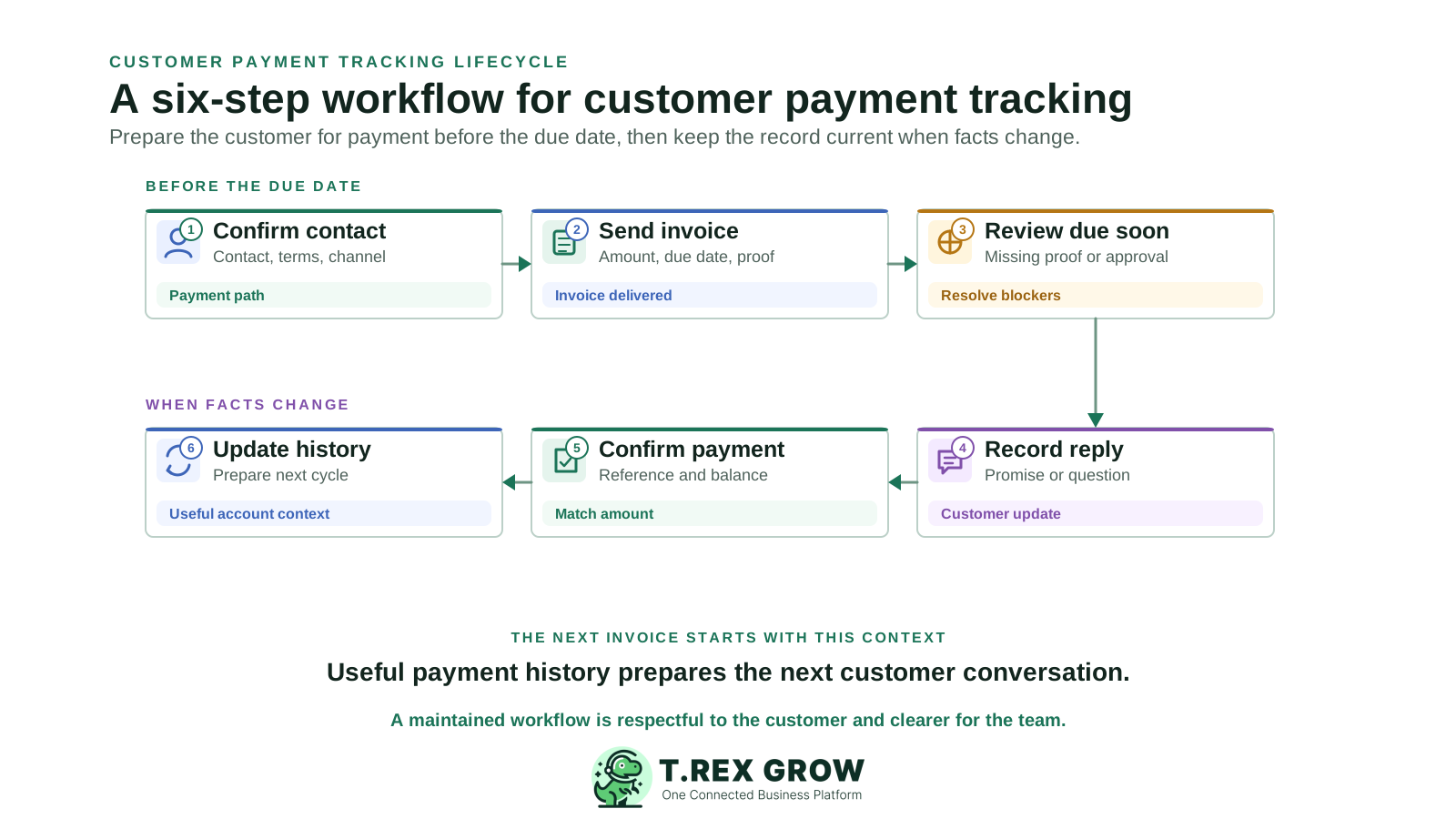
Six-step customer payment tracking lifecycle from confirming the billing contact to updating customer payment history after payment confirmation
1

Confirm the payment path before sending the invoice: identify the billing contact, payment approver where known, preferred channel, agreed term, and any document or reference the customer needs to recognise the charge.

2

Send the invoice with the right context: make the invoice number, amount, due date, source reference, and supporting documents easy for the customer to identify and easy for the team to retrieve later.

3

Review important invoices before the due date: check for missing documents, requested statements, delivery questions, purchase-order issues, or customer approval steps that could delay payment unnecessarily.

4

Record the latest customer reply and next action: capture the promise date, query, exception, requested document, responsible person, and next review date in the same payment record.

5

Confirm payment evidence and remaining balance: match the received amount and reference to the invoice, keep partial payments or deductions visible, and resolve any mismatch before closing the position.

6

Update useful customer payment history: retain practical context for the next cycle, such as the preferred contact, common timing, recurring blocker, and successful action, without turning notes into an uncontrolled archive.

Mistakes

Customer payment tracking mistakes that create avoidable friction

The aim is not to chase every customer more often. It is to make payment interactions timely, factual, and informed by the relationship and the actual payment position.

Most issues are not tax knowledge problems. They are workflow control problems.

Common

Contacting the relationship owner instead of the billing contact

A sales contact may be helpful but not responsible for payment. Confirming the right billing path early reduces unnecessary forwarding, awkward reminders, and delays caused by sending the invoice to the wrong person.

High risk

Waiting until the due date to discover a blocker

If the customer needs a statement, delivery proof, purchase-order reference, or corrected detail, a due-soon review is usually more constructive than a first reminder after the date has passed.

Common

Recording only the last reminder date

The team also needs the customer reply, any promise date, the reason for a delay, the next action, and the person responsible. A reminder timestamp alone does not explain the current situation.

High risk

Treating a payment promise as a completed payment

A promise is useful planning information, but it should remain separate from payment confirmation. Review it when the promised date passes and keep the balance open until evidence is matched.

Common

Closing a partial payment without a recovery plan

A part payment can be progress, a deduction, an allocation issue, or the start of a dispute. Keep the remaining balance, reason, owner, and next step visible.

High risk

Starting each invoice cycle with no customer context

When useful history is not retained, staff repeat the same questions about contacts, approvals, and documents. Capture practical patterns while keeping the record focused on actions that help the next cycle.

Best practices

Best practices for a smoother customer payment journey

The strongest process is respectful to the customer and clear to the team. It gives people enough context to act early, explain the invoice accurately, and follow through on the next action.

Do this

Confirm the payment path as part of customer setup

For a new customer or a significant invoice, confirm the billing contact, payment requirements, preferred channel, and any purchase-order or evidence requirement before the invoice is due.

Do this

Use due-soon checks to remove friction

Focus on customers who may need a document, clarification, internal approval, or statement. The point is to make payment easier, not to send generic messages earlier.

Do this

Keep customer communication factual and specific

Reference the invoice, amount, due date, and requested next step. Record the reply so that a colleague can continue the conversation without asking the customer to repeat themselves.

Do this

Separate an agreed term from a payment expectation

Retain the formal due date while recording a later expected date only when there is a credible customer update. Review expired expectations rather than letting them silently become the forecast.

Do this

Make payment confirmation a controlled step

Match the payment reference and amount to the invoice before closing it. Use a clear path for partial payments, deductions, disputes, and unverified customer claims.

Do this

Use history to prepare, not to stereotype

Keep actionable context about a customer's payment process, but do not rely on assumptions. Treat each new invoice as a current relationship and update the record when facts change.

The best practice is to make the next action clear before the situation becomes urgent.

Solution

How TREX Grow can support a connected customer payment workflow

After the team agrees the customer payment workflow, TREX Grow can help keep invoice, customer, sales-document, payment, and operational context closer together. The goal is a clearer shared record that lets each person understand the current customer payment position and take the next sensible action.

Operations work better when records and next actions are connected

Keep customer and invoice context connected

Bring the payment conversation closer to the customer record, invoice details, and commercial references so staff spend less time rebuilding why the customer is being contacted.

Make payment work visible across roles

Help finance, sales, and operations share the current payment position, internal blocker, or customer request instead of relying on a private inbox or memory.

Support consistent operational handovers

Use a shared record to make the last meaningful customer interaction, next action, owner, and relevant document context easier for the next person to understand.

TREX Grow Operations Hub

Retain a useful payment trail

Keep payment activity, document references, and operational notes available when the team needs to confirm a balance, answer a customer question, or review the next invoice cycle.

Build better collection conversations

When the workflow is maintained consistently, managers can review current customer commitments and blockers instead of asking the team to reconstruct the payment picture from separate files.

Next step

Start with one customer account, not a giant cleanup

Choose a customer with an open invoice, a meaningful payment term, and a recent interaction. Map the billing contact, invoice context, due-date plan, latest reply, payment evidence, and next action. If the next person can understand the position without opening several files, the workflow is starting to work.

Explore how TREX Grow works

It is the repeatable process a business uses to follow a customer payment journey from billing contact and invoice delivery through due-date readiness, customer replies, payment confirmation, and useful history for the next invoice cycle. It connects relationship context to the payment record.