The tracker only shows the invoice date and amount
An issue date and total do not tell the team whether the customer has acknowledged the invoice, promised a payment date, raised a question, or needs another document.

Payment tracking works when the team can see more than an invoice total. This guide shows how to connect the amount due, payment expectation, owner, evidence, exception, and next follow-up in one practical routine.
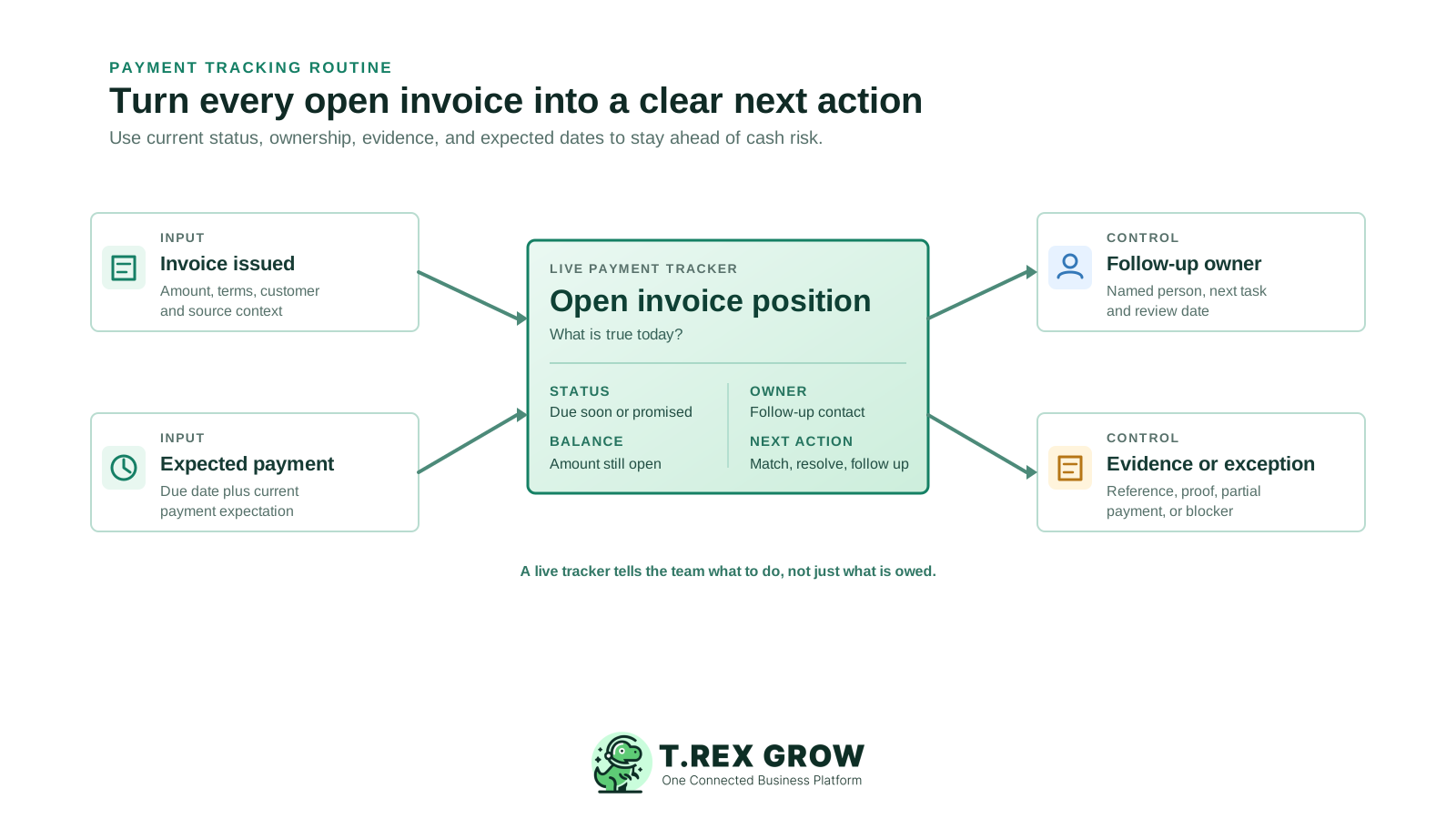
Payment tracking usually fails quietly. The invoices may exist, but the information needed to decide what to do next—who owns the follow-up, when payment is expected, what was promised, and what evidence has arrived—is scattered or missing.
Operational pressure
When records live in different places, the person responsible has to reconstruct what happened before they can make a confident decision or follow up.
An issue date and total do not tell the team whether the customer has acknowledged the invoice, promised a payment date, raised a question, or needs another document.
When nobody is clearly responsible for an invoice before or after its due date, follow-up becomes reactive and depends on who happens to notice the problem.
A customer may promise payment, request a statement, ask for delivery proof, or dispute a line item through email or WhatsApp. Without a visible note and next action, the reply is easy to lose.
Marking an invoice as paid after a partial amount arrives can remove the balance, payment reference, deduction reason, and remaining collection action from view.
A bank reference, receipt, remittance advice, or customer claim may exist without being linked to the correct invoice. The team then chases a customer who may already have paid.
If the business relies only on invoice issue dates or old spreadsheets, expected collections can become unrealistic as customer promises, disputes, and payment timing change.
Treat the tracker as a live operating record, not a monthly list. Each open invoice should carry enough context for the next person to understand its payment status and take the next sensible action without searching through messages.
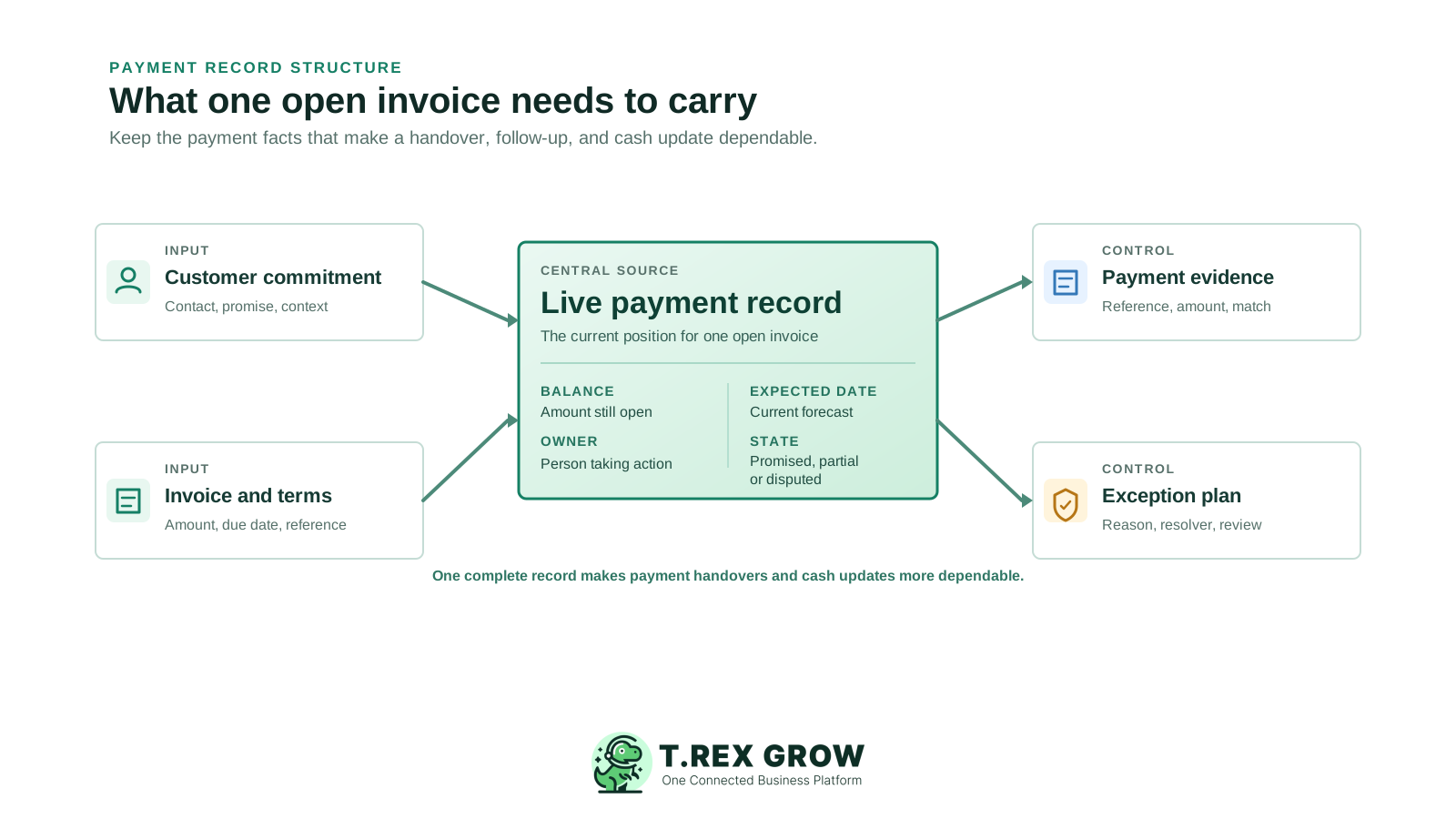
Record the invoice number, customer, contact, amount, currency where relevant, issue date, agreed terms, source document, and any information the customer needs to recognise the charge.
Keep the contractual due date separate from the current expected payment date. The expected date should change only when the team has a reliable reason, not because an invoice has been ignored.
Use practical states such as not due, due soon, follow-up sent, payment promised, partially paid, paid pending match, disputed, and resolved. The labels should guide the next action.
Every open balance needs a named person responsible for the next contact, check, escalation, or internal task. If responsibility moves, record the handover rather than relying on memory.
Capture the payment reference, date received, amount, supporting proof, and any allocation decision. Keep a customer statement or remittance reference close to the record when it helps resolve questions.
For a dispute, deduction, missing purchase order, delivery query, or request for more time, record the reason, the person needed to resolve it, and the date the team will revisit it.
The aim is not a complex finance dashboard. It is one clear view that lets an owner understand the current state of each open invoice and act without rebuilding the history.
| Field | What to record | Why it helps |
|---|---|---|
| Invoice context | Invoice number, customer, contact, amount, source reference, and agreed terms. | Makes the payment request recognisable and easier to verify. |
| Due and expected dates | The formal due date plus the latest credible expected payment date. | Separates an agreed deadline from the current collection forecast. |
| Payment state | A concise state such as due soon, promised, partial, disputed, or resolved. | Lets the team prioritise the correct next action. |
| Owner and next action | The named person, next task, and next review date. | Prevents invoices from waiting for someone to remember them. |
| Evidence and balance | Payment reference, amount received, remaining balance, and relevant proof. | Avoids duplicate chasing and makes partial payments visible. |
| Exception note | Dispute reason, missing document, promise, escalation, or internal blocker. | Turns a vague delay into a defined recovery path. |
Use the same short routine whenever an invoice is issued, comes close to its due date, receives a customer reply, or receives payment. The routine gives the team a way to update facts and decide what happens next.
Record the current facts in one shared place.
Confirm what is known and what needs attention.
Make the next decision or follow-up accountable.
Complete the next task and record the outcome.
Refresh the shared view when facts change.
A dependable workflow keeps the shared record and the next action aligned.
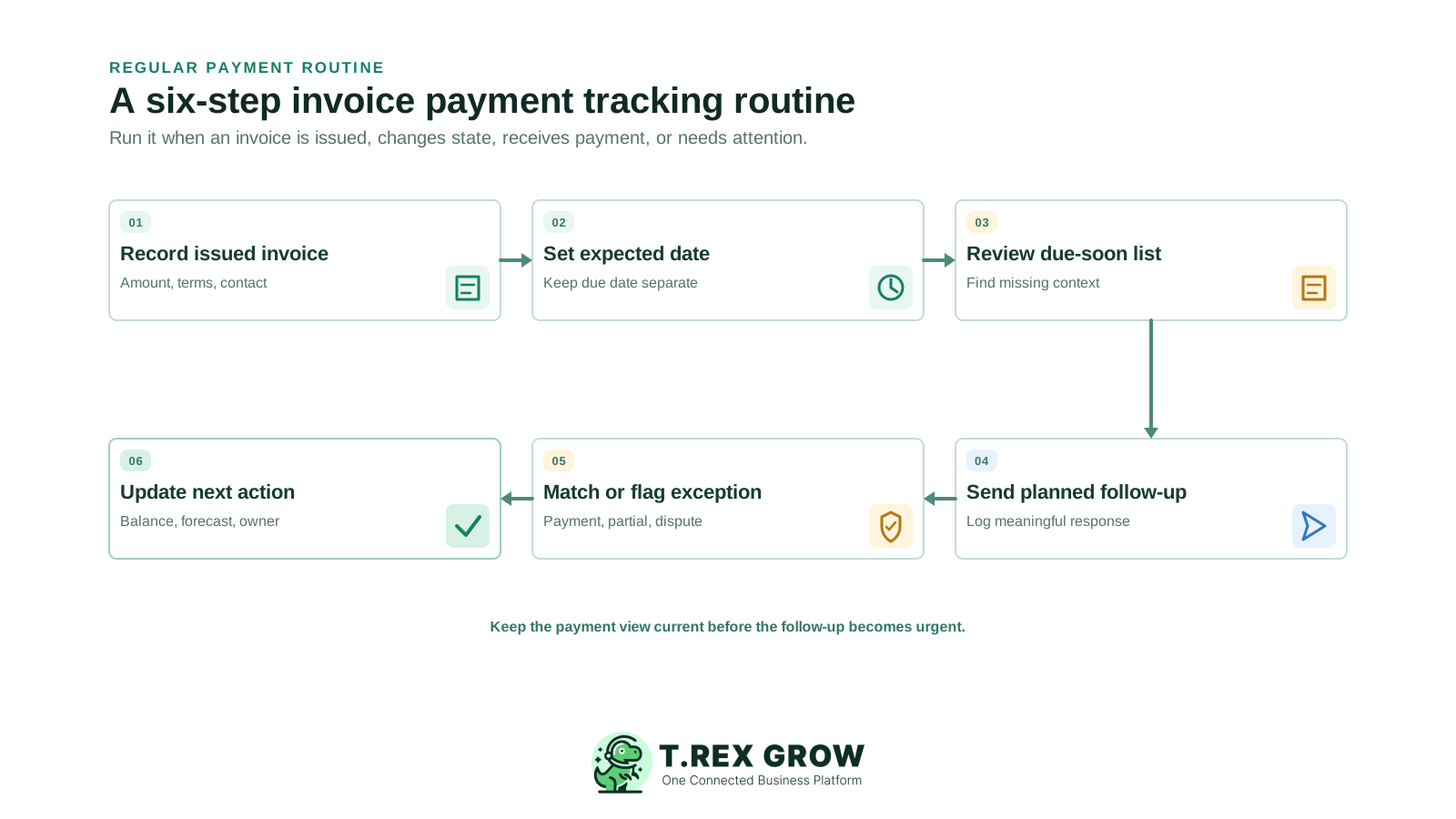
Record the issued invoice while the context is fresh. Include the customer contact, amount, due date, agreed payment terms, relevant source document, and the person who will own the first follow-up.
Set an expected payment date only when there is a credible basis for it, such as the agreed terms or a customer commitment. Keep it separate from the formal due date so the team can see both the obligation and the current forecast.
Review invoices that are due soon, not only those that are already overdue. Check whether the customer has the invoice, whether any supporting document is missing, and whether a reminder or internal task is needed.
Send the planned follow-up and log the outcome. Record a delivery confirmation, customer reply, payment promise, request for information, or escalation rather than leaving the conversation in a personal inbox.
Match payment evidence or flag an exception. Apply the amount received to the right invoice where appropriate, retain the reference, and clearly label a partial payment, dispute, deduction, or unverified customer claim.
Update the remaining balance, expected collection date, cash-flow outlook, owner, and next action. Close the record only when the payment position is genuinely resolved, not simply because a reminder was sent.
Most collection problems are not caused by a single late invoice. They grow when the tracking routine cannot tell the team what is true now, what still needs checking, and who will take the next action.
Recurring issues usually point to workflow-control gaps, not one isolated data-entry mistake.
A payment tracker should make due-soon work visible. Early checks can uncover a missing purchase order, delivery proof, contact change, or customer question before the due date passes.
The due date is an agreed deadline, not always a current prediction. Record a separate expected payment date when a reliable update is received, and revisit it when that expectation changes.
A partial payment, short payment, deduction, or unverified claim needs its own state and next action. Otherwise the remaining balance disappears from operational view.
A copied email or WhatsApp message is not a payment state. Log the meaningful outcome, such as a promise date, request for documents, dispute, or no response.
Sales may know the relationship while finance knows the balance. A useful routine gives both teams a shared view of the invoice, customer response, responsibility, and next action.
A dispute or missing document should have a reason, owner, next review date, and recovery path. A vague note makes it easy for the same issue to be rediscovered repeatedly.
The strongest practice is consistency. Small, visible updates made at the right moments give the business a more useful collection picture than a large overdue-report cleanup at the end of the month.
Avoid multiple private trackers. Give sales, finance, and management a shared record of the invoice status, outstanding amount, owner, expected date, and next action.
Ageing remains useful, but prioritise invoices with a missing document, a broken promise, a high balance, a due-soon date, a customer dispute, or no assigned owner.
Refer to the invoice, amount, due date, relevant proof, and the action you need. A clear request makes it easier for the customer to confirm a date, raise a real issue, or identify a mismatch.
Record the amount received, remaining balance, reference, reason for any difference, and who will follow up. Do not let a partial settlement hide the open exposure.
Define how the team responds when a customer says the invoice is missing, the price is disputed, a purchase order is needed, proof is requested, or payment will be late.
When a customer pays, promises a date, disputes an amount, or misses a commitment, update the expected collection view and share material changes with the people managing cash decisions.
The best practice is to make the next action clear before the situation becomes urgent.
After the routine is clear, TREX Grow can help the team keep invoice and payment information closer to the customer and sales context instead of rebuilding the payment picture from separate files.
Give the team a connected place to view the customer, invoice, related sales document, amount, and status when a payment question or follow-up arises.
Help users distinguish records that are due soon, awaiting a reply, partially paid, disputed, or ready for a next action instead of relying on a personal reminder list.
Keep payment references, notes, balances, adjustments, and related records close enough to the invoice that the team can understand what happened without reconstructing the history.
Give sales, finance, and operations clearer context for a customer payment conversation, while making ownership changes and internal actions easier to follow.
More current invoice and payment information gives management a more practical view of expected collections and the work needed to protect cash flow.
Choose one group of open invoices and give each record a clear state, owner, expected date, evidence, exception note, and next action. Once the team can maintain that view consistently, payment tracking becomes easier to trust and easier to improve.
Invoice payment tracking is the ongoing process of recording what is due, what the customer has said or paid, what remains outstanding, and who will take the next action. It should give the business a current view of payment status, not only a historical list of invoices.