The task belongs to everyone
A message sent to sales, purchasing or finance as a group does not tell one person to act.

Accountability becomes visible when each open item has a person who owns the next action, a source record, a clear result and a way to raise a blocker. Use one recurring handoff to build that habit before adding more reports or meetings.
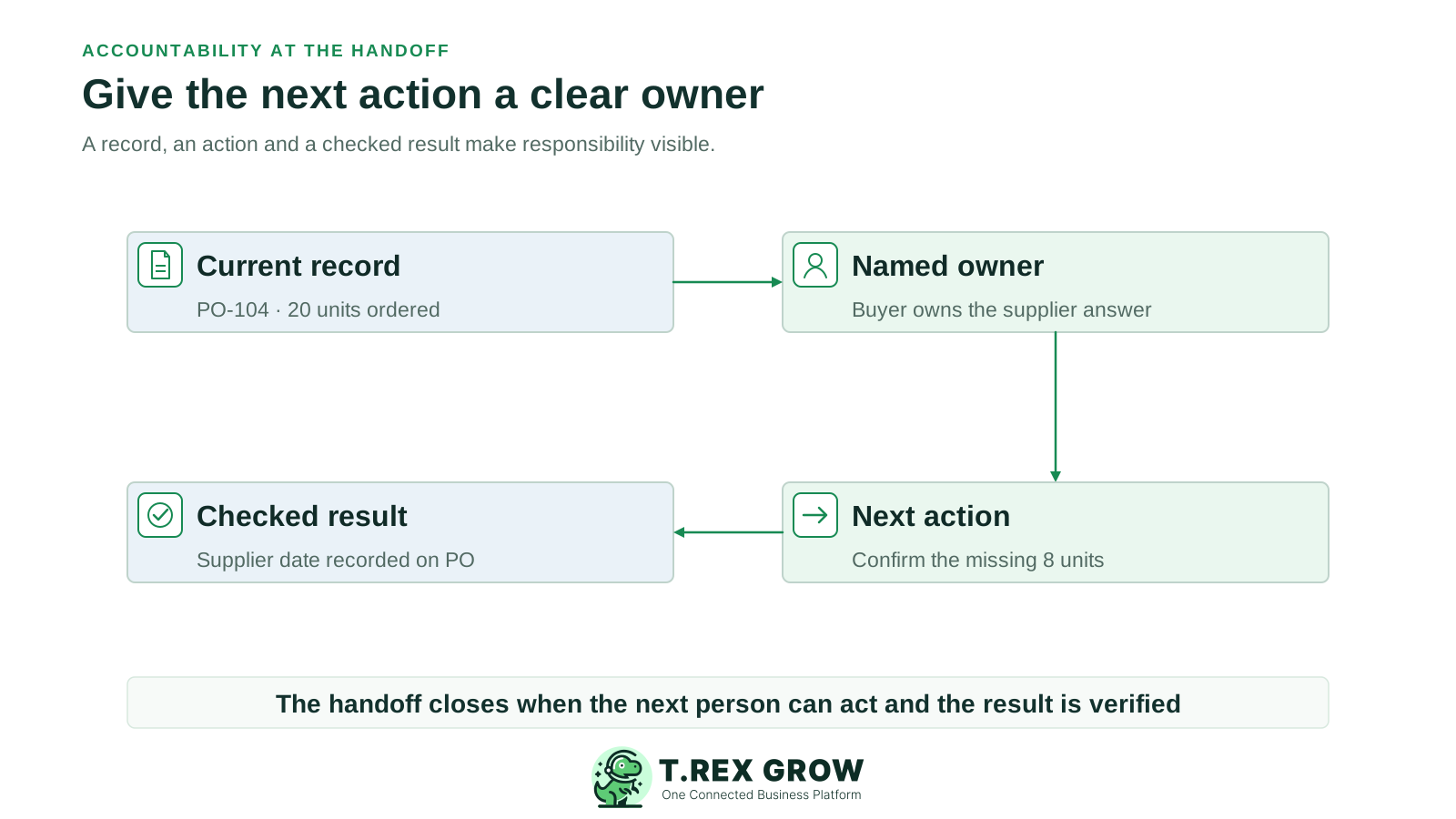
A quotation can be prepared, a PO approved or an invoice sent while the business outcome remains unfinished. Each person may believe their own step is complete. The gap appears at the transfer: who has the next action, what information did they receive and how will anyone know it happened?
Operational pressure
When records live in different places, the person responsible has to reconstruct what happened before they can make a confident decision or follow up.
A message sent to sales, purchasing or finance as a group does not tell one person to act.
The receiving person must ask for the current record, decision or supporting detail before work can continue.
One team means 'sent for review'; another means 'approved'; the customer or supplier outcome may still be pending.
The owner waits for a reply or correction, but nobody has an agreed time to review and unblock the item.
These roles can be held by the same person in a small firm, but the responsibilities should still be clear. A process owner improves the whole route. The next-action owner moves one open item. A decision-maker authorises a specific choice when policy requires it. None of these roles automatically proves that the next operational step happened.
A team can help, but one person should be able to explain the current state and next move.
The person doing the work may need a separate authorised decision before releasing a commitment.
Ask them to improve repeated handoff problems rather than personally chase every transaction.
| Role | Question to answer | Example |
|---|---|---|
| Process owner | Who fixes repeated gaps in the overall workflow? | Operations lead reviews recurring order-to-receipt delays. |
| Next-action owner | Who will move this item now? | Buyer confirms the eight units still owed by a supplier. |
| Decision-maker | Who can authorise the proposed commitment or exception? | Owner decides whether a changed PO may be issued. |
A lightweight accountability record need not be a long form. It should let a colleague see the underlying business fact, who moves it next, when it needs attention and what will count as complete.
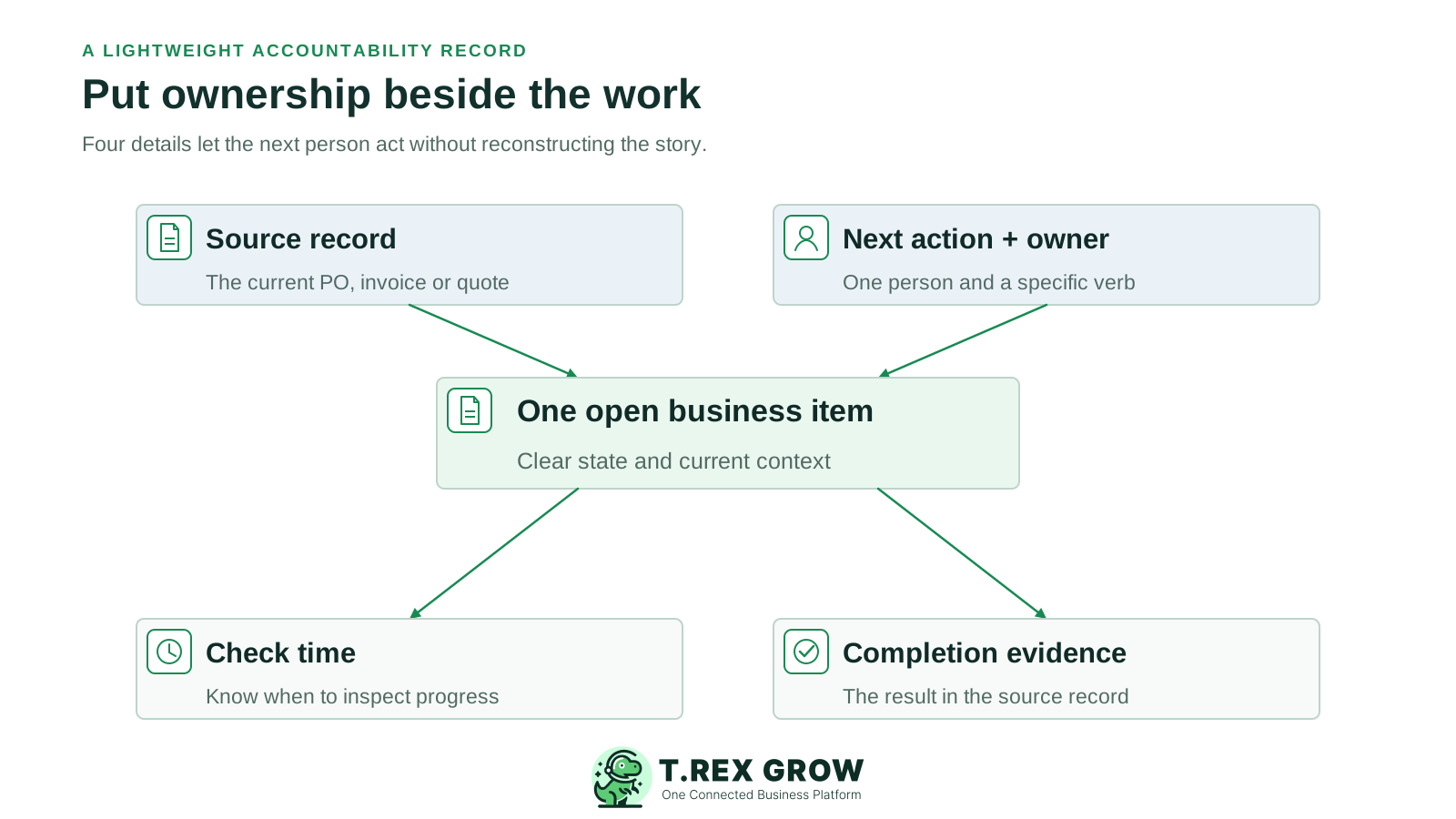
Link the quotation, PO, stock entry or invoice that explains the work; avoid an orphaned chat instruction.
Write 'Aisha to confirm the remaining eight units with Supplier B' rather than 'follow up purchase'.
Choose a realistic date or review point. It is a prompt to inspect progress, not a promise that the outcome is already complete.
State what closes the loop: an updated record, a confirmed delivery date, a recorded receipt or a verified payment entry.
Start with a handoff that regularly requires someone to ask 'who is dealing with this?' The steps below are an operating routine for an SME, not a software feature list or a mandatory standard.
Record the current facts in one shared place.
Confirm what is known and what needs attention.
Make the next decision or follow-up accountable.
Complete the next task and record the outcome.
Refresh the shared view when facts change.
A dependable workflow keeps the shared record and the next action aligned.
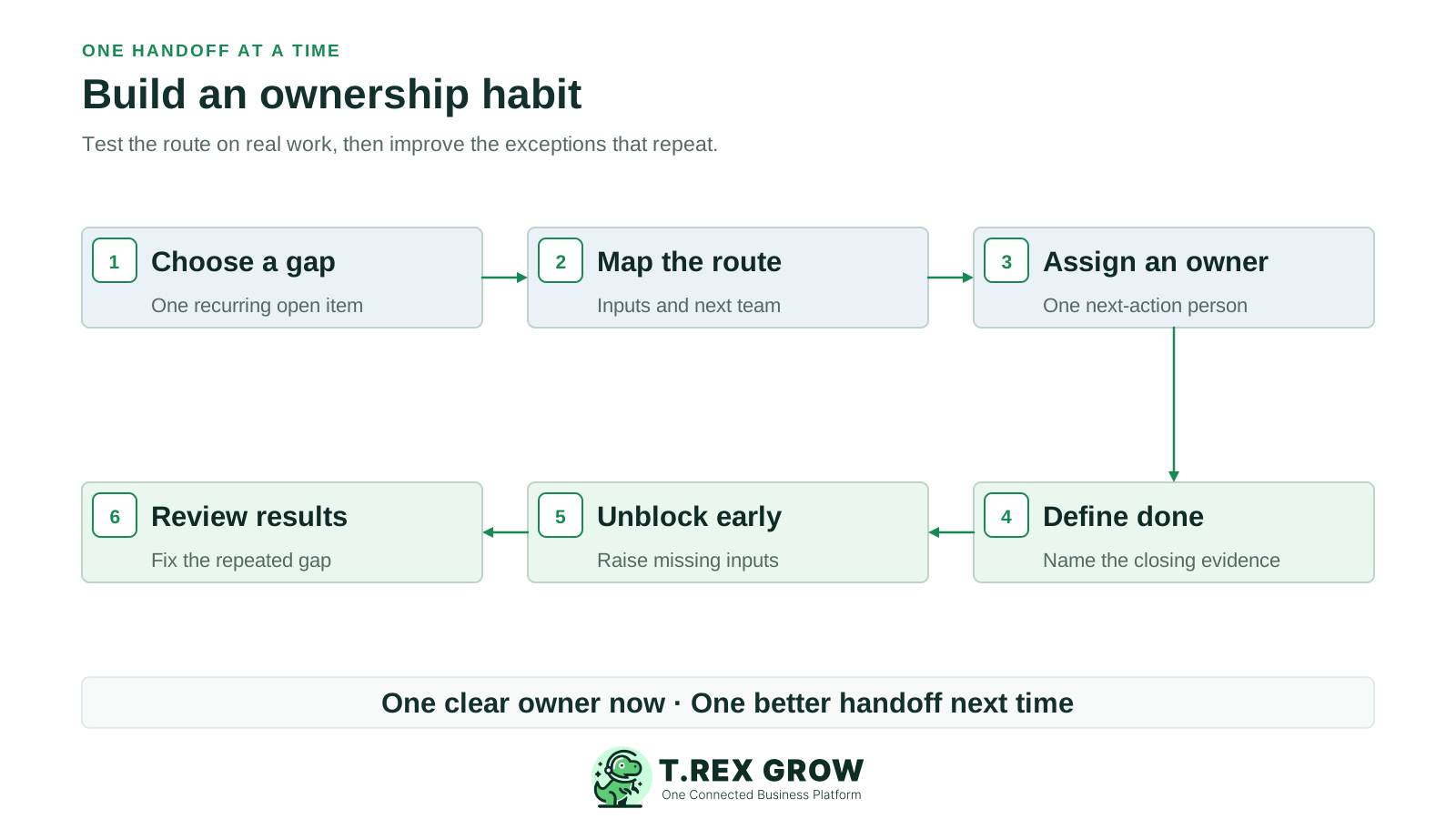
Choose one repeated gap, such as a partial delivery, an overdue customer invoice or a quotation waiting for a decision.
Map where the current record starts, who supplies its inputs and who needs its output.
Assign one person to the next action on each open item, with the decision-maker named separately when required.
Define what completed means and which record, response or receipt will prove it.
Agree how the owner raises missing information, absence or a decision beyond their authority before the check time passes.
Review a small sample of open, blocked and recently closed items; change the handoff rule if the same failure repeats.
A sender has not finished the transfer merely by posting a message. The receiving owner needs the current record, the specific action, a relevant check time and the right to accept or raise a blocker. Keep the handoff proportional to the value and risk of the work.
| Weak handoff | Accountable handoff | What to check |
|---|---|---|
| 'Please handle the PO.' | 'Nadia to confirm the remaining eight units on PO-104 with the supplier by Tuesday.' | PO and latest receipt show 20 ordered, 12 received. |
| 'Invoice sent.' | 'Finance to check that the final invoice was issued from the approved sales record.' | The issued invoice matches the agreed customer terms. |
| 'Payment chasing.' | 'Sales to contact the customer about invoice INV-205 and record the next promised date.' | A follow-up note and invoice balance are current; payment is still verified separately. |
Imagine a Malaysian trading SME ordered 20 units but received 12. The warehouse records the 12 actually received. The buyer owns a supplier follow-up for the remaining eight. Finance reviews the supplier invoice against the PO and actual receipt before its own payment step. The numbers and names here are illustrative; the point is that each team owns a different fact and passes clear evidence to the next.
The receiving person records the 12 units and any condition issue; an approved PO is not proof that 20 units arrived.
The buyer records who will ask about the remaining eight, the agreed follow-up date and the supplier's response.
The supplier invoice and eventual payment require their own review; the buyer's follow-up does not settle those decisions.
If partial receipts repeatedly arrive without a named follow-up, improve the handoff rule rather than only chasing this PO.
More status messages can create the appearance of control while leaving the real decision or next action unclear.
Recurring issues usually point to workflow-control gaps, not one isolated data-entry mistake.
'Finance will handle it' hides who has accepted the specific item.
Authorising a PO does not record a delivery; approving an invoice does not prove the money moved.
A message may be useful for coordination, but the record of the decision or transaction should be findable with its source.
A task marked done can still leave an unmatched document, unconfirmed supplier response or unpaid balance.
If authority, information or capacity is missing, record and resolve that blocker instead of treating it as silent personal failure.
A short daily or weekly review can reveal whether the ownership rule works. Pick a cadence that fits transaction volume and risk; the examples below are suggested management checks, not universal targets.
Find records or follow-ups with no clear next-action owner; assign or close them deliberately.
Ask what changed, what is blocked and when the next decision will happen rather than just shifting a due date.
Look for incomplete inputs or misleading completion rules that cause the same job to return.
Where several items stall at one interface, improve the process design, access or training.
The best practice is to make the next action clear before the situation becomes urgent.
The business still decides its owners, authority rules and review cadence. TREX Grow can keep supported sales, purchasing, stock and payment records connected, while permissions, document states and linked reminders help teams act from the underlying work. Availability varies by module, plan and user access.
Open the relevant quotation, PO, stock entry or invoice to inspect its current facts before making a follow-up request.
Supported reminders can carry an assignee, description, date and link to a sales or purchasing document. Check the source-document permissions for that person.
A purchase order, actual stock receipt, supplier invoice and payment are separate steps. Use the relevant record to verify each one.
Dashboard attention and document status can point staff toward work; they do not automatically decide responsibility, resolve exceptions or guarantee completion.
Choose one open item this week. Write its source record, one next-action owner, a check time and the evidence that will close it. Then review whether the next person could act without reconstructing the story.
It means a person can explain the current state of an open item, the next action they own, the decision authority needed, the check time and the evidence that will show the action is complete. It also means the business fixes recurring process gaps rather than only blaming individuals.