The need is never converted into a controlled request
A message such as 'please order this today' does not explain the business reason, scope, owner, required date or authority route.

Procure-to-pay is the operating chain that turns an approved business need into a supplier commitment, accepted goods or services, a verified payable, settlement evidence and a clean accounting handoff. The workflow works when every stage has an owner, a decision and a record that the next team can trust.
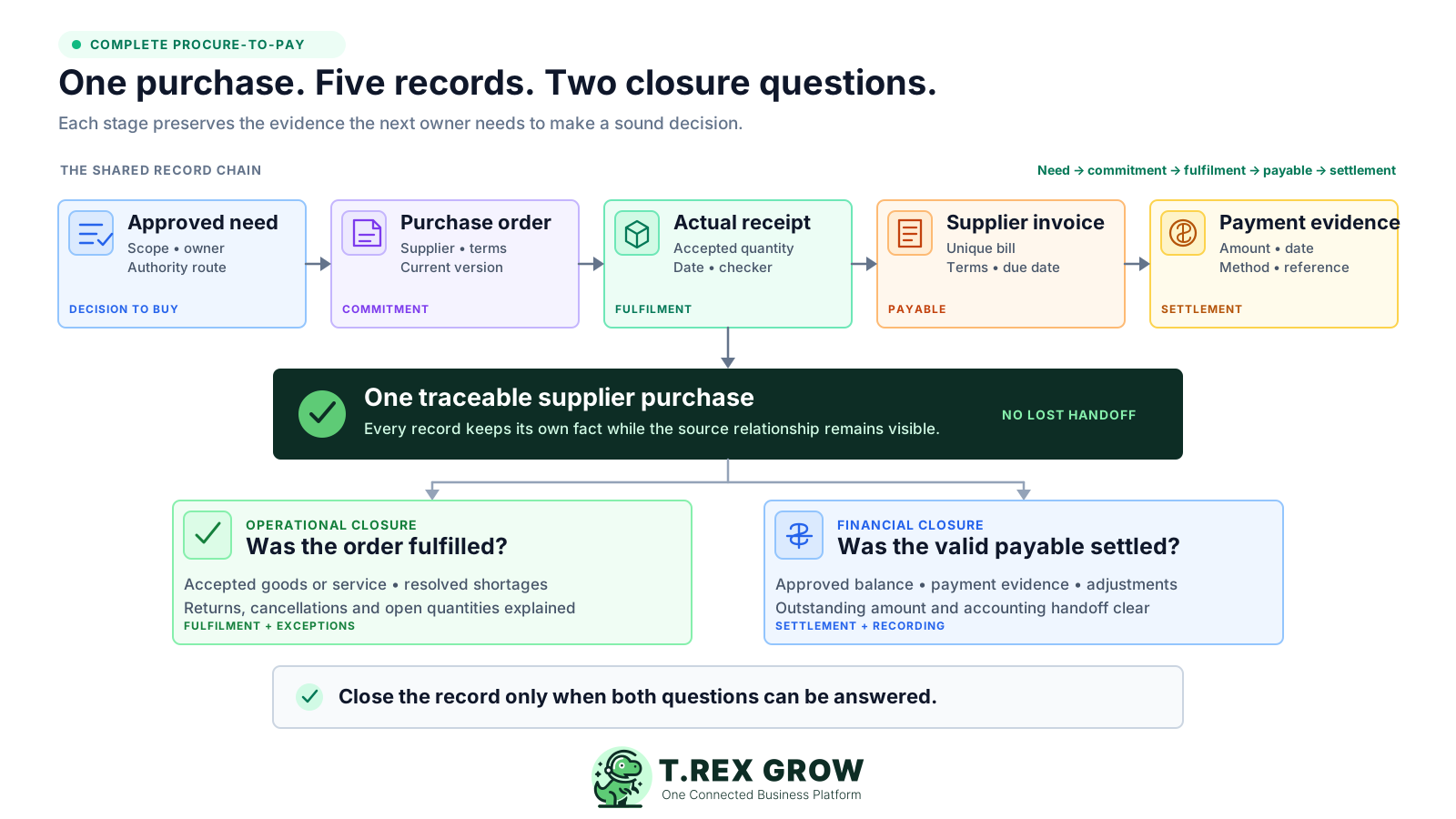
A supplier purchase may look simple to the person placing the order, but it crosses business need, authority, supplier terms, receiving, accounts payable, payment and accounting. Each handoff can lose context unless the SME deliberately connects the records.
Operational pressure
When records live in different places, the person responsible has to reconstruct what happened before they can make a confident decision or follow up.
A message such as 'please order this today' does not explain the business reason, scope, owner, required date or authority route.
The chosen supplier, quoted terms and person allowed to commit the company are not recorded as separate facts.
Receiving and finance cannot return to the same current commitment when goods arrive or the supplier invoice is submitted.
The SME updates stock or accepts a service without recording what actually arrived, when it was checked or what remained outstanding.
Accounts payable must reconstruct the purchase order, receipt, terms and exceptions from separate emails and attachments.
A paid invoice may still have an unresolved return, while a fully received order may still have an open supplier payable.
Procure-to-pay is narrower than the full source-to-pay lifecycle and broader than purchase-order administration. For an SME, the useful boundary is the chain from an approved purchase need through fulfilment, supplier invoice, settlement evidence and the accounting handoff.
Market research, tendering, supplier onboarding and contract negotiation can sit upstream. Keep their chosen supplier and agreed terms available to the P2P process.
The SME should define which purchases require a formal PO and how approved exceptions such as rent, utilities or urgent low-value items are documented.
Goods may use a receiving record and quantity check; services may require a named owner to confirm the agreed milestone or deliverable.
The supplier invoice should be checked for uniqueness, supplier identity, commercial agreement, actual fulfilment, amount, due date and unresolved differences.
The authorised bank or payment channel moves the money. The P2P record should preserve who approved it, what was paid, when, how and against which payable.
The order is operationally complete when fulfilment and exceptions are resolved; the payable is financially settled when the valid supplier balance is cleared and recorded.
A reliable workflow does not depend on one giant form. It gives purchasing, receiving and finance a clear question to answer and a compact evidence packet for the next owner.
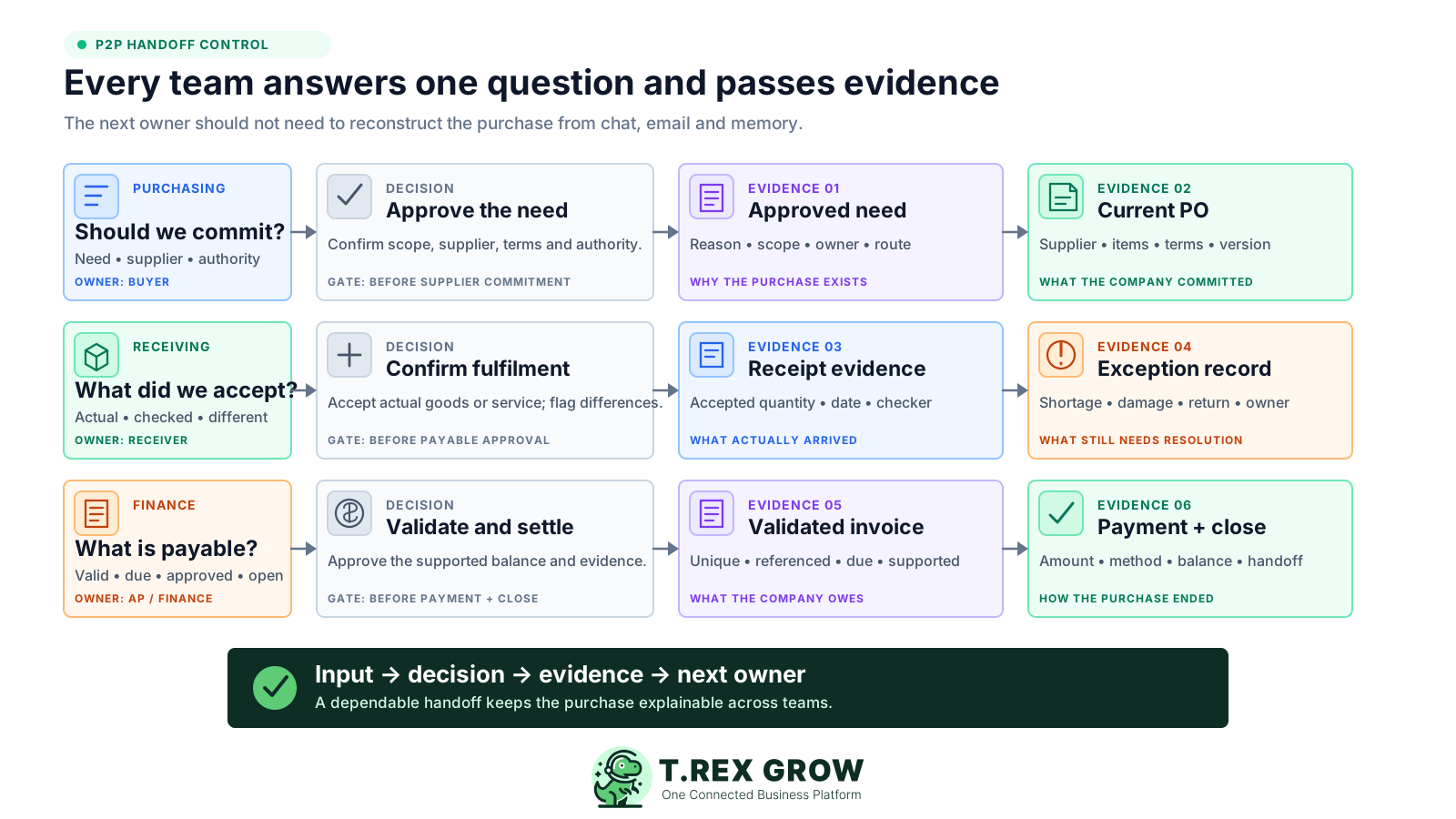
Business need, required date, scope, budget or authority owner, supplier context and agreed commercial terms.
Whether the purchase is valid, who may approve it and which current commitment can be issued to the supplier.
The quantity or service actually accepted, dates, checker, delivery or milestone reference and any discrepancy.
Whether the supplier invoice is unique, supported, correctly stated, due and ready for the authorised payment route.
Paid amount, date, method, reference, approver or person in charge, supporting attachment and remaining balance.
Resolved exceptions, final operational position, final payable position and the records handed to accounting.
The exact forms and approval levels should fit the SME's size and risk, but the operating logic should remain visible from the first request to the final accounting handoff.
Record the current facts in one shared place.
Confirm what is known and what needs attention.
Make the next decision or follow-up accountable.
Complete the next task and record the outcome.
Refresh the shared view when facts change.
A dependable workflow keeps the shared record and the next action aligned.
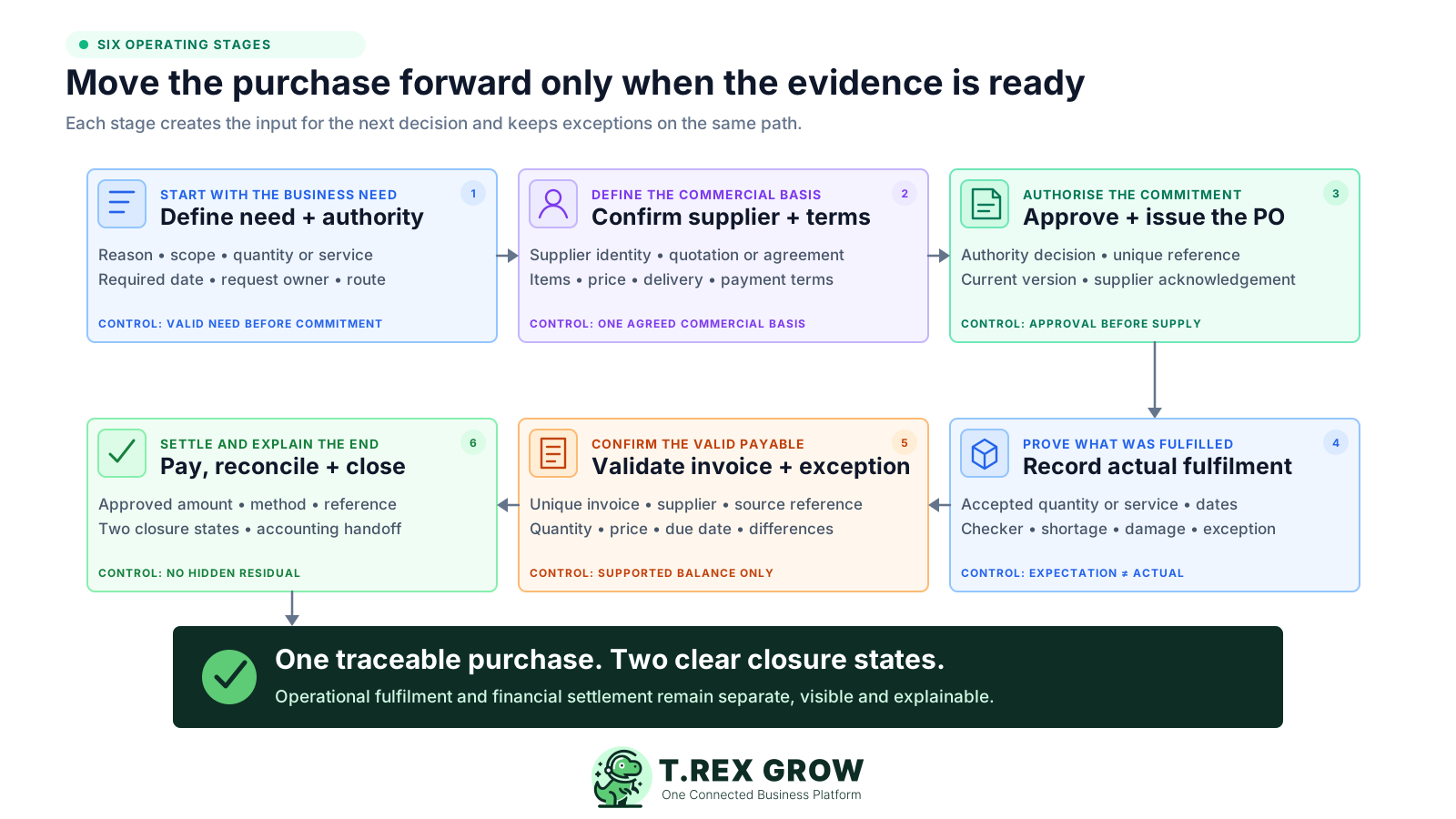
Define the need: record what is required, why it is needed, the quantity or scope, required date, request owner and the authority or budget route that applies.
Confirm the supplier and terms: verify the supplier identity, quotation or agreement, item or service description, quantity, price, delivery expectation, payment terms and any relevant tax or currency context.
Approve before commitment: route the purchase to a person with the right authority before the supplier is told to proceed, and retain the decision or approved exception.
Create and issue the purchase order: assign a unique reference, use one current version, send it to the supplier and retain any acknowledgement or requested correction.
Record actual fulfilment: confirm the goods or service received, record accepted quantities or milestones, dates and checker, and open an exception for anything missing, damaged or different.
Validate the supplier invoice: check the invoice is unique and compare its supplier, reference, descriptions, quantities, prices, dates, terms and totals with the current commitment and fulfilment evidence.
Authorise payment and record settlement: resolve differences first, use the SME's approved external payment procedure, then record the amount, date, method, reference and remaining balance.
Reconcile and close: confirm operational fulfilment and financial settlement separately, retain adjustments and supporting documents, and pass complete records into the accounting close.
A control gate is a short question that must be answered before the purchase moves forward. The SME can keep the gate proportionate to value, risk, urgency and team size without making every purchase bureaucratic.
Confirm the business purpose, scope, request owner and applicable approval or documented exception before the supplier proceeds.
Check supplier identity, item or service, quantity, price, dates, terms, version and delivery details before releasing the PO.
Record accepted goods or services independently of the ordered quantity and identify every shortage, damage or service gap.
Check the supplier invoice number, supplier, source reference, fulfilment evidence, descriptions, quantities, prices, dates, terms and totals.
Separate disputed amounts, confirm the approved amount and due date, and use the company's authorised payment procedure.
Confirm the order is fulfilled or properly cancelled, the valid payable is settled or adjusted, and the supporting records are retained.
The best practice is to make the next action clear before the situation becomes urgent.
The best test of a P2P workflow is not a perfect purchase. It is whether the team can preserve the original facts, assign the difference and reach a documented resolution when reality changes.
Record each accepted receipt separately and keep the remaining quantity, expected date and next owner visible.
Do not silently overwrite the PO or invoice. Record the difference, identify which document is wrong and obtain the appropriate correction or approval.
Keep the accepted quantity separate from the rejected quantity and connect any return, replacement or supplier credit evidence.
Hold payment while the invoice number, supplier, source purchase and prior entries are checked. Record the resolution instead of simply deleting the evidence.
Preserve the original purchase and payment history, then add the adjustment record that explains the changed payable.
Use a documented exception route with a reason, owner and after-the-fact review rather than letting the purchase bypass every control.
Most early improvements come from agreeing what each record means and who owns the next decision. More tooling cannot compensate for a workflow that treats every stage as the same fact.
Recurring issues usually point to workflow-control gaps, not one isolated data-entry mistake.
One row cannot preserve several receipts, invoices, payments, returns and decisions without overwriting history or creating dozens of ambiguous columns.
The approval becomes a retrospective signature instead of a decision about whether the company should make the commitment.
Ordered quantity is a supplier commitment; inventory should reflect the quantity actually received and accepted.
A supplier invoice does not prove that goods were accepted or a service milestone was completed.
Supplier name and amount are not enough. The team still needs the source commitment, fulfilment evidence, uniqueness check and payment authority.
A new receipt, invoice or payment should add to the record chain rather than replace the first event or its evidence.
Operational completion and financial settlement answer different questions and should remain independently reviewable.
A lightweight review rhythm keeps records current before month-end. The purpose is to surface missing owners, overdue actions and unexplained differences while they are still easy to resolve.
Capture new requests, supplier acknowledgements, receipts and supplier invoices in the agreed queue instead of leaving them in individual inboxes.
Review issued POs by expected date, outstanding quantity, exception, named owner and next action.
Review validated supplier invoices by due date, disputed amount, approval state, payment plan and remaining balance.
Track shortages, damage, mismatches, missing documents, returns and supplier disputes with a reason, owner and target resolution date.
Compare open orders, accepted receipts, supplier payables, payment evidence, adjustments and supplier statements with the accounting records.
Recheck PO exceptions, approval limits, role access, inactive suppliers and recurring workarounds as the business grows.
The best practice is to make the next action clear before the situation becomes urgent.
TREX Grow can connect the middle of the SME's procure-to-pay workflow without claiming to replace sourcing policy, bank controls or the final accounting close. Use the operational guide to define the process, then decide where connected records reduce re-keying and lost context.
Record supplier, assigned products, quantities, prices, expected delivery, terms, tax, discount, currency, delivery details and supporting attachments in a searchable PO.
Use the configured purchase-order request and approve path, or an intentional direct-finalisation path where the company's access design permits it.
Create stock entries from an approved or finalised PO and record the quantities actually received with receiving dates, references and evidence.
Carry supplier and item context into the supplier invoice while retaining its own number, dates, quantities, prices, terms and payable position.
Keep each paid amount, date, method, reference and optional attachment as a separate payment-history row instead of replacing the payable with one checkbox.
Review purchase-order receiving conditions independently from the supplier invoice's paid or outstanding position so each closure decision remains explainable.
Choose a recent supplier purchase with at least one imperfection, then trace its need, authority, supplier terms, PO, actual fulfilment, invoice review, payment evidence, exception resolution and two closure states. The missing links will show where your first workflow improvement belongs.
A procure-to-pay workflow is the operating chain used to turn an approved business need into a supplier commitment, accepted goods or services, a validated supplier invoice, authorised payment, settlement evidence and an accounting handoff. Each stage should have an owner, a decision and supporting records.