
Phase 1 Purchase Order Guide

Why Purchase Orders Matter for SMEs

A purchase order matters because it gives an SME one dated, authorised statement of what it intends to buy before the supplier acts. That shared commitment can guide the supplier, receiving team, finance team and owner—provided the business keeps the PO current and does not confuse it with receipt, invoice or payment evidence.

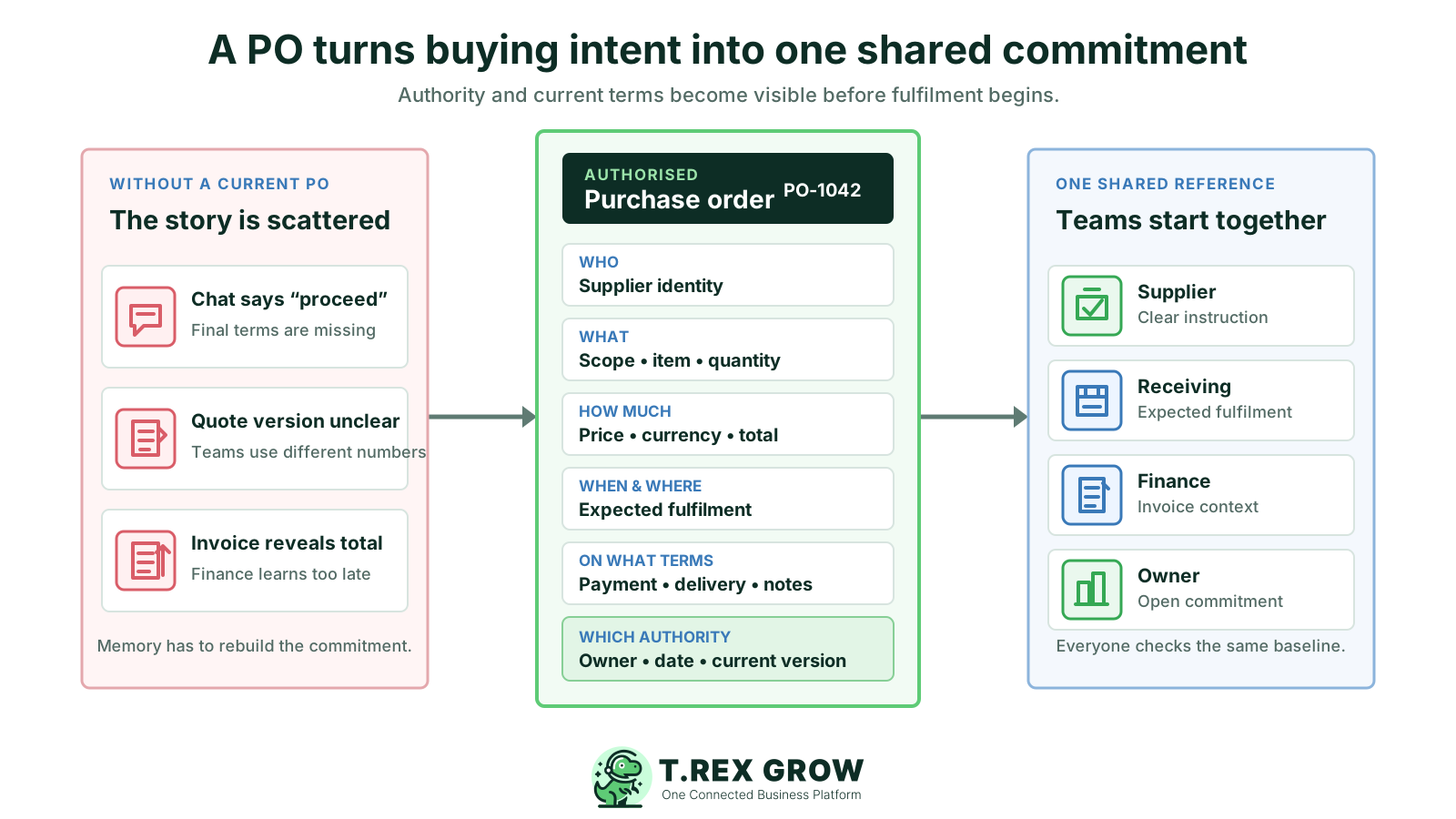
Comparison showing scattered chat, quotation and invoice information becoming one authorised purchase order that gives the supplier, receiving, finance and owner a shared reference
Problem

The real problem is an unclear supplier commitment

A missing PO is not only a missing form. It often means nobody can point to one authorised version of the supplier, items or services, quantities, prices, timing, delivery point and terms before the supplier starts work. Each team then discovers a different part of the purchase at a different time.

Operational pressure

The next action is easy to lose when context is scattered.

When records live in different places, the person responsible has to reconstruct what happened before they can make a confident decision or follow up.

Scattered recordsUnclear ownershipAvoidable surprises
High risk

The supplier acts on an informal message

A short instruction such as “please proceed” may not carry the final quantity, delivery address, price, currency, tax treatment, payment terms or contact person. The supplier fills the gaps from an earlier quote or conversation.
The current commercial version is unclear

A revised quotation, changed delivery date or substituted item sits in a later email while the buyer, supplier and manager still refer to the earlier numbers. There is no obvious baseline against which to explain the change.

Receiving has no expectation to test

The warehouse or service owner sees a delivery but not the authorised quantity, specification, location, due date or acceptance context. Actual fulfilment can be recorded only as an isolated event.

High risk

Finance sees the purchase too late

The supplier invoice becomes the first structured record. Finance must ask who requested the purchase, whether it was approved, which terms were current and whether the goods or service were actually accepted.

Management sees cash after commitment

Paid bills and posted invoices are backward-looking. Without a maintained list of open authorised orders, an owner can miss supplier commitments that have not yet reached invoicing or payment.

Education

Seven practical reasons purchase orders matter

The value of a PO comes from the operating questions it answers and the later records it can anchor. A template alone creates little value; the record must be authorised before supplier action, issued as the current version and connected to what happens next.

1. Authority becomes visible before commitment

The SME can connect the decision to buy with a named supplier and identifiable terms before the supplier ships goods or starts work. This turns approval into a preventive step rather than an after-the-event signature.

2. The supplier receives one clear instruction

A PO can state what to provide, how much, at what price and currency, where and when to deliver, which payment terms apply and who to contact when something is unclear.

3. Changes have a baseline

When quantity, scope, price or timing changes, the business can preserve the earlier issued version, record the reason and identify the replacement instead of editing history silently.

4. Receiving knows what was expected

The receiving team or service owner can compare actual fulfilment with an authorised expectation while keeping the receipt or acceptance record separate from the order.

5. Finance gets source context for the invoice

The PO gives finance a reference for the supplier, ordered lines, agreed prices and terms. It supports an invoice check but does not itself prove receipt, invoice validity or payment.

6. Open commitments become easier to see

A current open-PO list can show authorised purchasing commitments before invoices arrive. It improves forward visibility only when cancellations, partial fulfilment, remaining quantities and expected timing are maintained.

7. Ownership and follow-up become clearer

A PO number, current status, responsible buyer and expected date give the SME a practical reference for supplier follow-up, delivery exceptions, invoice questions and deliberate closure.

Education

Treat the PO as the expectation—not proof that everything happened

The purchase order records the authorised supplier-facing commitment. Later records answer different questions. Keeping those facts distinct prevents an SME from treating an order as evidence of delivery, an invoice as proof of acceptance or a payment entry as proof that the whole purchase is complete.

A purchase order is not a supplier invoice

The buyer issues the PO to state the intended purchase; the supplier issues its invoice to request payment for what it says was supplied. They serve different parties and moments in the transaction.

A purchase order is not a receipt

Ordered quantity is an expectation. The SME should record the goods or service actually accepted, including partial, rejected, returned, damaged or incomplete fulfilment.

A purchase order is not payment proof

An authorised order may show a future commercial commitment, but payment amount, due date, execution and settlement require their own invoice, approval and banking evidence.

Education

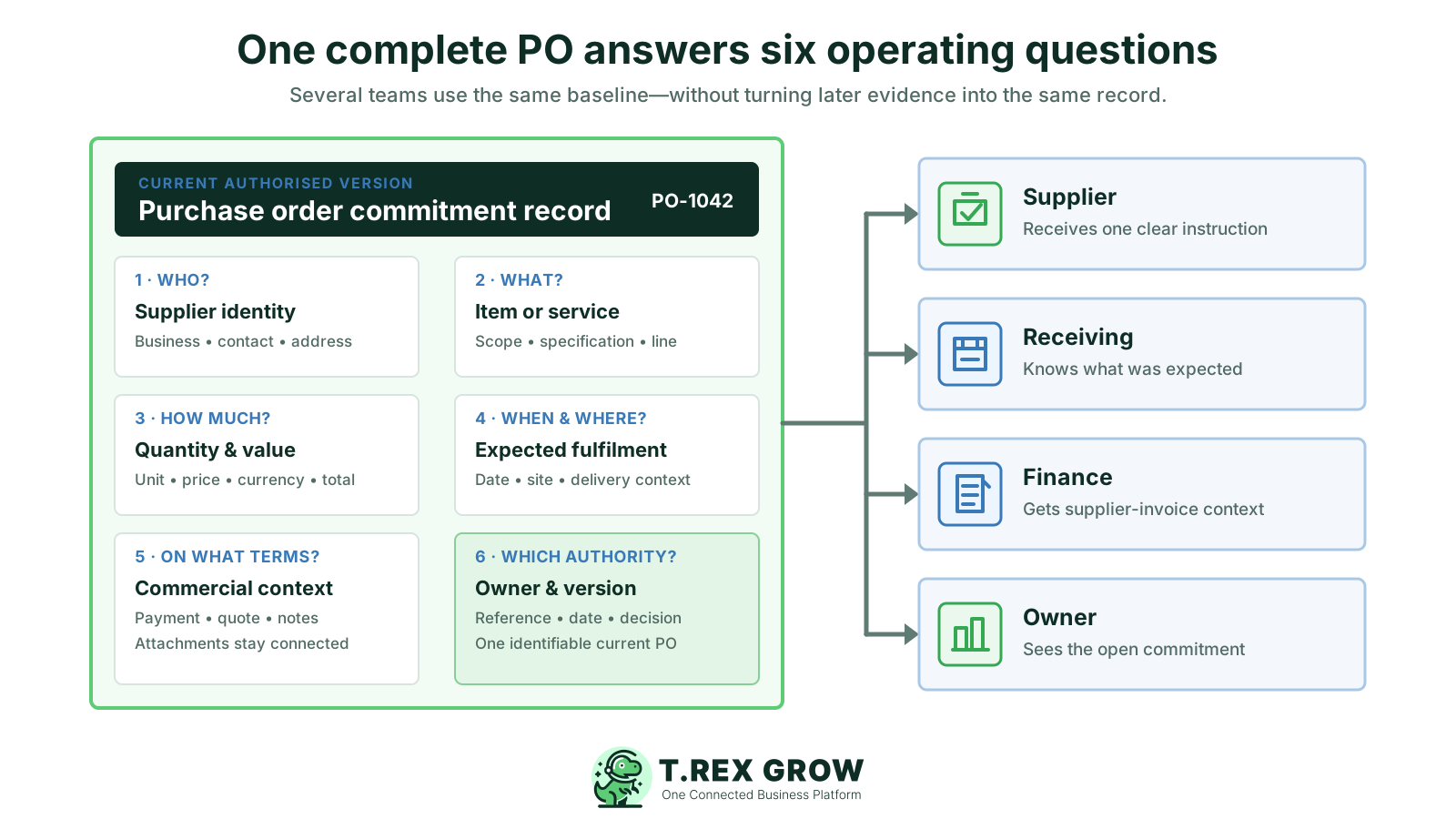
One complete PO answers six operating questions

A useful purchase order is specific enough for somebody outside the original conversation to understand the commitment. The exact fields can vary, but these six questions form a practical minimum for many ordinary SME purchases.

Purchase order record answering six questions about supplier, scope, quantity, price and currency, delivery, terms, ownership and current version for four business teams

Who is supplying?

Use the intended supplier identity and relevant contact or address so the order does not depend on a nickname, copied email thread or an employee's memory.

What is being bought?

Describe the product, service, specification, line item or scope clearly enough for the supplier and receiver to recognise the authorised requirement.

How much and in which currency?

Record quantity, unit, unit price, currency, discount, tax context and calculated total as appropriate. Do not let a quotation total hide the underlying lines.

When and where is fulfilment expected?

State the expected date, delivery or service location and any practical instruction needed to route the supply to the right employee or site.

Which terms and references apply?

Capture relevant payment terms, supplier quotation reference, delivery notes, attachments and commercial context without assuming the PO replaces a separate agreement or specialist specification.

Who owns this version?

Give the order a unique reference, date, responsible buyer or owner, current status and identifiable version so later changes and follow-up have a dependable starting point.

Best practices

Require a PO where uncertainty or business impact justifies it

A proportionate PO policy is usually more usable than a blanket rule. Current procure-to-pay control guidance from HM Revenue & Customs, used here as an external control reference rather than Malaysian tax advice, notes that businesses often apply a spend trigger and may process some small or recurring expenses without POs. The SME should define its own routes around value, impact, risk and purchase type.

Do this

New or unfamiliar supplier

Use a clearer commitment record when the working relationship, contact route, delivery pattern or commercial understanding has not yet been tested.

Do this

Stock, equipment or multi-line goods

A PO is especially useful when quantity, unit price, partial delivery, delivery location or outstanding balance must remain visible across purchasing and receiving.

Do this

Custom work or defined service scope

Use a PO with the relevant quote, statement of work, milestone or acceptance context when misunderstanding the scope, timing or owner would create material rework.

Do this

Higher-value or higher-impact commitment

Strengthen the authority and evidence when a purchase could materially affect cash, customer delivery, safety, operations, data, reputation or dependency on one supplier.

Do this

Partial, staged or change-prone fulfilment

A stable order baseline helps the team distinguish the original commitment from later receipts, service acceptance, substitutions, amendments, returns and remaining balances.

Do this

Documented non-PO route

Recurring utilities, rent, professional fees, employee expenses, card purchases or genuinely low-impact items may follow another controlled route under the SME's policy. State the authority, supporting record and exception handling instead of letting “no PO” mean “no control”.

A proportionate PO decision guide

These are decision factors, not universal thresholds. The SME should adapt them to its staffing, sector, contracts, tax obligations and risk appetite.

Purchase characteristicWhy a PO may add valuePossible alternative route
New supplier or new requirementMakes the authorised supplier, scope, price and timing explicitAnother written agreement plus recorded authority where appropriate
Inventory, equipment or partial deliveryCreates an ordered baseline for actual receiving and open quantityUsually limited; choose a route that still preserves the baseline
Custom service or project workConnects the commercial instruction to the relevant scope and ownerContract, statement of work or engagement letter with a controlled reference
Recurring utility, rent or professional feeMay help with ownership or commitment visibility in some SMEsContract-backed recurring-payment or non-PO invoice route
Low-impact expense or employee purchaseMay add more administration than useful clarityCard or expense policy with receipt, purpose and approval evidence
Emergency purchaseA later record can explain the exception but cannot recreate prior approvalDocumented emergency authority, reason, evidence and prompt review

The best practice is to make the next action clear before the situation becomes urgent.

Workflow

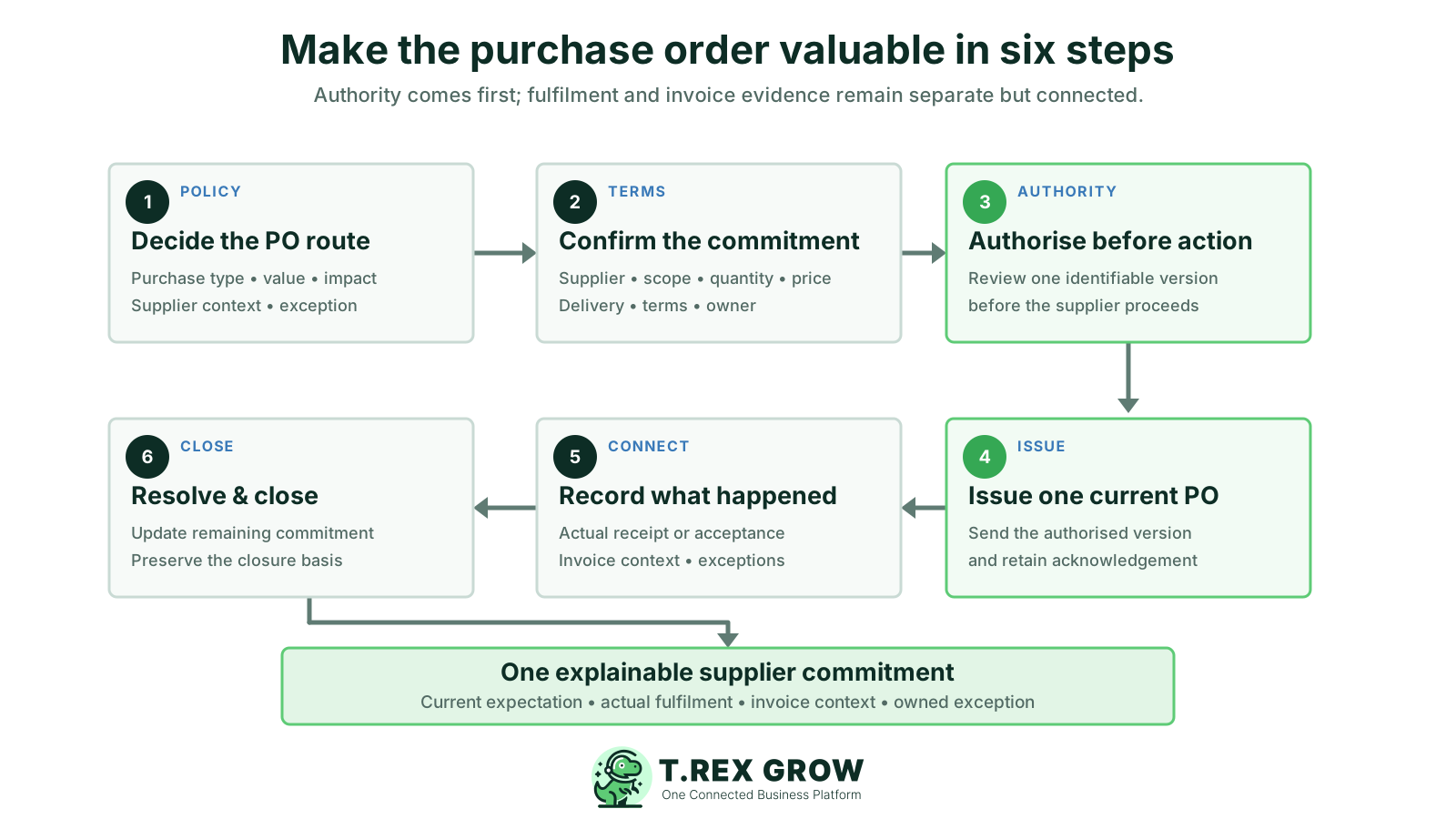
Use a six-step routine to make the PO valuable

This minimum routine is intentionally narrower than a full purchase-order lifecycle or procure-to-pay workflow. Its purpose is to make the business benefit real: decide when a PO is required, create it before commitment and keep the expectation connected to later evidence without collapsing those records together.

A repeatable operating workflow

Capture

Record the current facts in one shared place.

Check

Confirm what is known and what needs attention.

Assign

Make the next decision or follow-up accountable.

Act

Complete the next task and record the outcome.

Review

Refresh the shared view when facts change.

A dependable workflow keeps the shared record and the next action aligned.

Six-step purchase order routine covering route selection, confirmed terms, authority before commitment, one current PO, connected fulfilment evidence and deliberate closure
1

Decide the route: apply the SME's written PO rule using the purchase type, value, operational impact, supplier context and permitted exception rather than improvising after the supplier acts.

2

Confirm the commitment: identify the supplier, items or service, quantity, price and currency, delivery expectation, payment terms, owner and the supporting quotation or agreement before authorisation.

3

Authorise before supplier action: let the appropriate person review the current terms and record the decision before goods are shipped or work begins, except through a documented emergency route.

4

Issue one current PO: give the supplier the identifiable current version, record when and how it was issued, and keep acknowledgement, questions or requested changes attached to the same purchase context.

5

Connect what actually happens: record goods receipt or service acceptance separately, then use the PO as context for supplier-invoice review, partial balances, returns, credits and owned exceptions.

6

Resolve and close deliberately: update remaining commitments, preserve amendments or cancellation evidence, close the PO only on a documented basis and retain the connected records under the SME's applicable policy.

Mistakes

Know the limits of a purchase order

A PO strengthens the purchasing record, but it does not eliminate judgement, supplier communication or downstream evidence. Overstating what the document proves can create a false sense of control.

Recurring issues usually point to workflow-control gaps, not one isolated data-entry mistake.

Common

Creating the PO after goods arrive

A retrospective PO may help document what happened, but it does not provide the preventive authority and shared expectation that make the record valuable before commitment.

High risk

Assuming the PO alone forms the entire contract

The legal effect of a PO depends on the surrounding offer, acceptance, terms, communications and applicable law. Use appropriate agreements and obtain legal advice when the consequences matter.

Common

Using the PO as proof of receipt

The order says what should happen. It cannot prove the quantity, quality, condition, location, milestone or service actually accepted.

High risk

Using the PO as proof an invoice is payable

Finance still needs the supplier's valid invoice and the relevant receipt, service acceptance, credit, exception and approval evidence under the SME's process.

Common

Treating open PO value as a precise cash forecast

Open orders can improve commitment visibility, but expected timing, partial fulfilment, cancellations, tax, payment terms, deposits, credits and invoice status can change the actual cash requirement.

High risk

Overwriting changes

Editing an issued order until it matches the latest outcome removes the baseline needed to explain what was authorised, what the supplier saw and why the commitment changed.

Common

Applying one heavy route to every purchase

A rule that creates unnecessary work for routine, low-impact spend encourages bypasses. Keep exceptions explicit and strengthen the PO route where uncertainty or impact is higher.

High risk

Expecting software to define purchasing policy

A system can structure and connect records, but the SME must decide which purchases require a PO, who may authorise them, what terms matter and which exceptions need review.

Best practices

Keep the PO inside a complete purchase record

For Malaysian context, LHDN's current guidance for digital businesses says business documents, records and accounts should be kept for seven years and lists sales invoices, purchase records, email confirmations, agreements, bank statements and original receipts. That guidance does not make a PO a tax invoice or the whole evidence chain. Confirm the records and retention rules that apply to the SME with an appropriate adviser.

Do this

Retain the current issued PO

Keep the unique reference, issue date, supplier, lines, commercial terms, delivery context, owner and the version that was actually sent.

Do this

Preserve authority and replaced versions

Keep the decision attached to the identifiable terms it covered, then preserve amendment, cancellation and replacement evidence rather than silently rewriting the earlier record.

Do this

Connect supplier communication

Retain acknowledgement, clarification, substitution, delivery update or disputed term when it changes how the purchase should be fulfilled or reviewed.

Do this

Keep actual fulfilment separate

Record goods receipt, service acceptance, partial balance, rejection, return or quality exception as what happened—not as a modification to what was originally ordered.

Do this

Connect invoice, adjustment and payment evidence

Keep the supplier invoice, relevant debit or credit note, approved difference and payment history linked by a stable purchase reference without treating those records as interchangeable.

Do this

Review open commitments

Give every open PO an owner, expected date, remaining balance and next action. Close, cancel or revise stale commitments so the forward view remains useful.

The best practice is to make the next action clear before the situation becomes urgent.

Solution

Where TREX Grow can support the purchase-order record

TREX Grow can keep selected supplier, purchase-order, receiving, supplier-invoice and payment-history records connected after the SME defines its PO policy, authority and exception rules. It supports the operating record without claiming to replace sourcing judgement, contracts, bank execution, tax advice or the final accounting close.

Operations work better when records and next actions are connected

Searchable supplier and product context

Keep active or archived suppliers, contacts, payment terms, lead-time context and eligible supplier-linked products available when preparing an order.

Structured PO commitment

Record supplier, products, quantities, unit prices, currency, expected delivery, payment terms, tax, discount, delivery address, notes and attachments in one purchase order.

Permission-based decision path

Use the supported request-and-approve route or an intentional direct-finalisation route where configured access permits it, without implying enterprise multi-level threshold routing.

TREX Grow Operations Hub

Distinct draft and official documents

Generate a watermarked draft for review and an official PDF after supported finalisation or approval so preparation and the supplier-facing record do not look identical.

PO-linked actual receiving

Create a stock entry from an approved or finalised PO, enter what actually arrived and review ordered, received and outstanding quantity without treating the order itself as stock receipt.

Connected supplier-invoice context

Start a supplier invoice from the PO context while retaining its own values, then keep payment amount, date, method, reference and supporting detail as separate history.

Next step

Test the value on five recent purchases

Choose five supplier purchases from the past month. Ask whether one current record showed who authorised the supplier, what was ordered, which terms were current, what actually arrived and which commitment remained open. Use the gaps to define one simple PO trigger, minimum field set and exception route before expanding the policy.

See TREX Grow Purchase Orders

A purchase order gives an SME one identifiable, authorised statement of what it intends to buy before the supplier acts. It can clarify supplier instructions, create a baseline for receiving and invoice checks, expose open commitments and give later questions a stable owner and reference.