
Customer payment follow-up guide for Malaysian SMEs

How SMEs Can Follow Up Customer Payments Better

A good follow-up is more than a reminder. It gives the customer enough context to respond, makes the current payment position clear, and gives your team one sensible next action. Build the brief before the message, then match the next move to the customer's reply.

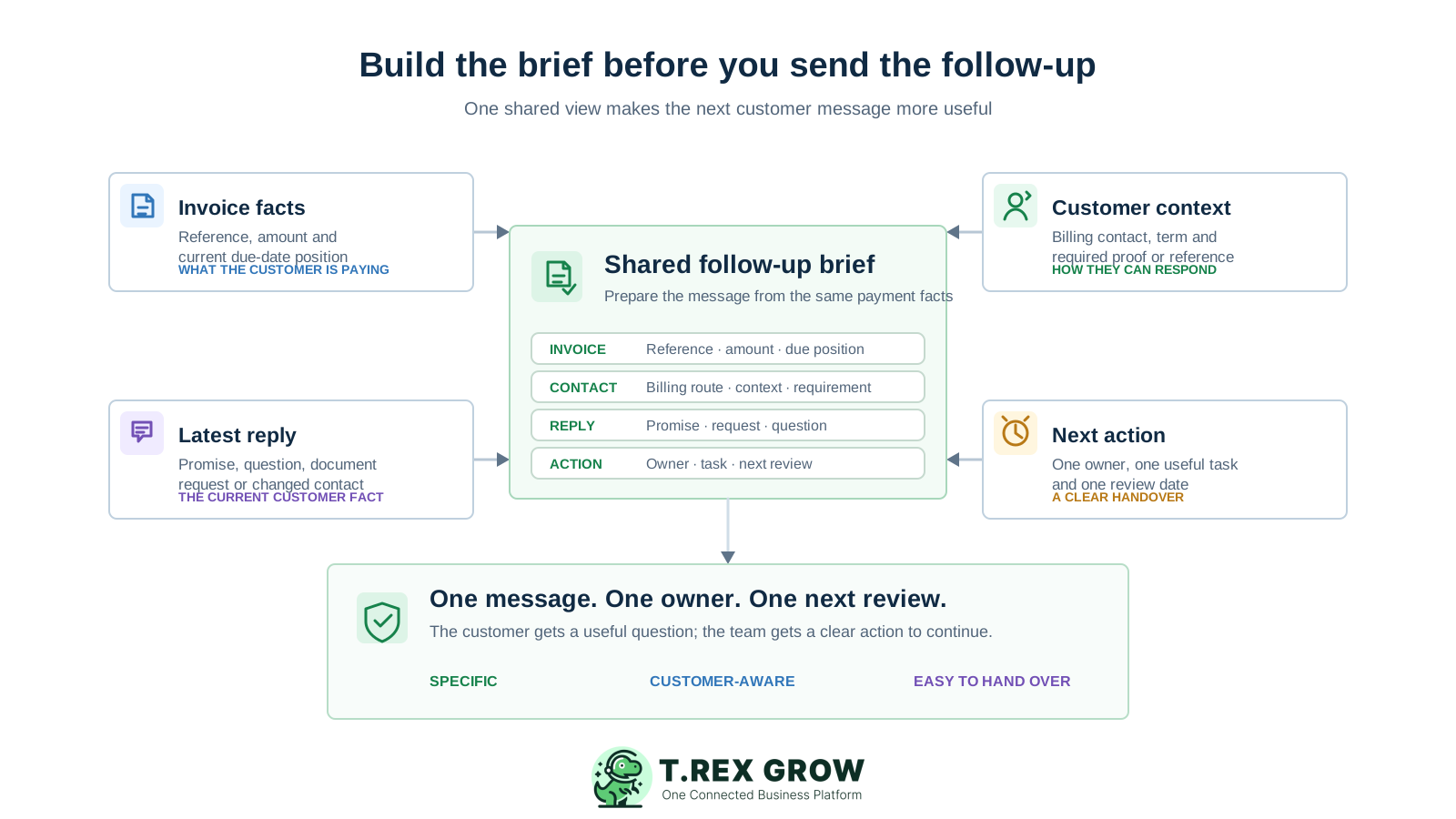
Shared customer payment follow-up brief connecting invoice facts, customer context, latest reply and the next action

Primary keyword

how to follow up customer payments

Audience

Malaysian SME owners, finance administrators, accounts assistants, sales coordinators, and operations teams who need a respectful, repeatable way to follow up open customer payments across shared customer and invoice records.

Goal

Teach Malaysian SMEs a customer-respectful payment follow-up routine based on a shared follow-up brief, message clarity, response-based next actions, ownership, and review dates before softly showing how TREX Grow can support connected operational records.

Problem

Why payment follow-up turns into an awkward chase

A customer payment follow-up becomes uncomfortable when it is sent without enough context or a clear purpose. The team may know an invoice is open, but not whether the customer received it, needs a document, has a genuine question, gave a payment date, or is waiting for someone else. The message then adds pressure without helping either side decide what happens next.

Operational pressure

The next action is easy to lose when context is scattered.

When records live in different places, the person responsible has to reconstruct what happened before they can make a confident decision or follow up.

Scattered recordsUnclear ownershipAvoidable surprises
High risk

The sender must reconstruct the facts each time

When the invoice, due date, customer contact, sales context, supporting documents, and last reply live in separate places, every follow-up starts with a search. Important context gets missed and the message can sound vague or uninformed.
The message asks for an update but not a useful response

A short reminder can be respectful, but it should still tell the customer which invoice is involved, what payment position you are checking, and what they can do if a document, clarification, or internal approval is holding things up.

Timing ignores the customer’s actual payment process

Some invoices need an earlier due-soon check because they are new, material, document-heavy, or waiting on approval. Others need a light-touch review after a credible customer response. Treating every invoice the same creates noise rather than progress.

High risk

A reply is not converted into a next action

A customer may say that payment is planned, request proof, flag a mismatch, or ask for another contact. If the reply remains only in an email or chat, the follow-up process has information but no agreed owner, review date, or action.

Different teams contact the customer independently

Finance can see the balance, sales can know the relationship, and operations can hold delivery evidence. Without a shared follow-up brief, people may send overlapping messages or wait because they assume someone else is handling it.

A payment promise quietly replaces the actual position

A promised date is useful planning information, but it is not payment confirmation. The invoice, amount received, remaining balance, and next review must stay clear until evidence can be matched.

Education

What a helpful customer payment follow-up needs

The best follow-up makes it easy for the customer to recognise the invoice and easy for your team to continue the conversation. It should be brief, factual, and specific enough to turn a reply into a useful next action rather than a longer email thread.

A useful record supports the next decision

The work is easier when the team can see the current facts, the responsible person, and the next action without reconstructing the history from separate tools.

Shared operating context
Clear ownership and status
A visible next action

Set up the team view

1

Define the shared fields

  • - Use current facts
  • - Keep details consistent
2

Assign the next action

  • - Name an owner
  • - Set a review date
3

Keep it current

  • - Record changes
  • - Resolve exceptions
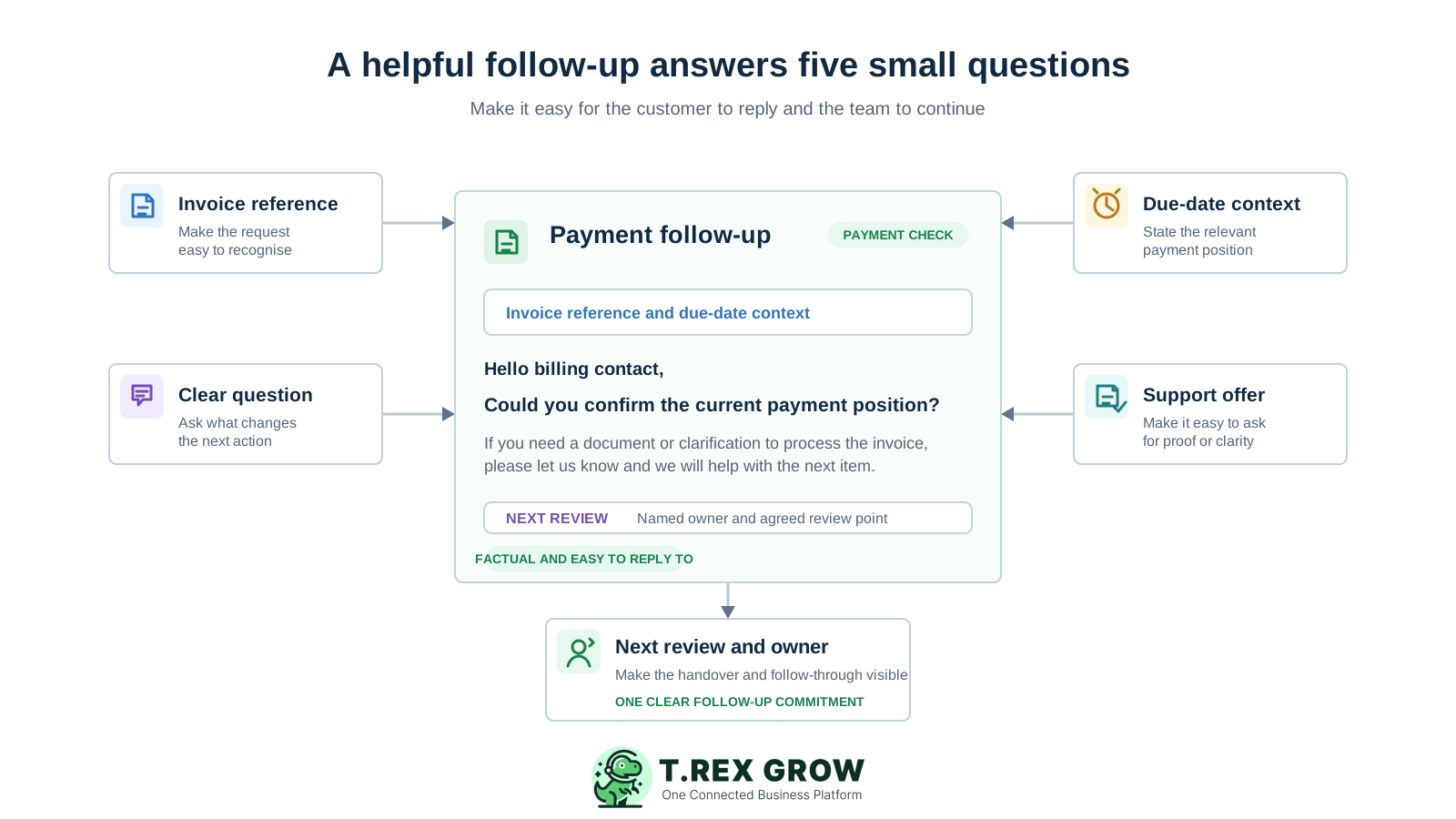
Customer payment follow-up message anatomy showing an invoice reference, due-date context, clear question, support offer, and named next review

A recognisable invoice reference

Include the invoice number, amount where helpful, and a plain description or commercial reference so the billing contact can identify the request without searching through several earlier messages.

The relevant payment context

State the due date or current payment position in a factual way. If you are checking before the due date, explain that the purpose is to confirm readiness, not to imply that the customer has already paid late.

One clear question or requested action

Ask for the information that changes the next move: whether payment has been arranged, whether a document is missing, whether another approver or contact is needed, or when the team should review again.

A practical offer to remove friction

Make it easy to request a statement, delivery proof, purchase-order reference, corrected detail, or another supporting item. The aim is to help the customer process the payment request, not simply repeat the reminder.

A visible follow-up commitment

Record who owns the next action and when the team will review the result. This keeps the message from becoming an open-ended request and lets colleagues continue safely if the owner is unavailable.

A record of the customer’s answer

Keep the latest reply, promise, document request, exception reason, and next action beside the payment position. A useful record prevents the customer from repeating themselves when another team member needs to help.

Workflow

A five-move customer payment follow-up routine

Use the same lightweight routine whenever an invoice needs attention. It helps the team prepare a better message, treat each customer reply as an operational signal, and avoid accidentally restarting the conversation every time a different colleague looks at the account.

A repeatable operating workflow

Capture

Record the current facts in one shared place.

Check

Confirm what is known and what needs attention.

Assign

Make the next decision or follow-up accountable.

Act

Complete the next task and record the outcome.

Review

Refresh the shared view when facts change.

A dependable workflow keeps the shared record and the next action aligned.

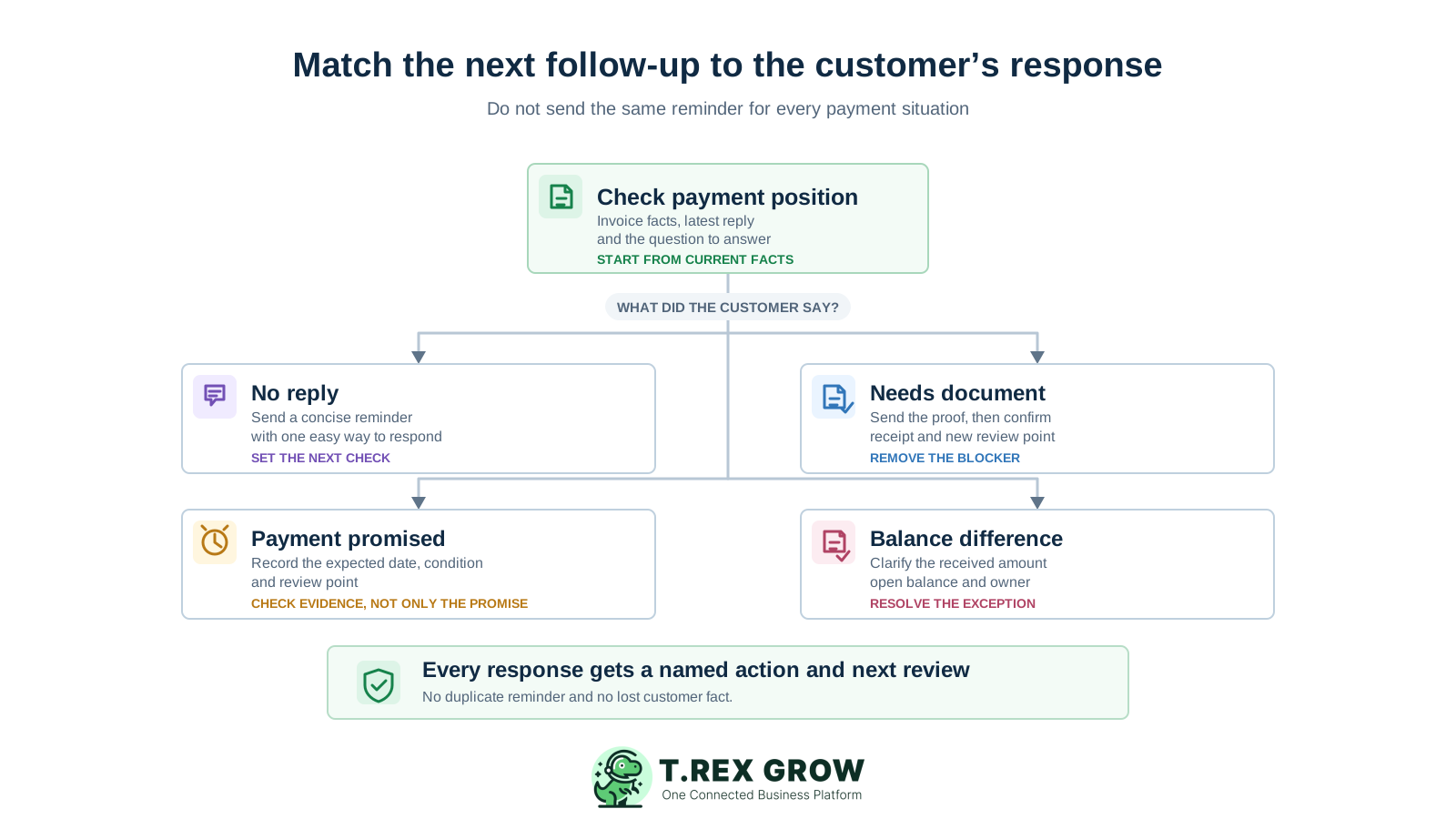
Customer payment follow-up response map routing no reply, document request, payment promise, and partial payment to a clear next action
1

Prepare a short follow-up brief before contacting the customer: confirm the invoice number, amount, due-date position, billing contact, relevant reference, supporting documents, latest customer reply, and the action you need to decide next.

2

Choose the purpose and timing of the contact: decide whether you are checking readiness before the due date, following up after no response, reviewing a promised date, answering a document request, or clarifying a balance difference.

3

Send a specific, low-friction message: identify the invoice, state the current context, ask one clear question, make it easy for the customer to request support, and avoid language that assumes a cause or outcome you cannot confirm.

4

Capture the customer response where the team can use it: record the promise, question, requested document, contact change, partial payment, or exception beside the payment position rather than leaving it only in a private conversation.

5

Route the response to one owner and review date: decide whether the next move is to send a document, confirm receipt, review a promise, clarify a difference, involve a relationship owner, or continue a factual check-in. Keep the invoice open until the payment position is genuinely resolved.

Mistakes

Follow-up habits that frustrate customers and teams

Payment follow-up should be firm enough to move work forward and informed enough to respect the customer’s process. These habits usually create more messages without creating more clarity.

Most issues are not tax knowledge problems. They are workflow control problems.

Common

Sending the same reminder at every stage

A due-soon readiness check, no-response check, payment-promise review, document response, and partial-payment clarification need different information. Repeating one generic line makes it harder for the customer to tell what you actually need.

High risk

Using a vague request for an update

A customer may not know whether you need payment confirmation, a remittance reference, a document request, a new billing contact, or a realistic review date. Ask the one question that changes the next action.

Common

Following up without checking the latest context

Before sending a message, look for a recent customer reply, document request, service or delivery issue, payment promise, or internal owner. A message that ignores known facts can damage trust and duplicate work.

High risk

Keeping the reply in a private inbox

If a colleague cannot see the latest customer fact, they may send another reminder or wait too long. Capture only the useful operational context, then make the next owner and review date visible.

Common

Treating an expected date as a completed payment

A customer’s expected payment date is not a matched payment. Keep the promise, evidence, received amount, remaining balance, and next review distinct so the collection view stays credible.

High risk

Escalating internally without a useful brief

A manager or relationship owner needs to know the invoice, amount, due-date position, latest customer response, requested item, and recommended next action. Escalating only an overdue balance makes a thoughtful decision harder.

Best practices

Best practices for consistent customer payment follow-up

A good routine is small enough to use on a busy day. It gives customers a respectful way to respond and gives the team a dependable handover when a payment needs more than one conversation.

Do this

Create one shared follow-up brief

Keep the invoice facts, customer contact, current payment context, latest reply, supporting documents, next owner, and review date together. The brief should be quick to scan before a message is sent and useful when a colleague takes over.

Do this

Match the cadence to risk and context

Use a more attentive rhythm for new, high-value, complex, or document-dependent invoices. Give a credible customer promise a clear review date. Avoid adopting a fixed message volume that ignores the actual customer and payment position.

Do this

Write for an easy customer reply

Use an invoice reference, concise context, one clear question, and a practical route for the customer to ask for a document or clarification. The easier the response is to route internally, the easier it is to move the next action forward.

Do this

Give each follow-up one accountable owner

Finance, sales, and operations can each add context, but the record should show who is responsible for the next action. This prevents duplicate messages and helps the team decide when a relationship or document handover is needed.

Do this

Treat customer replies as decision points

No response, a document request, a payment promise, a changed contact, a deduction, and a partial payment should each lead to a defined next action. Record the fact, assign the action, and set a review rather than returning to a generic reminder list.

Do this

Review the quality of follow-up, not only the balance

Periodically look at recurring document requests, reply gaps, expired promises, duplicated contacts, and unresolved differences. Improve the message or handover that causes repeated friction instead of only increasing the number of reminders.

The best practice is to make the next action clear before the situation becomes urgent.

Solution

How TREX Grow can support more consistent payment follow-up

Once your team agrees how to follow up, TREX Grow can help keep customer, invoice, sales-document, payment, and operational context closer together. The goal is a clearer shared record so each person can prepare a useful message, understand the customer’s latest response, and make the next handover easier.

Operations work better when records and next actions are connected

Bring the follow-up brief closer to the payment record

Keep the invoice, commercial reference, relevant supporting documents, customer information, and current payment context easier to retrieve when someone needs to contact the customer.

Make the latest customer fact visible

Help the team refer to the most recent meaningful reply, request, promise, exception, or evidence instead of rebuilding the conversation from separate messages.

Support clearer action ownership

Keep the next action, owner, and review point visible across finance, sales, and operations so one person can continue the work without surprising the customer or duplicating effort.

TREX Grow Operations Hub

Keep payment evidence and remaining balance connected

Make it easier to review payment activity, partial amounts, document references, and the outstanding position before deciding whether a follow-up is still needed.

Create a more informed management review

A connected view helps managers discuss customer commitments, blockers, response gaps, and next actions with more context than an overdue list alone.

Next step

Improve one real customer follow-up today

Choose an open invoice with a recent interaction or an approaching review date. Build the follow-up brief, decide the exact question you need answered, check what document support is available, and assign one next action. If another colleague can pick up the record without asking the customer to repeat themselves, the routine is becoming more useful.

Explore how TREX Grow works

Include a recognisable invoice reference, the relevant due-date or payment context, one clear question or requested action, an easy way for the customer to ask for a document or clarification, and the next review point for your team. Keep the message factual and concise.