Late payment communication guide for Malaysian SMEs

How to Follow Up Late Payments Professionally

Professional follow-up is calm, accurate, and easy to act on. Check the invoice facts first, state what is overdue, ask for one clear action, offer the document or clarification that may remove a blocker, and record the customer's reply before deciding what happens next.

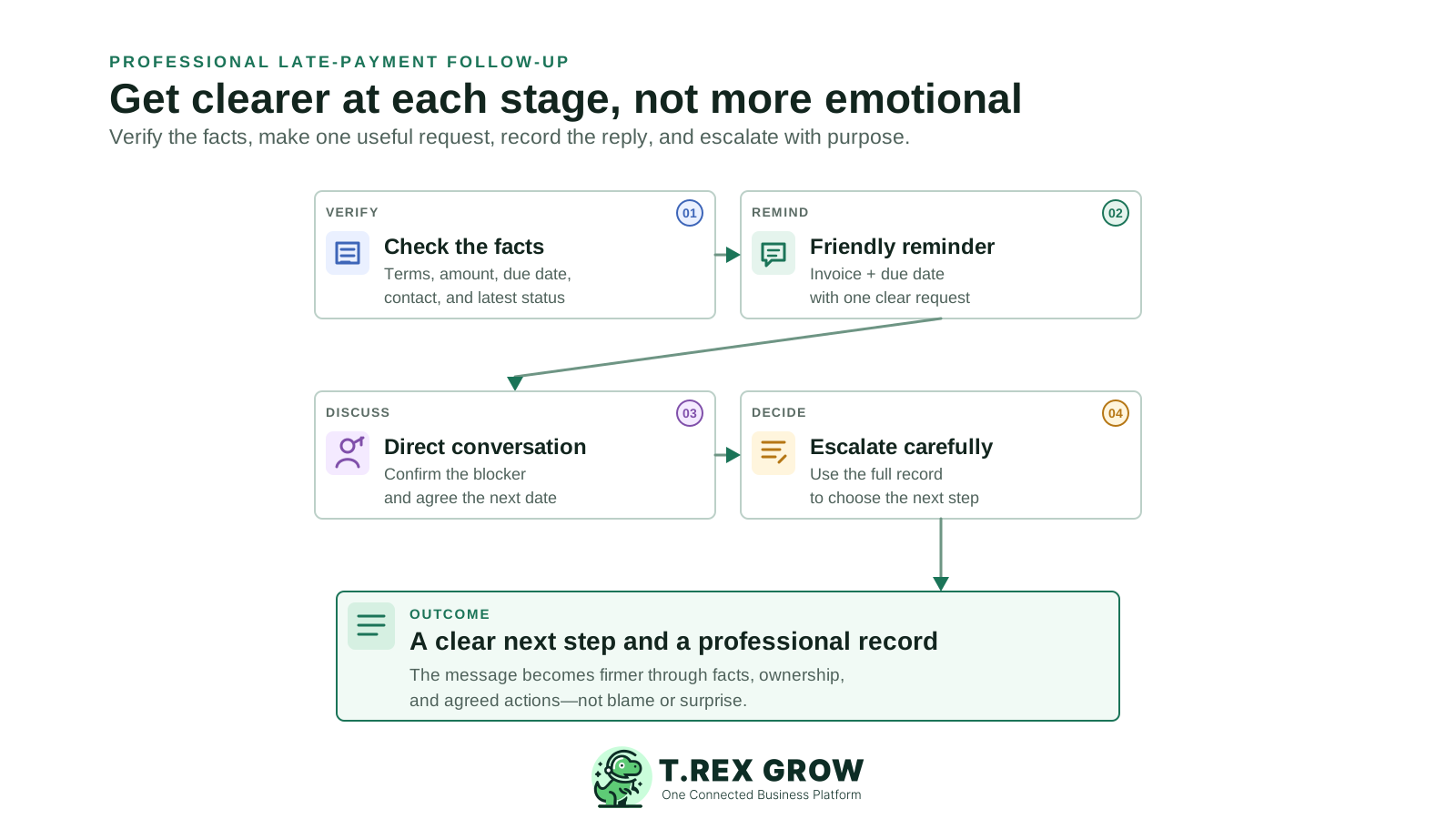
Four-stage professional late-payment follow-up ladder from verifying invoice facts through a friendly reminder, direct conversation and deliberate escalation

Primary keyword

how to follow up late payments professionally

Audience

Malaysian SME owners, finance administrators, accounts assistants, sales coordinators, and operations teams that need to contact customers about late invoice payments and preserve a clear professional record of every follow-up.

Goal

Teach Malaysian SMEs how to conduct a factual, respectful, post-due payment conversation with useful message examples and a deliberate escalation workflow before softly showing how TREX Grow can support shared invoice context, ownership, and follow-up history.

Problem

Why late-payment follow-up becomes uncomfortable

The tension usually comes from uncertainty rather than the request itself. The sender may not know whether the invoice is correct, whether the right person received it, whether payment has already been made, or whether a dispute is holding it up. Without those facts, the message can become either too apologetic or unnecessarily aggressive.

Operational pressure

The next action is easy to lose when context is scattered.

When records live in different places, the person responsible has to reconstruct what happened before they can make a confident decision or follow up.

Scattered recordsUnclear ownershipAvoidable surprises
High risk

The sender starts with frustration instead of facts

An overdue balance can create real pressure, but the first message should still come from the invoice record: what was agreed, when it was due, what remains open, and what the customer has already said.

The request is hidden inside polite wording

A message can sound courteous and still be ineffective. If the customer cannot tell whether you need payment, a payment date, a remittance reference, another contact, or a reply about a blocker, the conversation remains open.

The same reminder is repeated at every stage

A first overdue reminder should not sound like a final escalation, and a second follow-up should not simply copy the first. Each stage needs a clearer purpose based on what has happened since the last contact.

High risk

The customer response does not change the workflow

A payment promise, missing document, invoice query, partial payment, or changed billing contact should each lead to a different next action. Repeating the original reminder ignores useful information.

Different people use different tones

Finance may send a formal email while sales sends an informal message and management contacts another person. Without one shared history and owner, the customer receives mixed signals and the team loses control of the conversation.

Escalation arrives as a surprise

When there is no staged process, the business may move suddenly from a friendly reminder to a serious warning. A professional approach makes each next step deliberate, supported by the record, and proportionate to the situation.

Education

Professional does not mean passive

A professional reminder can be warm and firm at the same time. It confirms the accurate invoice position, identifies one action the customer can take, gives a practical route to resolve a problem, and makes the next review point visible. The tone stays respectful while the request becomes more specific.

A useful record supports the next decision

The work is easier when the team can see the current facts, the responsible person, and the next action without reconstructing the history from separate tools.

Shared operating context
Clear ownership and status
A visible next action

Set up the team view

1

Define the shared fields

  • - Use current facts
  • - Keep details consistent
2

Assign the next action

  • - Name an owner
  • - Set a review date
3

Keep it current

  • - Record changes
  • - Resolve exceptions
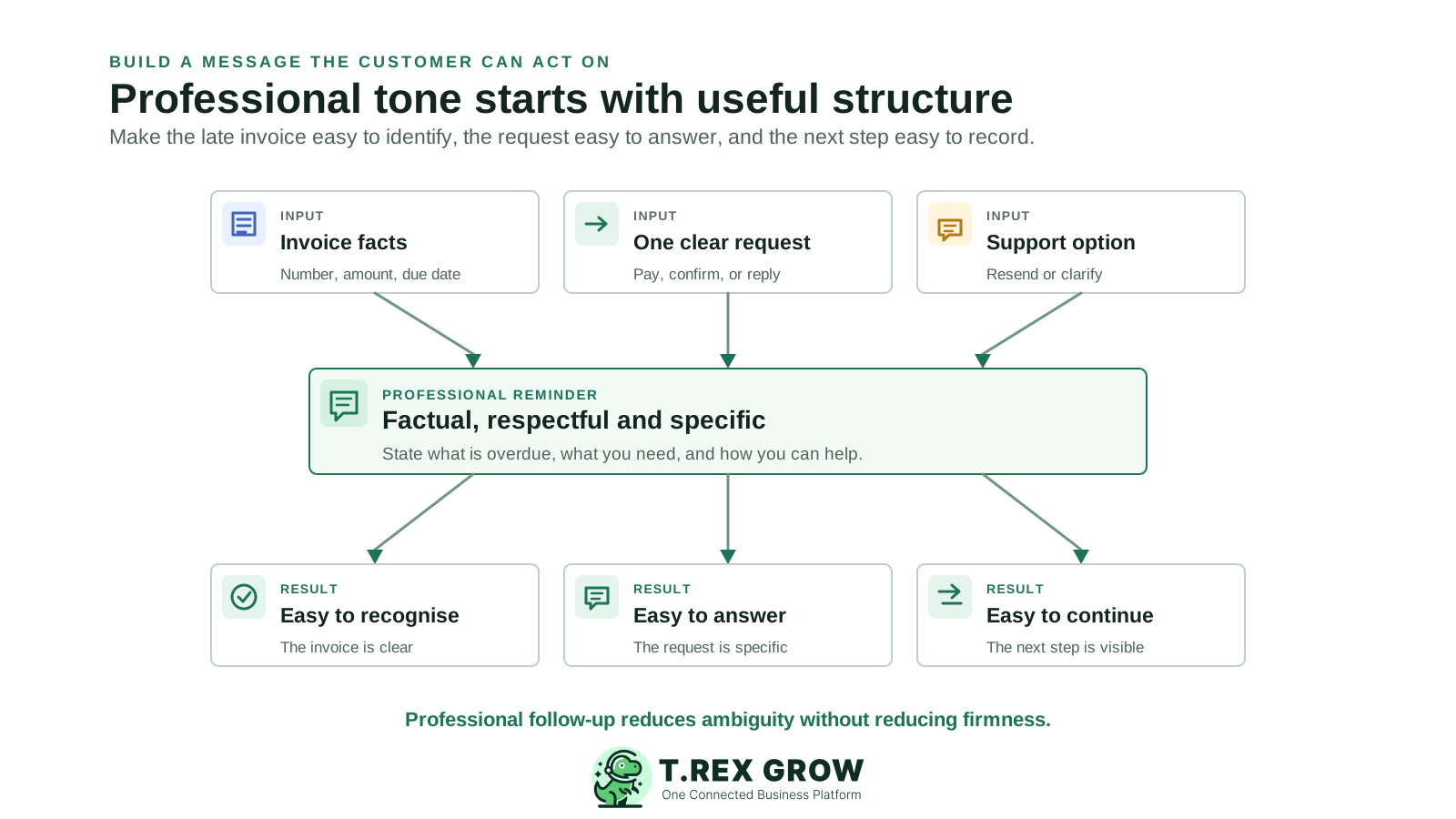
Professional late-payment reminder structure combining invoice facts, one clear request and a support option into a message that is easy to recognise, answer and continue

Start with a neutral subject line

Use a subject such as 'Invoice INV-1042 overdue - payment status' or 'Follow-up on invoice INV-1042'. Avoid dramatic labels, blame, or vague subjects that make the customer search for the reason you contacted them.

State the invoice facts precisely

Include the invoice number, amount where useful, due date, and relevant purchase-order or service reference. Confirm these details before sending so the message does not create a new dispute.

Ask for one action

Request payment, a payment date, a payment reference, confirmation of the right contact, or details of a blocker. One clear request is easier to answer than a general demand for an update.

Offer a practical way forward

Make it easy for the customer to ask for the invoice, statement, delivery evidence, purchase-order reference, corrected detail, or another document needed for internal approval.

Use a calm closing with a review point

Thank the customer, state when you need the reply where appropriate, and record when your team will review again. The message can be courteous without leaving the request open-ended.

Preserve the response as operational context

Record what the customer said, what was promised, what document was requested, who owns the next action, and when the position should be checked again. Professional follow-up continues the conversation instead of restarting it.

Workflow

A six-step professional late-payment follow-up workflow

Use this workflow after the agreed due date has passed and payment has not been matched. It separates the emotional pressure of an overdue balance from the operational work needed to resolve it, while keeping each contact connected to a current invoice position.

A repeatable operating workflow

Capture

Record the current facts in one shared place.

Check

Confirm what is known and what needs attention.

Assign

Make the next decision or follow-up accountable.

Act

Complete the next task and record the outcome.

Review

Refresh the shared view when facts change.

A dependable workflow keeps the shared record and the next action aligned.

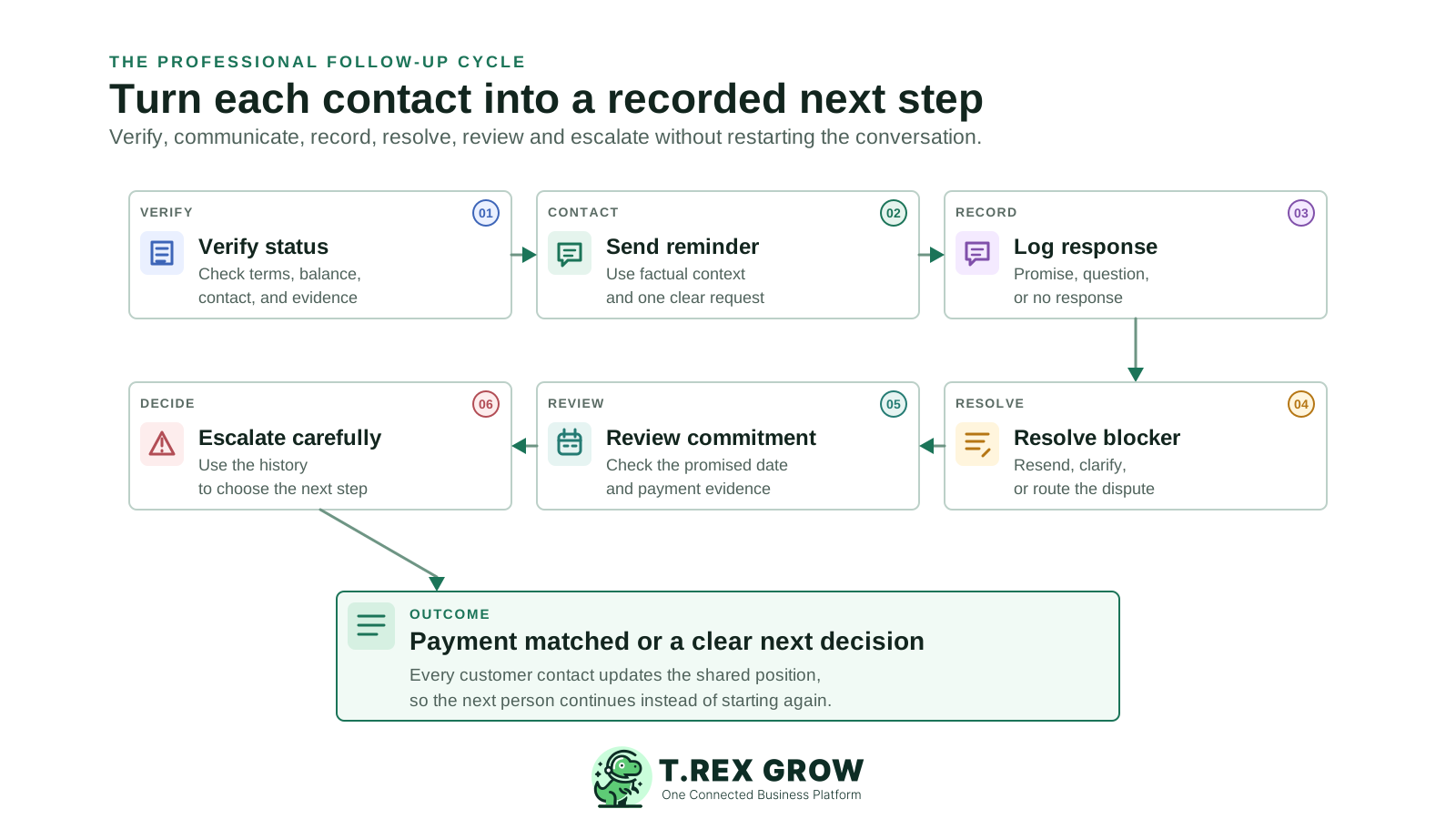
Six-step professional late-payment follow-up cycle from verifying invoice status through reminders, recorded replies, blocker resolution, commitment review and careful escalation
1

Verify the position before contacting the customer: review the invoice, agreed term, due date, outstanding amount, payment instructions, billing contact, delivery or service evidence, latest reply, and bank or remittance activity. Correct any error before asking the customer to act.

2

Send the first overdue reminder with a low-friction request: identify the invoice, state that it remains open, ask whether payment has been arranged, and offer to resend the invoice or supporting document. Do not assume why payment is late.

3

Record the response and choose the next route: capture a payment promise, request for a document, billing-contact change, invoice query, dispute, partial payment, or no response. Assign one owner and one review date instead of sending another generic message automatically.

4

Resolve the blocker promptly: resend the requested document, clarify the invoice, match a payment reference, involve the relevant sales or operations person, or route a genuine dispute to the person who can decide it. Confirm what was done in writing.

5

Review the customer's commitment when it becomes due: check whether payment evidence arrived, whether the amount can be matched, and whether the remaining balance is clear. If the promised date passes, refer to the earlier commitment factually and request a revised action.

6

Escalate deliberately when normal reminders do not resolve the position: prepare a concise internal brief with the invoice facts, contact history, customer responses, documents provided, current balance, and recommended next step. Obtain Malaysia-specific professional advice before using formal demand, fee, or legal language.

Mistakes

Late-payment follow-up mistakes that weaken the message

The goal is to move the payment position forward while protecting an accurate record and a workable customer relationship. These habits tend to create defensiveness, confusion, or unnecessary risk.

Most issues are not tax knowledge problems. They are workflow control problems.

Common

Accusing the customer of avoiding payment

You may not yet know whether the delay is an oversight, an approval issue, a missing document, a dispute, or a payment that has not been matched. State what the record shows and ask for the fact you need next.

High risk

Writing an urgent message with no invoice context

Words such as urgent or immediate are not useful without the invoice number, amount, due date, and requested action. Specific facts create more clarity than extra emphasis.

Common

Copying senior people too early

Unexpectedly widening the audience can make a routine issue feel adversarial. Use the normal billing contact first, then escalate internally or externally according to a considered process and the actual response.

High risk

Contacting the customer too often without new purpose

Repeated messages can become noise when the team has not checked a promised date, resolved a document request, or changed the requested action. Every follow-up should have a reason.

Common

Mentioning fees or consequences without a verified basis

Do not import legal wording, interest claims, or collection threats from another country or a generic template. Check the agreement and obtain appropriate Malaysia-specific advice before making a formal statement.

High risk

Continuing to chase after payment activity

Check bank activity, remittance details, partial payments, and allocation before sending the next message. If the customer has paid, acknowledge it promptly; if only part is matched, state the remaining position accurately.

Best practices

Best practices for firm and respectful follow-up

Professional follow-up is a team discipline. The wording matters, but reliable facts, ownership, timing, and handovers are what keep the conversation consistent when an invoice requires more than one contact.

Do this

Use a staged reminder ladder

Define what a first reminder, second follow-up, direct conversation, promise review, and internal escalation are meant to achieve. Adapt the timing to the agreed term, invoice value, customer context, and actual replies.

Do this

Keep the tone neutral and the request specific

Describe the current payment position without assigning motives. Ask for the payment, date, reference, contact, or clarification that changes the next action.

Do this

Use the right channel for the stage

Email provides a useful written record, while a phone call can clarify a stalled situation. After a meaningful call, send a brief written summary of what was agreed and when it will be reviewed.

Do this

Separate payment delay from invoice dispute

A normal overdue invoice needs a payment action; a disputed invoice needs a resolution owner. Record the issue, stop repeating generic reminders, and route the decision to the right person.

Do this

Treat promises as review points

Keep the formal due date, the promised payment date, any condition, the source of the promise, and the review date visible. Do not treat the promise as paid until the evidence is matched.

Do this

Close the loop after payment

Match the amount and reference, update any remaining balance, stop scheduled reminders, thank the customer where appropriate, and retain the useful history for the next invoice cycle.

The best practice is to make the next action clear before the situation becomes urgent.

Education

Professional late-payment message examples

Use these as starting points, not automatic scripts. Replace the placeholders, verify every fact, match the tone to the customer relationship and stage, and keep formal or legal wording out unless it has been reviewed for your actual agreement and Malaysian context.

A useful record supports the next decision

The work is easier when the team can see the current facts, the responsible person, and the next action without reconstructing the history from separate tools.

Shared operating context
Clear ownership and status
A visible next action

Set up the team view

1

Define the shared fields

  • - Use current facts
  • - Keep details consistent
2

Assign the next action

  • - Name an owner
  • - Set a review date
3

Keep it current

  • - Record changes
  • - Resolve exceptions

First overdue reminder

Subject: Invoice [number] overdue - payment status. Hi [name], our records show invoice [number] for RM[amount] was due on [date] and remains open. Could you confirm whether payment has been arranged, or let me know if you need the invoice or supporting document resent? Thank you, [sender].

Second follow-up after no response

Hi [name], I am following up on invoice [number], due on [date]. We have not yet received payment or an updated payment date. Please confirm by [reply date] whether payment is being processed, or advise who we should contact about the account. I have attached the invoice again for convenience.

Payment-promise review

Hi [name], thank you for advising that invoice [number] would be paid on [promised date]. We have not yet matched the payment. Could you share the payment reference, or let us know the revised date if the payment has changed?

Reply after a document request

Hi [name], attached is the [invoice, statement, delivery evidence, or reference] requested for invoice [number]. Please confirm receipt and whether anything else is needed to process payment. We will review the position again on [date].

Partial-payment clarification

Hi [name], we have matched RM[received amount] to invoice [number], leaving RM[remaining amount] outstanding. Could you confirm whether the balance is scheduled separately or whether there is a deduction or query we should review?

Written summary after a call

Hi [name], thank you for speaking with me today. We agreed that [document or action] will be completed by [owner] and that payment for invoice [number] is expected on [date]. We will review again on [date]. Please reply if any detail is incorrect.

Solution

How TREX Grow can support professional payment follow-up

Once your team agrees the follow-up ladder and message standards, TREX Grow can help bring invoice, customer, document, payment, and operational context closer together. The aim is to help each person contact the customer with current facts and continue from the latest recorded action.

Operations work better when records and next actions are connected

Keep the invoice context easier to retrieve

Bring the invoice, customer, quotation, and related document references closer together so the sender can verify the payment request before contacting the customer.

Share the latest payment position

Help finance, sales, operations, and management work from the same current balance, customer response, supporting evidence, and exception context.

Make the next action and owner visible

Keep the responsible person and review point easier to understand so the customer does not receive duplicate messages and a colleague can continue the work safely.

TREX Grow Operations Hub

Retain a useful follow-up history

Keep meaningful replies, commitments, document requests, and payment activity available for promise reviews, internal decisions, and future invoice cycles.

Connect collections to wider operations

Customer payments can affect purchasing, supplier commitments, inventory decisions, approvals, and cash planning. A connected operating view helps the team understand those dependencies.

Next step

Rewrite one overdue reminder before sending it

Choose one late invoice and check the facts, subject line, requested action, support option, owner, and next review date. If the customer can recognise the invoice, answer one clear question, and understand what happens next, the follow-up is ready to send professionally.

See how TREX Grow supports this workflow

State the invoice number, amount where useful, due date, and current open position. Ask for one action, such as payment confirmation, a payment date, a reference, or details of a blocker. Offer to resend the invoice or supporting document and keep the tone neutral and respectful.