The first version is easy to understand
One person creates the invoices, checks the bank, updates a few rows, and contacts the customer. The method feels efficient because the process and the person's memory are effectively the same system.

A spreadsheet can work when invoice volume is low, one person owns the process, and exceptions are rare. The problem starts when more due dates, customer replies, payment evidence, and handovers must be reconciled faster than the team can keep one current view.
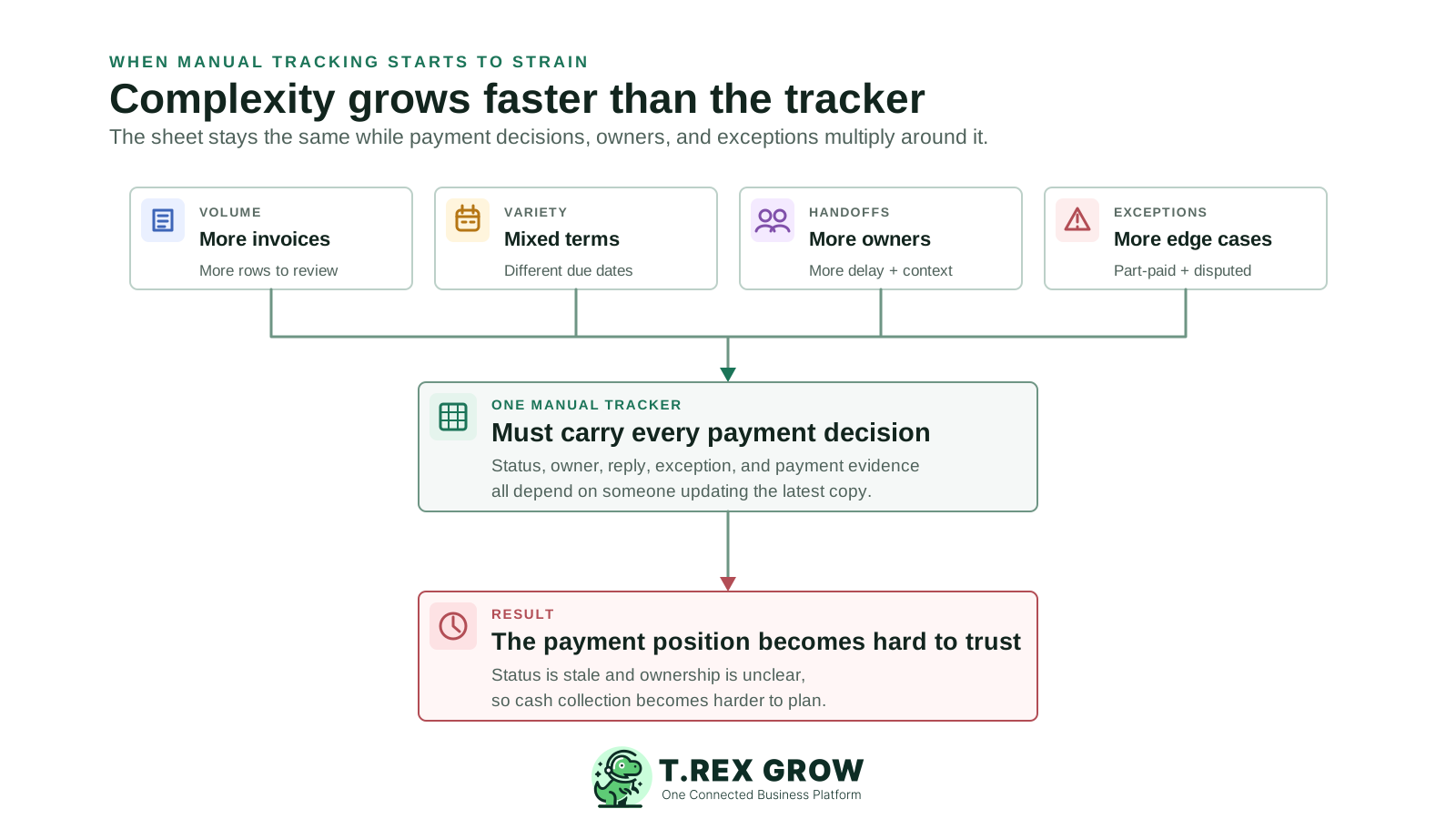
The first warning is rarely a completely missing invoice list. The tracker still opens and the totals may still look reasonable. Reliability weakens gradually as updates arrive from more people and places, while the business continues to make collection and cash decisions from a view that is already ageing.
Operational pressure
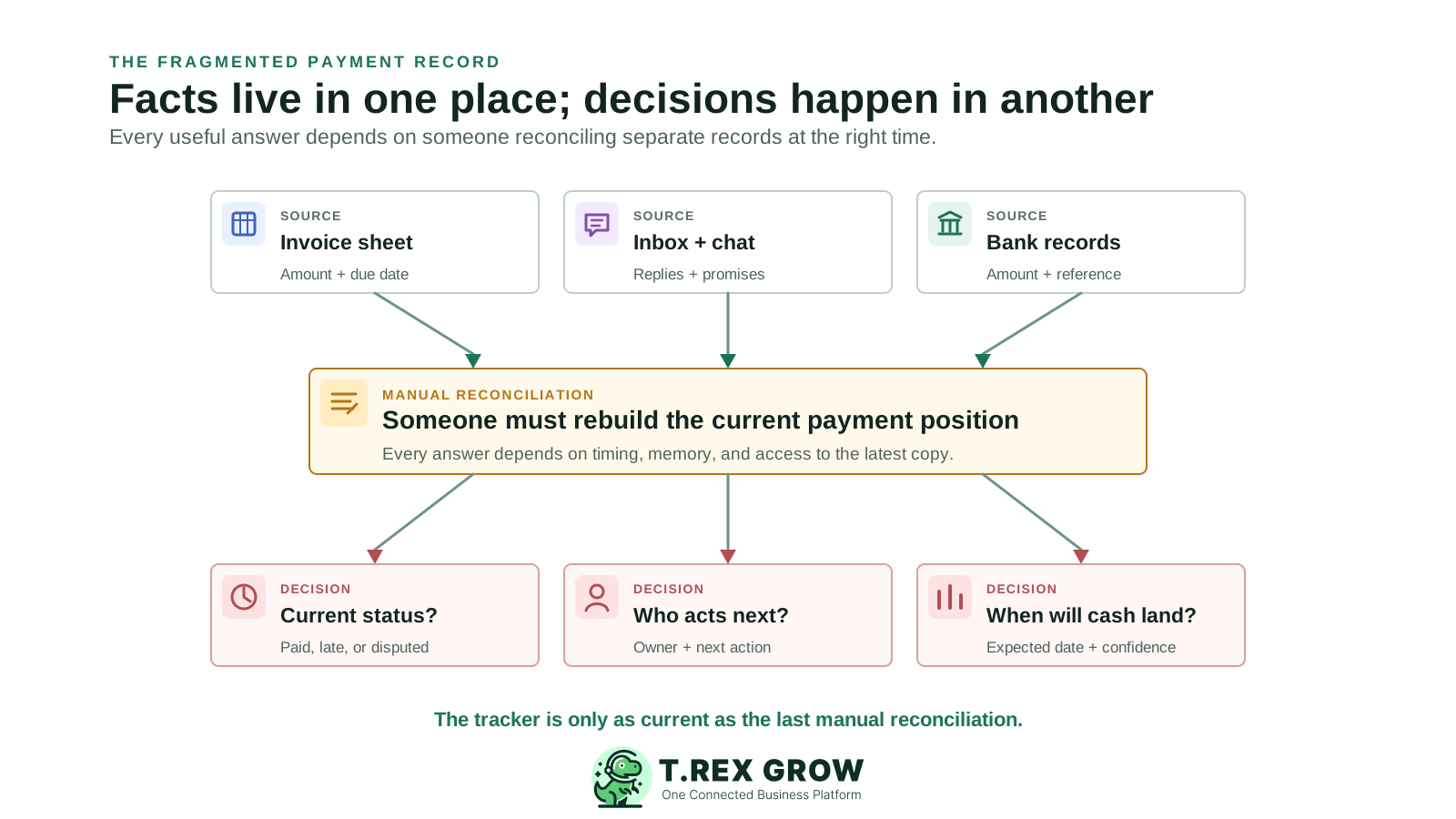
When records live in different places, the person responsible has to reconstruct what happened before they can make a confident decision or follow up.
One person creates the invoices, checks the bank, updates a few rows, and contacts the customer. The method feels efficient because the process and the person's memory are effectively the same system.
More invoices do not only add rows. They add more due dates to review, more payments to match, more customers to contact, and more opportunities for an update to arrive after the list was last checked.
A payment received but not recorded can trigger an unnecessary reminder. A promise kept in a private message can make the forecast too pessimistic. A dispute that is not visible can make repeated chasing feel careless.
Part payments, combined transfers, deductions, missing references, document requests, and invoice disputes cannot be explained safely by a simple paid or unpaid field.
Finance may have the latest bank position, sales may have the latest customer reply, and operations may hold the delivery evidence. Each person can be correct while the shared tracker is incomplete.
When managers ask for ageing, expected collections, or high-risk accounts, the team often exports, filters, and annotates another file. The report starts becoming stale as soon as operational work continues elsewhere.
Manual payment tracking is more than entering figures. SME Corp Malaysia describes credit management as connected work that includes monitoring and logging payments, starting collection activity, and resolving invoice questions or disputes. As an SME grows, coordinating those tasks across separate tools becomes the fragile part.
Every additional invoice needs a due-date check, status update, possible customer contact, payment match, and closure step. Manual effort grows across the full payment cycle, not only at invoice creation.
COD, deposits, 7-day, 14-day, 30-day, milestone, and customer-specific terms create different review dates and escalation paths. One generic reminder schedule stops fitting the real agreements.
When finance, sales, operations, and management contribute context, each update needs a clear home, timestamp, and owner. Otherwise the tracker becomes a summary of what one person knows, not what the business knows.
Invoice details, email replies, WhatsApp messages, bank references, delivery documents, and internal notes can all be accurate but disconnected. The current position exists only after someone reconciles them.
A late invoice, a disputed invoice, and a partially paid invoice may show an outstanding balance, but they need different actions. The method must retain the reason and next step, not only the amount.
Expected collections, cash commitments, customer risk, and team workload depend on live payment status. A tracker that is accurate only after a cleanup cannot support timely operating decisions.
There is no universal invoice-count threshold. Look at the coordination burden around each invoice and whether the team can keep one current position without rebuilding it.
| Operating condition | Manual tracking can cope when | Warning sign |
|---|---|---|
| Invoice volume | One owner can review every open invoice on a fixed schedule. | Old rows are checked only when cash is tight or a customer calls. |
| Payment terms | Terms and due dates are consistently recorded and understood. | Different customer terms require memory or repeated manual calculations. |
| Team involvement | Everyone updates the same current record with clear ownership. | Sales, finance, and operations keep separate notes or copies. |
| Exceptions | Partial payments, promises, and disputes have a defined field and next action. | Staff add free-form comments that the next person must interpret. |
| Cash visibility | The open-invoice view is current enough to support the next operating decision. | A special cleanup is required before every collection forecast or management update. |
The goal is not to replace a spreadsheet for its own sake. First replace the unreliable chain of memory, private messages, copied files, and ad hoc reviews with a shared routine. The same controls can start in a well-managed tracker and later move into connected software.
Record the current facts in one shared place.
Confirm what is known and what needs attention.
Make the next decision or follow-up accountable.
Complete the next task and record the outcome.
Refresh the shared view when facts change.
A dependable workflow keeps the shared record and the next action aligned.
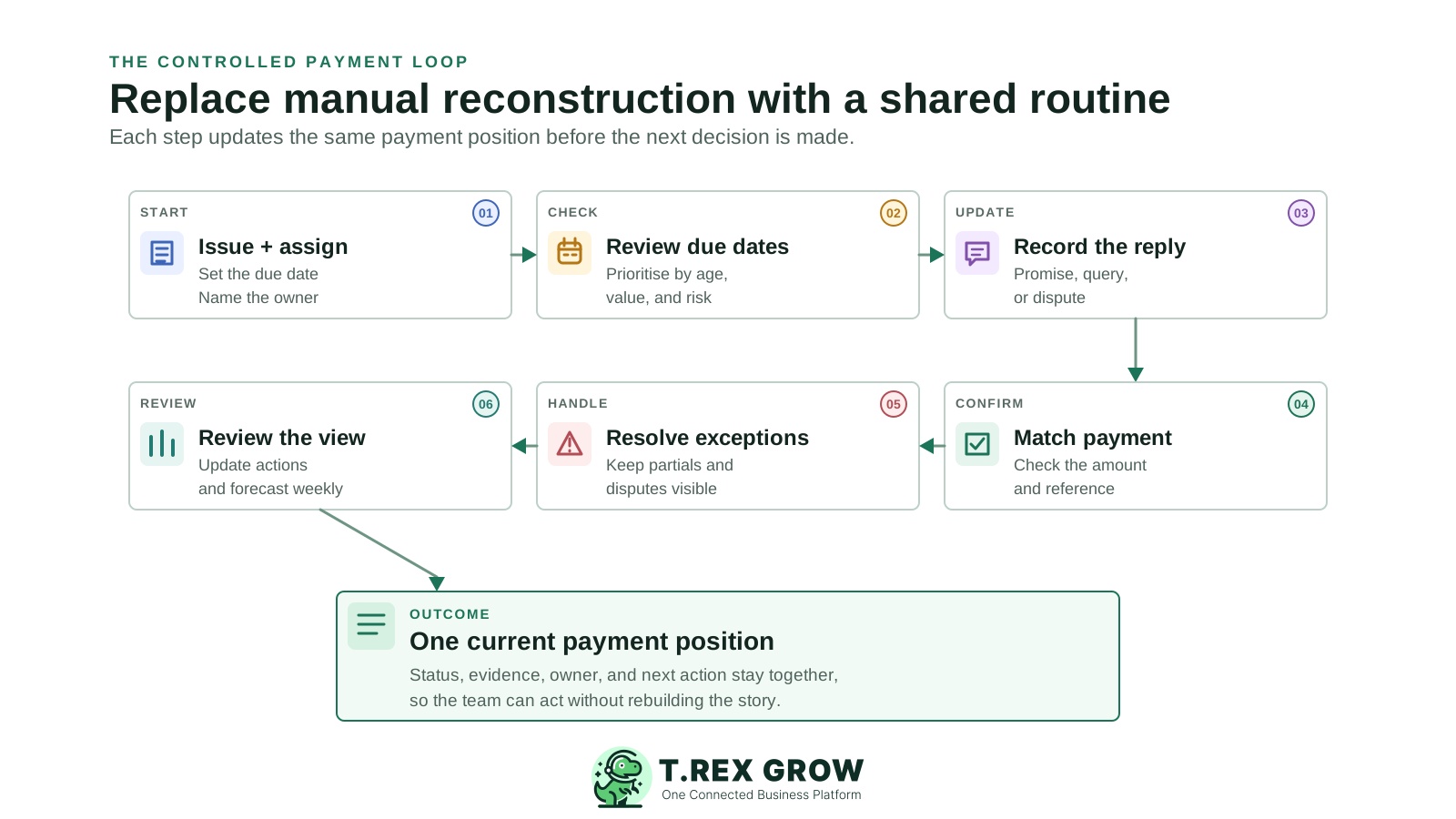
Create the payment record when the invoice is issued: capture the customer, invoice number, amount, issue date, due date, agreed term, responsible owner, and the source documents needed to explain the charge.
Review due dates on a fixed schedule: separate not due, due soon, overdue, and long-overdue invoices. Prioritise by amount, age, customer risk, and any known blocker rather than scanning every row in the same way.
Record the latest meaningful customer update: keep the reply, promise date, requested document, query, dispute reason, responsible person, and next review date beside the payment position instead of leaving the context in a private channel.
Match incoming payment before closing the invoice: confirm the amount, payment reference, customer, invoice allocation, and remaining balance. Keep partial, combined, or unallocated payments visible until the difference is understood.
Resolve exceptions through a named path: assign an owner and next action for disputes, deductions, missing documents, expired promises, and long-overdue accounts. An exception should not sit indefinitely inside a notes column.
Review the whole view weekly: check overdue movement, expired promises, unowned actions, high-value balances, expected collection dates, and payment evidence. Use the refreshed position for the cash view instead of creating a separate forecast copy.
When the tracker starts to strain, teams often add more manual work around it. Some changes create temporary visibility but leave the underlying coordination problem untouched.
Recurring issues usually point to workflow-control gaps, not one isolated data-entry mistake.
More fields do not help if nobody knows when to update them, which values are allowed, who owns the next action, or how an exception should move forward.
Personal filters can be useful, but separate files create competing versions of status, notes, and expected dates. A shared process needs one current record even when people use different views.
Not due, due soon, overdue, partially paid, disputed, promised, and unallocated are operationally different. A binary status hides the action the team should take next.
A promise is useful only when the expected date, condition, owner, and review point are visible to the people managing the invoice. A screenshot in a private thread is difficult to govern.
A customer message or remittance document may indicate intent, but the amount and reference still need to be matched to the correct invoice position before the balance is treated as resolved.
The agreed due date and the latest credible payment expectation answer different questions. Keep both so the team can see lateness clearly while planning from the latest customer information.
A better tool will not repair an undefined process by itself. Establish these controls first so the business knows what the system must preserve, automate, or make easier to review.
Choose statuses that lead to different actions and write a short definition for each one. Avoid labels that depend on one person's interpretation or combine several conditions.
The invoice can belong to the customer account while the next task belongs to a named person. Record who acts next and when the position should be reviewed again.
Allow filters, exports, and reports, but identify the record that must be updated when a payment, customer reply, dispute, or decision changes the position.
Record when a status was checked and where an expected date came from. An old promise should not silently remain in the forecast after its review date passes.
The tracker is an index, not the evidence itself. HASiL guidance identifies records such as bank statements, sales invoices, purchase records, transaction confirmations, and receipts. Keep the supporting record accessible so the current status can be checked.
Move beyond the manual method when keeping one current view repeatedly requires duplicate entry, private knowledge, after-hours cleanup, or a dedicated reconciliation exercise before normal decisions can be made.
The best practice is to make the next action clear before the situation becomes urgent.
Use these questions with the people who issue invoices, contact customers, check payments, and plan cash. Repeated warning signs mean the coordination method is at its limit even if the spreadsheet itself still looks tidy.
A healthy method gives every owner one current record with visible update timing. If people need to compare copies or ask for the latest file, the team is already working from different versions.
The reason, latest fact, owner, and next action should be visible beside the balance. If the context lives in someone's memory or messages, the tracker is showing an amount rather than a usable payment position.
A promise should include its date, source, condition, owner, and review point. An expected date that remains in notes or forecasts after it passes is a warning that working assumptions are not being controlled.
The amount, reference, invoice allocation, and evidence should be accessible from the same working path. Reconstructing bank activity, remittance details, and invoice records every time is a coordination cost.
A dependable collection view comes from recently checked invoice positions. If every cash discussion starts with a new spreadsheet exercise, the normal tracking method is not producing decision-ready information.
Another person should be able to understand the current facts and next actions without a private handover. If work pauses or customers are contacted again, essential history is still tied to an individual.
Answer from the current working process, not from what the tracker is supposed to contain after someone cleans it up.
| Question | Healthy answer | Warning sign |
|---|---|---|
| Can every owner see the same open-invoice position now? | Yes, from one current record with visible update timing. | Different people need to compare copies or ask for the latest file. |
| Can the team explain why each important invoice is still open? | Yes, the reason, latest fact, owner, and next action are visible. | The balance is visible but the context lives in someone's memory or messages. |
| Can customer promises be reviewed when they expire? | Yes, the promise date, source, condition, and review date are recorded. | Expected dates remain in notes or forecasts after the promised day passes. |
| Can a payment be matched without asking several people? | Yes, the amount, reference, invoice allocation, and evidence are accessible. | Bank activity, remittance details, and invoice records must be reconstructed manually. |
| Can management see expected collections without a special cleanup? | Yes, the collection view comes from recently checked payment positions. | A separate file or long reconciliation is needed before every cash discussion. |
| Can another person continue the work during an absence? | Yes, the current facts and next actions are understandable without a private handover. | The process pauses or customers are contacted again because history is incomplete. |
Once the team agrees what a current payment position should contain, TREX Grow can help bring customer, invoice, document, payment, and operational context closer together. The aim is a shared view that reduces repeated reconstruction and makes the next action easier to understand.
Bring the payment position closer to the customer, invoice, quotation, and related document context so staff spend less time rebuilding why an amount is due.
Give finance, sales, operations, and managers a clearer way to work from the same current record rather than relying on personal spreadsheet copies or private notes.
Keep meaningful activity and document references available for follow-up, handovers, balance checks, and the next customer invoice cycle.
For trading, distribution, and service SMEs, customer collections affect purchasing, supplier payments, inventory decisions, and approvals. A connected operating view helps those dependencies stay visible.
TREX Grow supports Malaysia LHDN e-Invoice workflows while helping SMEs keep focus on the wider quotation, invoice, payment, inventory, purchasing, and approval process.
Start with ten open invoices. For each one, identify the agreed due date, current status, source evidence, latest customer update, next action, owner, and review date. If the team cannot produce one dependable view without opening several tools, the process is ready for a shared workflow.
No. A well-managed spreadsheet can be appropriate when invoice volume is low, one person owns the process, payment terms are simple, and exceptions are rare. It becomes a problem when keeping the view current depends on repeated reconciliation across people, messages, files, and payment evidence.