
Practical cash timing guide for Malaysian SMEs

Cashflow Visibility for SMEs

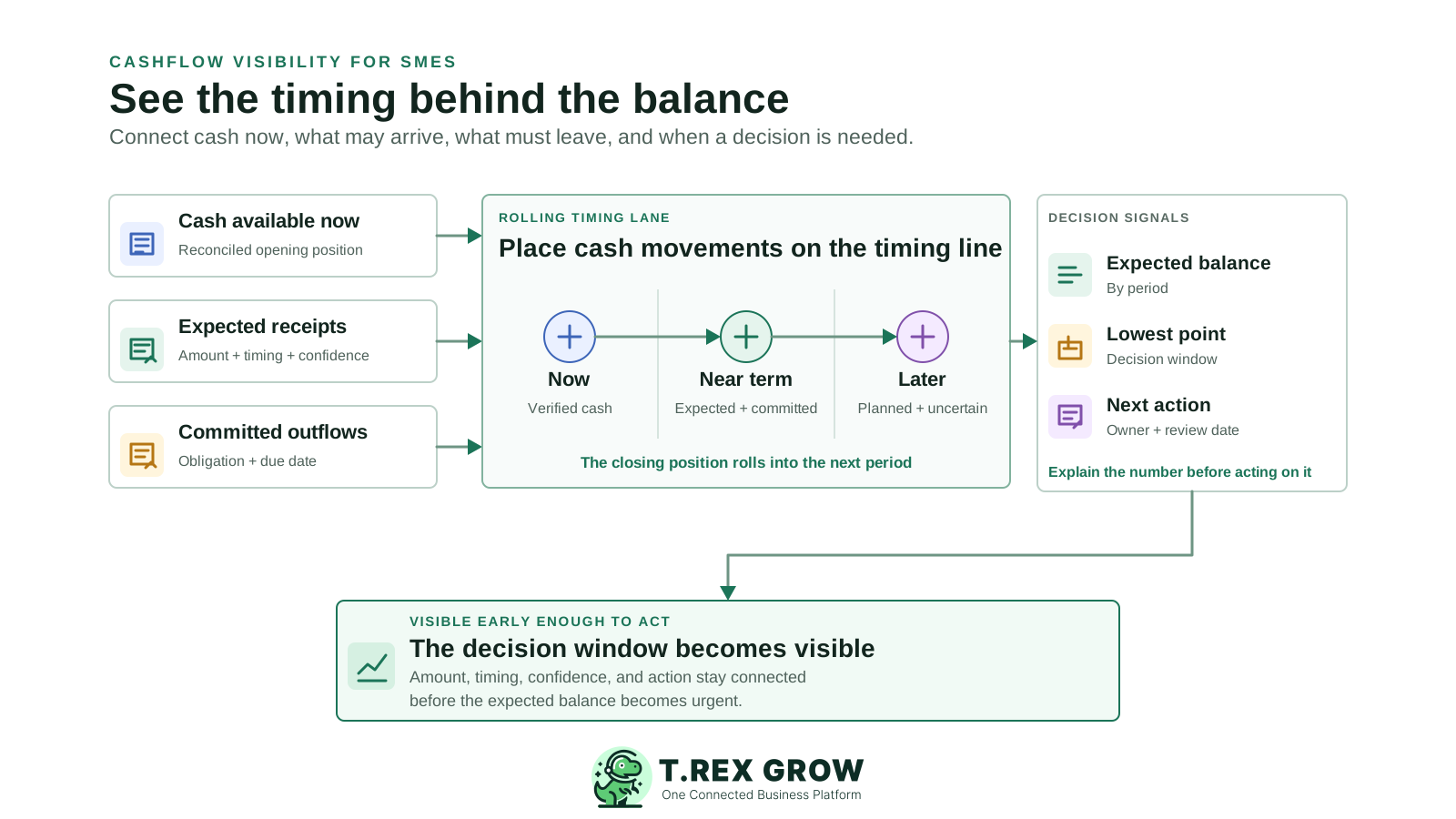
Cashflow visibility is not one balance or one report. It is a rolling view of the cash available now, the receipts that may arrive, the payments that must leave, the timing and confidence behind each assumption, and the point where the business may need to change a decision.

Cash timing overview connecting opening cash, expected receipts and committed outflows to a rolling balance and decision window

Primary keyword

cashflow visibility for SMEs

Audience

Malaysian SME owners, finance administrators, accounts staff, operations managers, and decision-makers who need a simple rolling view of cash timing across customer receipts, supplier commitments, payroll, inventory, and other operating payments.

Goal

Teach Malaysian SMEs how to build a practical, rolling cashflow visibility view from reconciled cash, timed receipts, committed outflows, explicit assumptions, and forecast variance before softly showing how TREX Grow can connect the operational records behind those movements.

Problem

Why SMEs can have records but still lack cashflow visibility

A business may have bank statements, invoices, supplier bills, payroll records, purchase plans, and a budget without having one reliable view of when cash will actually move. Visibility breaks when the records are not connected by timing, confidence, ownership, and the decision they are meant to support.

Operational pressure

The next action is easy to lose when context is scattered.

When records live in different places, the person responsible has to reconstruct what happened before they can make a confident decision or follow up.

Scattered recordsUnclear ownershipAvoidable surprises
High risk

The bank balance shows now, not what happens next

A current balance can be accurate and still hide a supplier payment, payroll run, loan instalment, rent payment, or inventory purchase due shortly. It needs to be the opening point of the view, not the complete answer.
Sales and invoices are confused with cash receipts

Revenue may be recorded before the customer pays. A useful cash view reflects when payment is reasonably expected to reach the business, not only when the invoice was issued or the sale was made.

Cash outflows are scattered across teams

Finance may know supplier due dates, operations may know an upcoming purchase, management may know a loan payment, and HR may know payroll changes. If those commitments are not combined, the projected balance is incomplete.

High risk

Monthly totals hide short timing gaps

The month can show more incoming than outgoing overall while a large payment falls before the related customer receipt. Shorter time buckets make the decision window visible before the gap becomes urgent.

Optimistic and reliable assumptions look the same

A payment already received, a customer promise, a normal payment pattern, and a sales opportunity do not have the same certainty. Visibility weakens when every expected inflow is treated as equally available.

The view is not refreshed when reality changes

A forecast becomes misleading when delayed receipts, partial payments, price changes, new supplier commitments, or unexpected costs are not compared with the prior view and rolled into the next one.

Education

The six questions a useful cash view should answer

Cashflow visibility should help a team make decisions, not simply display totals. A practical view connects verified cash, expected inflows, committed and planned outflows, time periods, assumption quality, and the action needed when the forecast changes.

A useful record supports the next decision

The work is easier when the team can see the current facts, the responsible person, and the next action without reconstructing the history from separate tools.

Shared operating context
Clear ownership and status
A visible next action

Set up the team view

1

Define the shared fields

  • - Use current facts
  • - Keep details consistent
2

Assign the next action

  • - Name an owner
  • - Set a review date
3

Keep it current

  • - Record changes
  • - Resolve exceptions
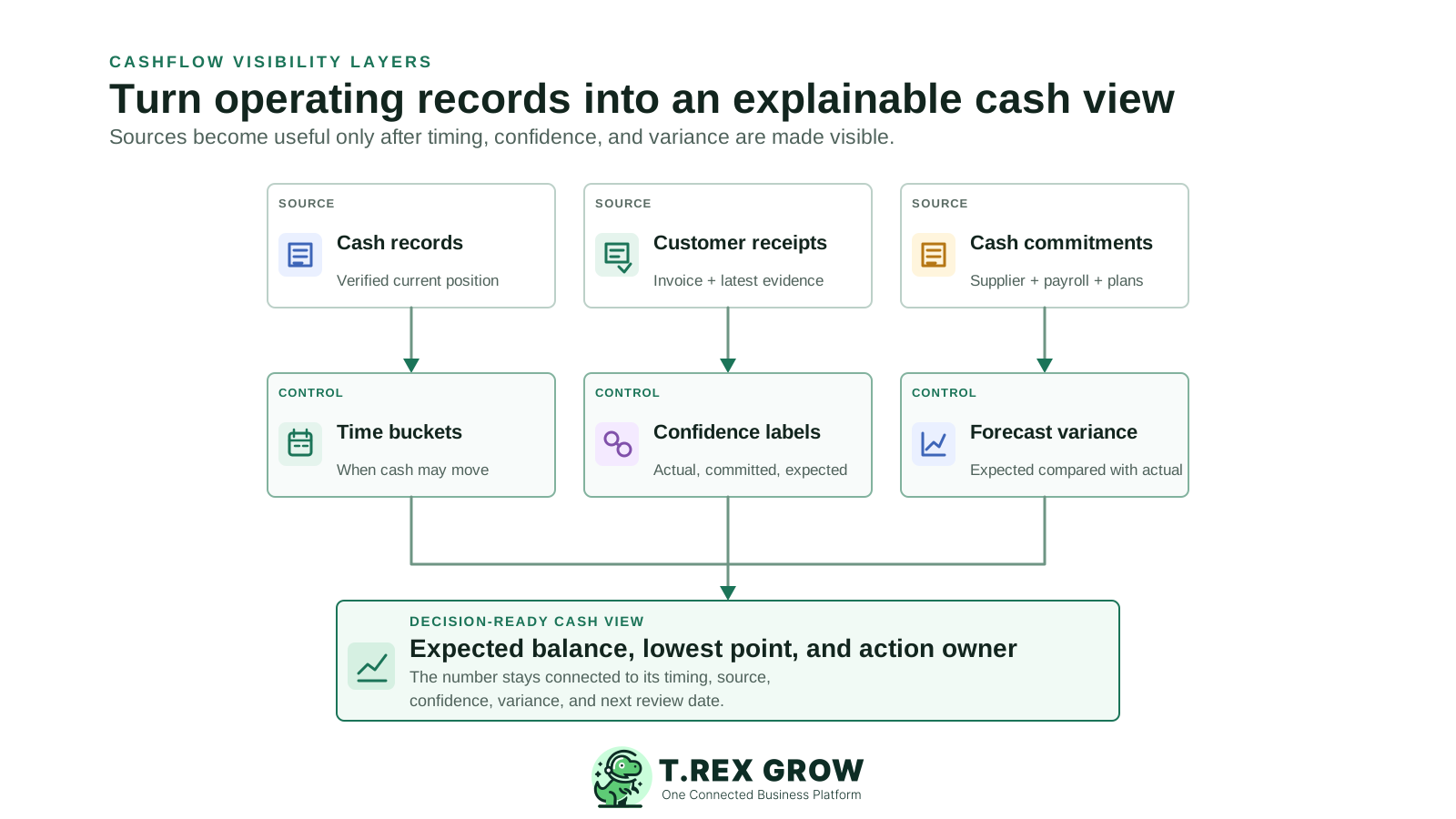
Three-layer cashflow visibility model connecting source records, timing and confidence controls, and business decisions

How much usable cash is available now?

Start from a reconciled cash position and identify amounts already reserved or not available for normal operating decisions. Do not assume every number shown in a bank feed has been classified correctly.

What cash is expected to arrive, and when?

Use invoice due dates, current customer responses, promised payment dates, deposits, recurring receipts, and other supported sources. Keep expected timing separate from the original invoice date.

What cash is committed or likely to leave?

Include supplier invoices, payroll, rent, loan repayments, inventory orders, approved purchases, and other known operating obligations with the dates the business expects to pay them.

What will the projected balance be in each period?

Calculate the movement from opening cash through expected inflows and outflows for each chosen period. Weekly buckets may help near-term decisions while monthly buckets can support a longer planning view.

Where is the lowest point or decision window?

A forecast is useful when it shows when cash may become tight, which assumption creates the pressure, and how much time the team has to collect, delay, reduce, reserve, or reassess a commitment.

What changed from the previous view?

Compare expected and actual receipts and payments. Record why the difference occurred, update the assumption, assign an owner where action is needed, and roll the closing position forward.

Workflow

A six-step cashflow visibility workflow for SMEs

Use a consistent rolling workflow rather than rebuilding the forecast from scratch. Choose a review horizon and time bucket that match the decisions your business needs to make, then update the view as actual cash movements and operational commitments change.

A repeatable operating workflow

Capture

Record the current facts in one shared place.

Check

Confirm what is known and what needs attention.

Assign

Make the next decision or follow-up accountable.

Act

Complete the next task and record the outcome.

Review

Refresh the shared view when facts change.

A dependable workflow keeps the shared record and the next action aligned.

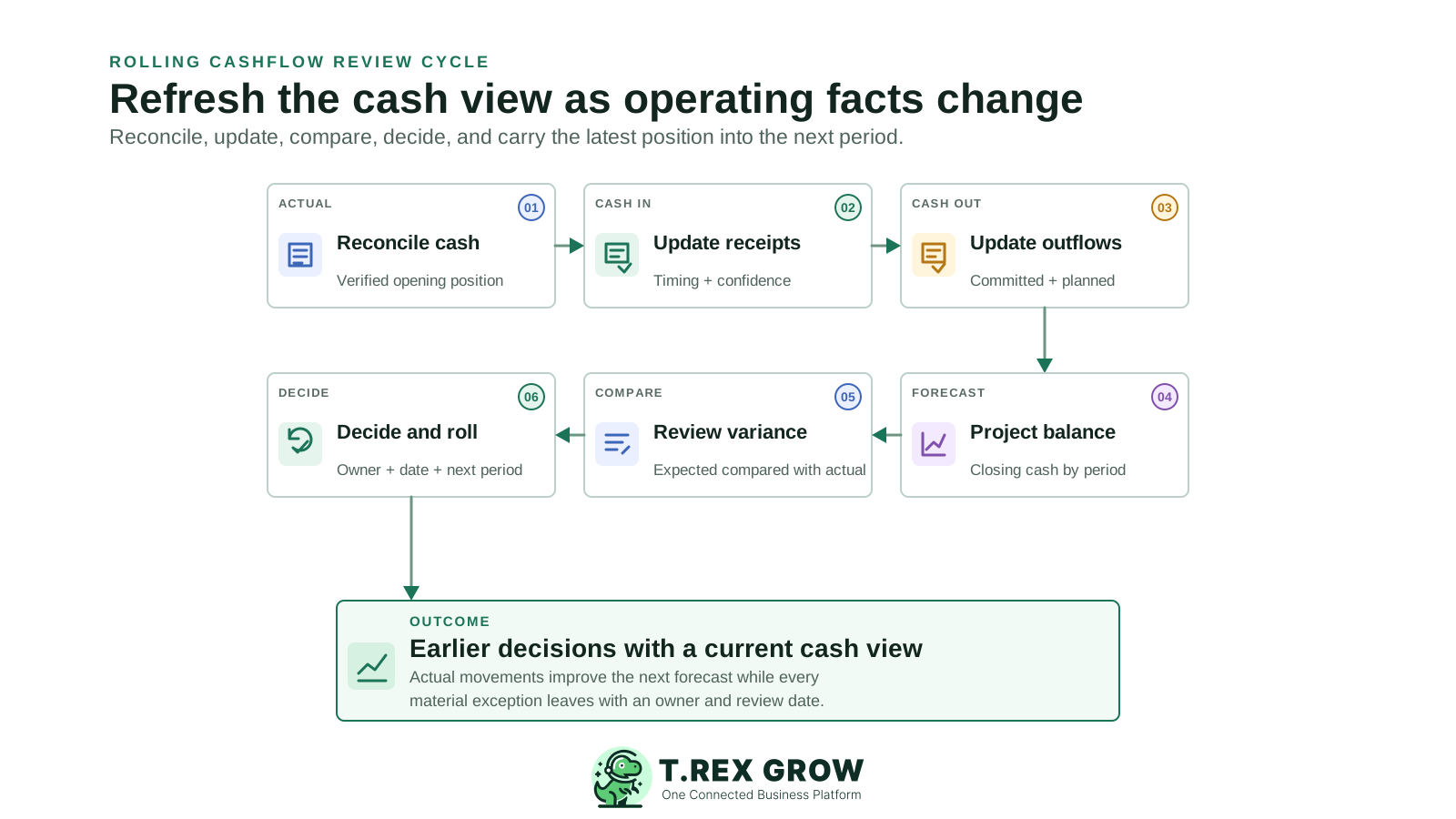
Six-step rolling cashflow visibility workflow from reconciling cash through updating receipts and outflows, projecting balance, reviewing variance and deciding actions
1

Reconcile the opening position: confirm the bank and cash records, identify uncleared or duplicated transactions, and separate cash that is already reserved for known obligations. The next period should begin from a position the team can explain.

2

Update expected cash receipts: review unpaid invoices, deposits, recurring income, customer promises, partial payments, other supported inflows, and the dates each amount may arrive. Label the source and confidence instead of treating every invoice as cash on its due date.

3

Update committed and planned cash outflows: collect supplier invoices, payroll, rent, financing repayments, inventory orders, approved purchases, and other operating payments. Keep committed obligations separate from planned spending that can still be changed.

4

Project the balance across the chosen time buckets: carry the opening cash forward, add expected inflows, subtract outflows, and show the expected closing position for each period. Make the lowest balance and the assumptions behind it easy to identify.

5

Compare the prior forecast with actual cash movements: investigate late receipts, earlier or larger payments, omitted commitments, partial payments, and timing shifts. Update the reason and confidence rather than silently replacing the previous number.

6

Decide the next action and roll the view forward: assign collection, purchasing, supplier, inventory, cost, funding, or reserve decisions to an owner and review date. Carry the latest closing position into the next cycle and update it when facts change.

Mistakes

Cashflow visibility mistakes that create false confidence

A neat forecast is not necessarily a reliable forecast. These mistakes make the cash position look clearer than it really is and can delay the decision the business needed to make earlier.

Most issues are not tax knowledge problems. They are workflow control problems.

Common

Using the bank balance as the forecast

The balance shows cash at one moment. It does not show approved purchases, supplier due dates, payroll, expected customer receipts, or the timing sequence that will change the position.

High risk

Counting every invoice at face value and due date

An invoice amount may be disputed, partially paid, delayed, or subject to the customer's normal processing cycle. Use current payment facts and label the timing assumption.

Common

Combining committed and optional spending

A supplier invoice already due and a proposed equipment purchase should not appear equally fixed. Separate obligations from plans so management can see which decisions remain flexible.

High risk

Forecasting totals without timing

Knowing the month's total receipts and payments is not enough when a large outflow occurs before the related inflow. Use periods short enough to expose the timing risk relevant to the decision.

Common

Leaving assumptions without a source or owner

A number that nobody can explain cannot be reviewed safely. Keep the source record, confidence, responsible person, and next date for material or uncertain movements.

High risk

Replacing the forecast without reviewing variance

If the team overwrites yesterday's expectation with today's actual, it loses the reason receipts or payments behaved differently. Variance is how the next forecast becomes more useful.

Best practices

Best practices for decision-ready cashflow visibility

The goal is not perfect prediction. It is a current, explainable view that shows the likely cash path, makes uncertainty visible, and gives the team enough time to change an operational decision.

Do this

Reconcile the starting position

Use verified cash records and resolve uncleared, duplicated, or misclassified movements before they become the opening balance for every future period.

Do this

Track timing as carefully as amount

Record when money is expected to move, not only the total value. Keep invoice date, due date, expected receipt date, payment date, and review date distinct.

Do this

Label actual, committed, expected, and planned

Give each movement a status or confidence level so the team can distinguish cash already moved, fixed obligations, evidence-based expectations, and changeable plans.

Do this

Use a rolling horizon that matches the decision

Use shorter periods for immediate payment and purchasing decisions and longer periods for seasonal, inventory, staffing, or growth planning. Extend the view as each period closes.

Do this

Review variance, not only the latest balance

Compare what was expected with what happened, identify the operational reason, and update recurring assumptions such as customer timing, supplier schedules, or inventory needs.

Do this

Connect every material exception to an action

Assign an owner and review date when the view shows a delayed receipt, new commitment, lower balance, or uncertain timing that could change a business decision.

Minimum fields for a useful SME cashflow view

A practical set of fields that keeps amount, timing, evidence, confidence, and action connected.

FieldDecision questionEvidenceReview action
Opening cashWhat is available now?Reconciled bank and cash recordsCorrect the starting position
Expected receiptsWhat may arrive and when?Invoice, payment pattern, customer responseUpdate date and confidence
Committed outflowsWhat must be paid and when?Supplier bill, payroll, rent, scheduled paymentConfirm amount, date, and owner
Planned outflowsWhat is likely but still changeable?Purchase, inventory, staffing, or project planLabel the assumption or scenario
Projected balanceWhere is the lowest point?Opening cash plus timed inflows and outflowsFlag the decision window
Forecast varianceWhat changed from the prior view?Expected amount and date compared with actualUpdate the cause and next action

The best practice is to make the next action clear before the situation becomes urgent.

Education

How to run a practical weekly cashflow review

A short review should focus on movements that changed, assumptions that need evidence, and decisions that cannot wait. Keep the same structure each time so the team can find the risk quickly and leave with an owner and date.

A useful record supports the next decision

The work is easier when the team can see the current facts, the responsible person, and the next action without reconstructing the history from separate tools.

Shared operating context
Clear ownership and status
A visible next action

Set up the team view

1

Define the shared fields

  • - Use current facts
  • - Keep details consistent
2

Assign the next action

  • - Name an owner
  • - Set a review date
3

Keep it current

  • - Record changes
  • - Resolve exceptions

Confirm what changed in cash now

Reconcile material receipts and payments since the previous review, identify anything still unmatched, and correct the opening position before discussing future periods.

Review receipts due in the near term

Check the largest or most uncertain customer receipts, current invoice status, latest response, expected date, and whether a collection or document action is needed.

Review committed cash out

Confirm supplier, payroll, rent, inventory, financing, and other priority payments due in the review horizon, including new commitments that were not in the prior view.

Find the lowest projected balance

Identify the period with the least expected cash, the assumptions driving that point, and how much time remains to change collection, purchasing, inventory, or spending decisions.

Explain the largest variances

Focus on receipts or payments that moved materially from the previous expectation. Record whether the cause is one-off or should change future timing and amount assumptions.

Close with owners and review dates

Assign each material action, confirm when it will be checked, roll the closing balance into the next period, and keep the earlier forecast available for comparison.

Solution

How TREX Grow can support clearer cashflow visibility

Once your team defines the cashflow view and review cadence, TREX Grow can help bring quotation, invoice, customer payment, purchasing, supplier, inventory, approval, and operational context closer together. The aim is to improve the records behind the decisions, not to promise perfect forecasts.

Operations work better when records and next actions are connected

Connect customer receipts to source documents

Keep quotation, invoice, customer, due-date, payment, and related document context closer together so expected cash-in assumptions can be reviewed against current operational facts.

Bring purchasing and supplier context into view

Use purchase, supplier, approval, and payment records to understand which cash-out movements are committed, pending, or linked to an operational decision.

Make ownership and status easier to understand

Help finance, sales, purchasing, operations, and management continue from the same current record when an expected movement needs collection, clarification, approval, or matching.

TREX Grow Operations Hub

Connect inventory decisions to cash timing

Inventory purchases can use cash before the related sale is collected. Bringing stock, purchasing, and sales context closer together helps the team discuss that timing trade-off.

Retain the operational history behind changes

Keep useful payment, document, approval, and exception context available when the team reviews why the forecast changed and how future assumptions should be adjusted.

Next step

Build one short-term cash view from real records

Start with verified cash today, then add the largest expected receipts and committed payments for the periods that matter to your next decision. Label the timing and confidence, find the lowest projected balance, and assign one action before expanding the view.

See how TREX Grow supports this workflow

Cashflow visibility is the ability to see current cash, expected receipts, committed and planned outflows, timing, assumption quality, projected balances, and the actions needed when the view changes. It should help the team make decisions before cash becomes tight.