End-to-end payment collection guide for Malaysian SMEs

Payment Collection Process for Small Businesses

Payment collection is broader than chasing overdue invoices. A dependable process starts with clear commercial terms and a payable invoice, keeps every due date, response, owner, and next action visible, and ends only when the payment is matched and the account position is closed accurately.

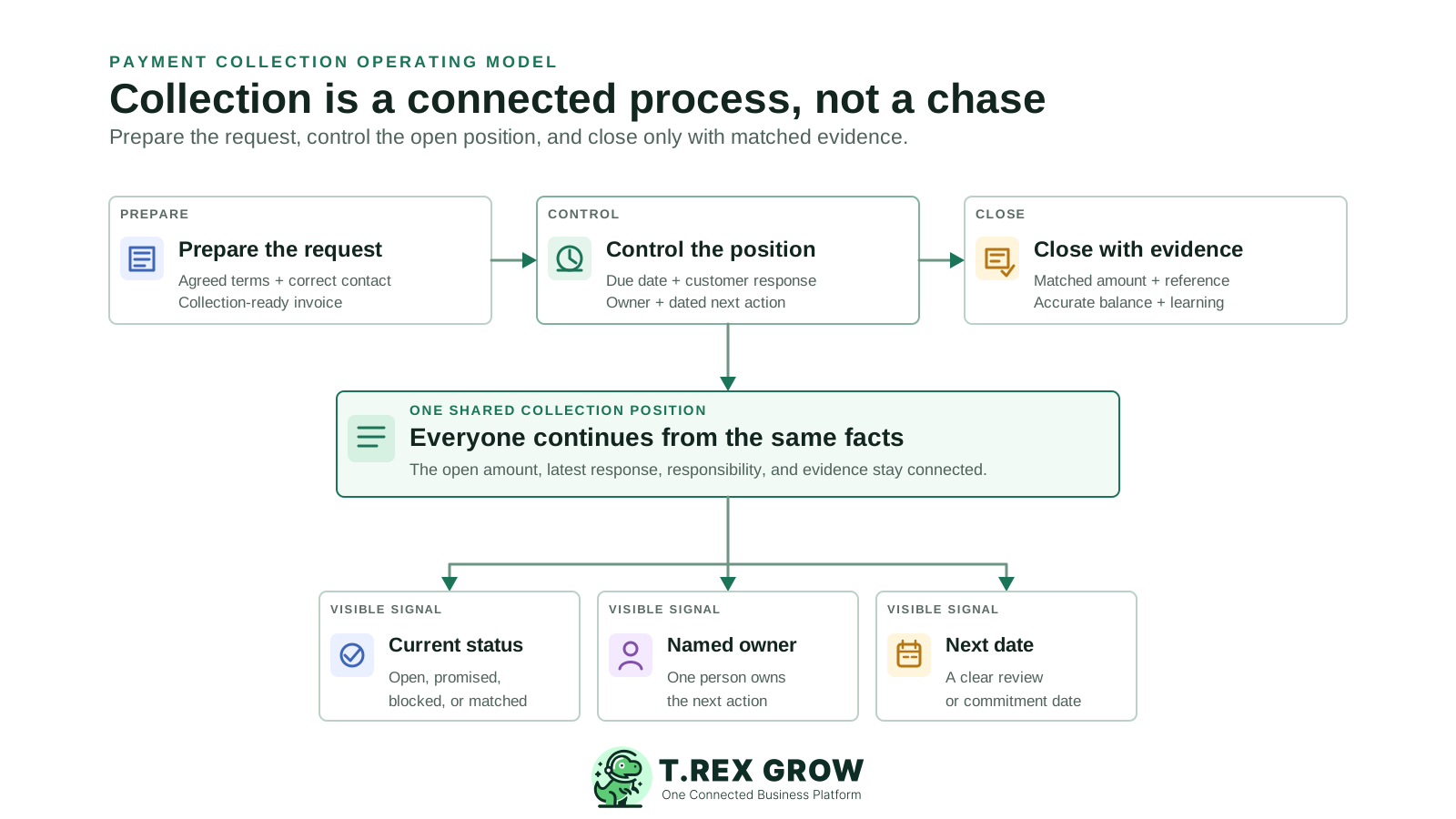
Three-stage small-business payment collection operating model covering preparation, collection control, and accurate closure

Primary keyword

payment collection process for small businesses

Audience

Malaysian small-business owners, finance administrators, accounts assistants, sales coordinators, and operations teams that need a repeatable way to collect customer invoice payments without relying on memory or disconnected handovers.

Goal

Teach Malaysian SMEs how to build one connected payment collection process across commercial terms, invoice readiness, due-date control, customer responses, payment evidence, and closure before softly showing how TREX Grow can support shared operational context.

Problem

Why small-business payment collection becomes reactive

Many teams think collection begins when payment is late. By then, the business may be discovering an incorrect billing contact, a missing purchase-order reference, an unclear payment term, a disputed amount, or a document the customer needed weeks earlier. A collection process works better when it manages the full path to payment, not only the overdue stage.

Operational pressure

The next action is easy to lose when context is scattered.

When records live in different places, the person responsible has to reconstruct what happened before they can make a confident decision or follow up.

Scattered recordsUnclear ownershipAvoidable surprises
High risk

The commercial promise is not carried into the invoice

The quotation, order, contract, or customer conversation may contain the agreed price, credit term, billing entity, purchase-order requirement, and payment method. If those facts are not checked when invoicing, the collection problem is created before the due date.

The invoice is sent but receipt is assumed

A sent email does not prove the invoice reached the correct person or entered the customer's approval process. The team needs a reliable recipient, issue date, delivery record, and practical route for the customer to request missing information.

Open invoices have balances but no next action

An ageing list can show what is unpaid, but it does not always show who owns the next contact, what the customer last said, which document is pending, or when the position should be reviewed again.

High risk

Customer replies are treated as notes, not workflow changes

A promise to pay, invoice query, missing document, wrong contact, partial payment, or remittance advice should each change the next action. If replies sit in individual inboxes, generic reminders continue and the real blocker remains open.

Payment evidence is separated from the invoice record

Bank activity, remittance advice, receipts, and partial-payment references may reach different people. Until the evidence is matched to the correct invoice and amount, the collection position is not reliable.

Closure means removing a row, not learning

If the team never reviews recurring late causes, it keeps repeating the same billing errors, weak handovers, unclear terms, and unhelpful reminder timing in the next collection cycle.

Education

What a payment collection process must keep connected

A useful process gives the team one current collection position. It connects what the customer agreed, what was invoiced, what the customer has said, what remains open, who owns the next action, and what evidence will close the invoice. That shared position lets finance, sales, and operations continue the same process instead of restarting it.

A useful record supports the next decision

The work is easier when the team can see the current facts, the responsible person, and the next action without reconstructing the history from separate tools.

Shared operating context
Clear ownership and status
A visible next action

Set up the team view

1

Define the shared fields

  • - Use current facts
  • - Keep details consistent
2

Assign the next action

  • - Name an owner
  • - Set a review date
3

Keep it current

  • - Record changes
  • - Resolve exceptions
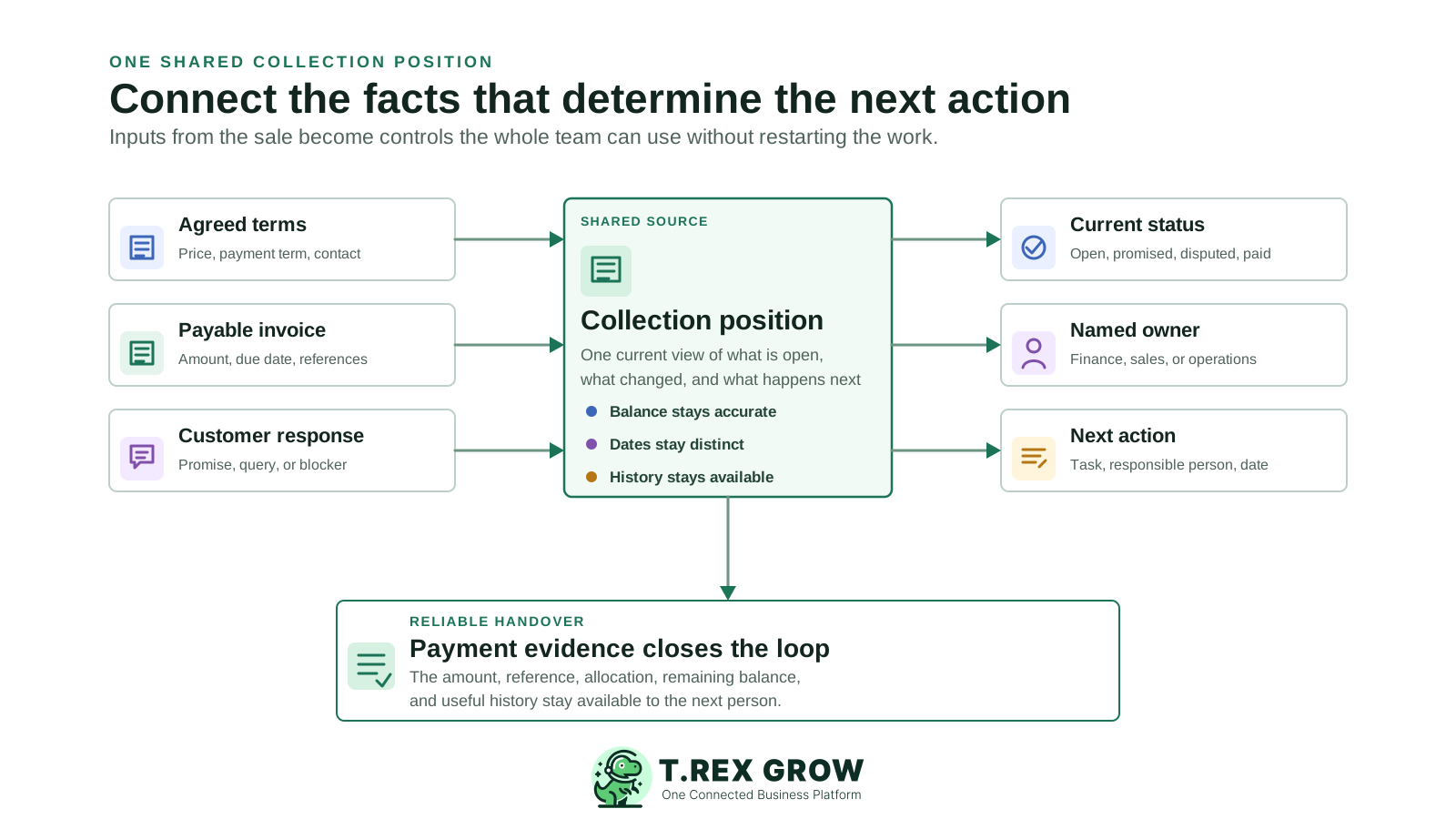
Shared payment collection position linking commercial terms, invoice details, and customer responses to status, ownership, next action, and payment evidence

Agreed commercial terms

Keep the price, payment term, deposit or instalment arrangement, accepted payment method, credit condition, and any customer purchasing requirement connected to the collection request.

A collection-ready invoice

The invoice should identify the parties, goods or services, amount, issue date, due date, payment instructions, and relevant quotation, order, purchase-order, or delivery references accurately.

The current open position

Show the original amount, amount received, remaining balance, formal due date, expected payment date, dispute or blocker, and the latest customer response without replacing one fact with another.

One responsible owner

Assign the next action to the person who can perform it. Finance may contact the customer, sales may clarify a commercial promise, and operations may provide delivery or service evidence.

A dated next action

Every open invoice should have a next review point: confirm receipt, send a reminder, provide a document, review a promise, match a payment, resolve a dispute, or prepare an internal escalation brief.

Evidence that closes the loop

Use the payment amount, date, bank or remittance reference, allocation, receipt where relevant, and any remaining balance to close the invoice accurately and stop unnecessary follow-up.

Workflow

A six-step payment collection process for small businesses

Use this process for every credit sale, then adapt the timing and level of attention to the customer, invoice value, agreed term, and actual response. The aim is to keep one current position from the commercial agreement through to payment closure.

A repeatable operating workflow

Capture

Record the current facts in one shared place.

Check

Confirm what is known and what needs attention.

Assign

Make the next decision or follow-up accountable.

Act

Complete the next task and record the outcome.

Review

Refresh the shared view when facts change.

A dependable workflow keeps the shared record and the next action aligned.

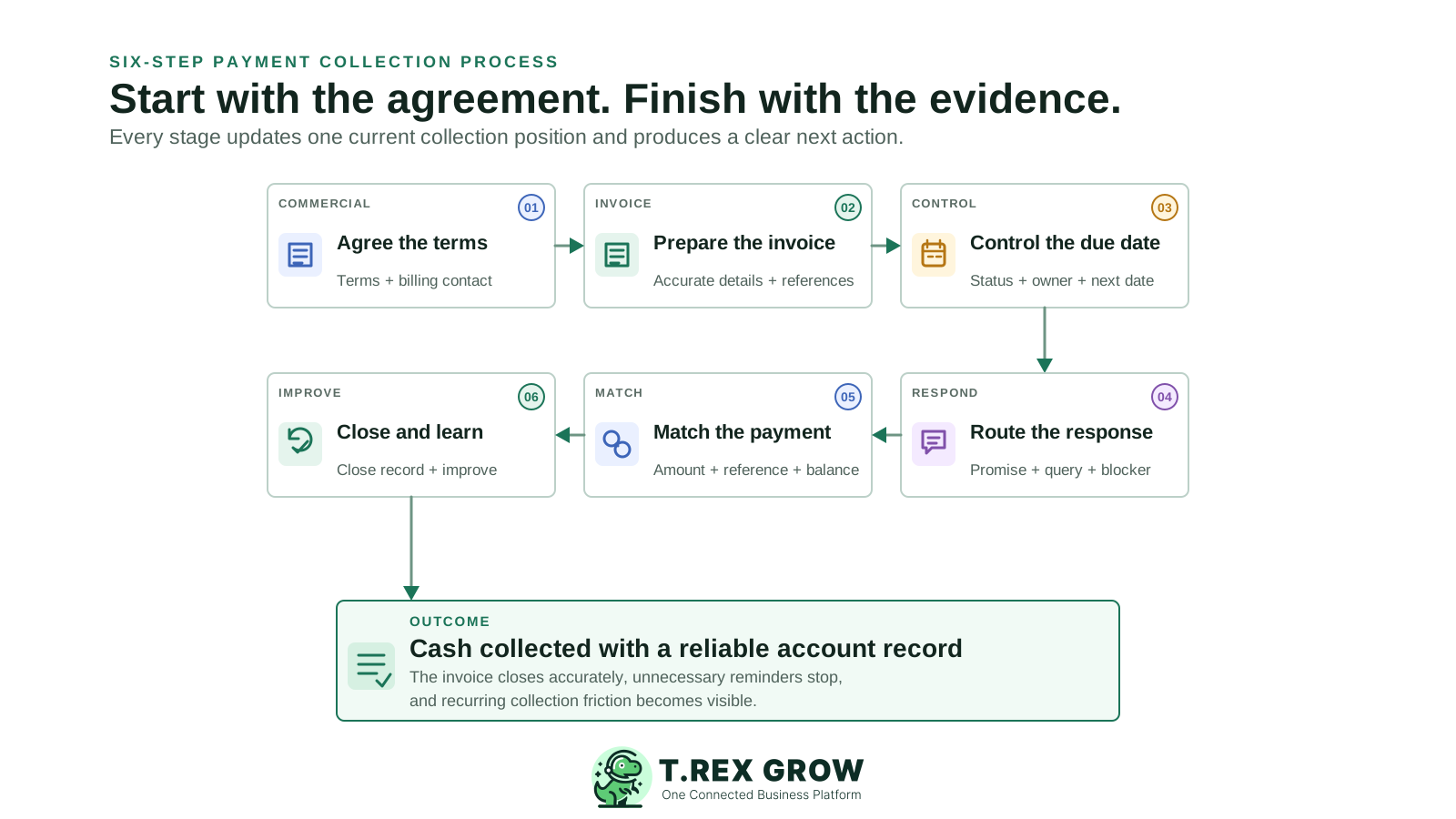
Six-step payment collection process from agreeing terms and issuing an invoice through monitoring, resolving, matching, and reviewing
1

Agree the collection conditions before supplying on credit: confirm the customer entity, billing contact, price, payment term, deposit or instalment arrangement, accepted payment method, credit limit where relevant, and any purchase-order or approval requirement. Record the agreement where the invoicing team can retrieve it.

2

Issue a collection-ready invoice promptly: verify the customer details, invoice number, description, quantity, amount, due date, payment instructions, and commercial references. Send it to the correct billing contact using a delivery method the team can trace, and make supporting documents easy to retrieve.

3

Control the open position before and at the due date: record the formal due date, confirm receipt when the customer's process warrants it, review what is becoming due, and set one owner and next action. Keep any expected payment date separate from the contractual due date.

4

Route the customer's response instead of repeating the reminder: record a payment promise, missing document, wrong contact, query, dispute, deduction, or partial payment. Assign the blocker to the person who can resolve it and set a dated review point. Use a staged, professional follow-up when there is no response.

5

Match payment evidence to the correct invoice: check the amount, payment date, bank or remittance reference, customer account, invoice allocation, and any remaining balance. A payment is not operationally closed merely because someone says it was sent; the evidence must be matched accurately.

6

Close the collection record and improve the next cycle: update the invoice position, stop unnecessary reminders, acknowledge payment where appropriate, retain the useful history, and review repeated causes such as invoice errors, missing references, weak terms, slow dispute handling, or unclear ownership.

Mistakes

Payment collection mistakes that weaken the whole process

Collection problems are not always caused by customers refusing to pay. Many delays come from missing information, unclear ownership, poor response routing, or inaccurate closure inside the business itself.

Most issues are not tax knowledge problems. They are workflow control problems.

Common

Starting collection only after the due date

The team loses time if it waits until an invoice is overdue to discover a missing purchase-order number, incorrect recipient, unclear term, or document the customer needs for approval.

High risk

Treating every open invoice the same

A due-soon invoice, broken payment promise, disputed invoice, partial payment, and unmatched remittance need different actions. One overdue label is not enough to operate the process.

Common

Letting inboxes become the collection record

Important promises, queries, attachments, and contact changes become invisible to colleagues when they remain in personal email or messaging threads. The next person then contacts the customer without the latest context.

High risk

Sending reminders before resolving your own blocker

If the customer requested a corrected invoice, statement, delivery evidence, or other document, complete or route that action before sending another generic request for payment.

Common

Marking invoices paid without checking allocation

A bank receipt may cover several invoices, part of one invoice, or an amount with a deduction. Match the evidence and remaining balance before closing the item or stopping all follow-up.

High risk

Escalating with borrowed legal language

Do not copy interest, fee, demand, or debt-recovery wording from another country or a generic template. Check the actual agreement and obtain Malaysia-specific professional advice before formal escalation.

Best practices

Best practices for a process a small team can maintain

The best process is not the one with the most stages. It is the one the team can apply consistently, hand over safely, and review quickly without losing the facts that determine the next action.

Do this

Define a minimum collection record

Require the invoice, customer, amount, due date, status, latest response, owner, next action, next date, and payment evidence for every open item. Add detail only when it changes a decision.

Do this

Separate due date, expected date, and review date

The due date records the agreed obligation, the expected date records the customer's current commitment, and the review date tells your team when to act. One date should not overwrite the others.

Do this

Use response-based routes

Create clear paths for no response, promise to pay, missing document, dispute, partial payment, wrong contact, and payment sent but unmatched. This prevents one reminder sequence from being applied blindly.

Do this

Review open items on a fixed cadence

Use a short, repeatable review to identify what is due soon, overdue, blocked, promised, disputed, partially paid, or ready to close. Prioritise by action and risk, not only by invoice age.

Do this

Keep customer contact factual and proportionate

Verify the invoice position, identify one request, provide the relevant document, record the response, and make each next step more deliberate. Avoid emotional, accusatory, or unsupported language.

Do this

Measure recurring collection friction

Review repeated invoice errors, missing purchase-order references, time to resolve disputes, broken promises, unmatched payments, and customers or handovers that regularly require intervention.

Small-business payment collection control points

A stage-by-stage view of the question, evidence, and output that keep the collection process moving.

StageDecision questionEvidence to retainProcess output
AgreeWhat did the customer accept?Quote, order, contract, term, billing contactClear collection conditions
InvoiceCan the customer process this request?Accurate invoice, references, delivery recordPayable invoice issued
ControlWhat is due and what happens next?Due date, status, owner, next review dateCurrent open position
RespondWhat changed after customer contact?Reply, promise, query, dispute, document requestResponse-based next action
MatchWhat payment can be allocated?Amount, date, reference, remittance, allocationAccurate remaining balance
CloseWhat should stop or improve?Closed status, history, recurring causeClean closure and learning

The best practice is to make the next action clear before the situation becomes urgent.

Education

How to run a short payment collection review

A small team does not need a long collection meeting. Use one current view, work through the invoices that require a decision, assign the next action, and finish with a dated review point that another person can understand.

A useful record supports the next decision

The work is easier when the team can see the current facts, the responsible person, and the next action without reconstructing the history from separate tools.

Shared operating context
Clear ownership and status
A visible next action

Set up the team view

1

Define the shared fields

  • - Use current facts
  • - Keep details consistent
2

Assign the next action

  • - Name an owner
  • - Set a review date
3

Keep it current

  • - Record changes
  • - Resolve exceptions

Begin with due-soon and newly overdue invoices

Confirm that the invoice reached the right person, the agreed date is correct, and there is one planned action before the account becomes a prolonged exception.

Separate invoices by the decision they need

Group items that need customer contact, an internal document, dispute resolution, promise review, payment matching, or closure instead of discussing one long overdue list.

Review promises on the promised date

Check whether evidence arrived and whether it can be matched. If the commitment changed, record the new fact and next action without replacing the formal due date.

Route blockers during the review

Assign a missing document, commercial query, delivery issue, or disputed amount to the person who can resolve it and give that person a clear review date.

Match receipts before sending more reminders

Review bank activity, remittance references, partial payments, and allocations so a customer is not contacted about an amount already received or a balance stated incorrectly.

End with an owner and date for every open item

The review is complete when each invoice has a current status, responsible person, next action, and dated checkpoint—or is closed with the payment evidence matched.

Solution

How TREX Grow can support a connected collection process

Once your team defines the collection stages and decision rules, TREX Grow can help bring customer, quotation, invoice, payment, document, and operational context closer together. The objective is a clearer handover and a more reliable current position, not a promise that every customer will pay on time.

Operations work better when records and next actions are connected

Carry commercial context into invoicing

Keep customer, quotation, invoice, and related operational references closer together so the collection request can be checked against what was agreed.

Make open payment positions easier to review

Give the team a clearer view of invoice status, dates, balances, related documents, and the context needed to choose the next action.

Support safer team handovers

Help finance, sales, operations, and management continue from the latest known position instead of duplicating contact or searching across disconnected files.

TREX Grow Operations Hub

Keep payment activity connected to the invoice

Bring payment evidence and invoice context closer together so partial, complete, or unmatched payments can be reviewed against the correct customer and balance.

Connect collection visibility to operations

Customer collections affect purchasing, supplier commitments, stock decisions, approvals, and cash planning. A connected operating view helps the business see those dependencies.

Next step

Map one real invoice from agreement to payment

Choose one open customer invoice and trace the agreed terms, billing contact, issue evidence, due date, current response, owner, next action, and payment evidence. Any missing handoff is a practical place to improve your collection process before applying it to the full ledger.

See how TREX Grow supports this workflow

It is the repeatable workflow used to turn a credit sale into matched payment. It should connect agreed terms, invoice readiness, due-date monitoring, customer contact, exception handling, payment evidence, accurate allocation, closure, and review.