Stockouts and excess stock exist together
The business holds too much of slow or unsuitable products while fast-moving, customer-critical, or long-lead items run short because every item follows the same review rule.

Inventory problems rarely begin with one dramatic event. They grow when item rules are unclear, movements are recorded late, stock states are mixed, purchasing relies on instinct, and differences are corrected without fixing the operating rule behind them.
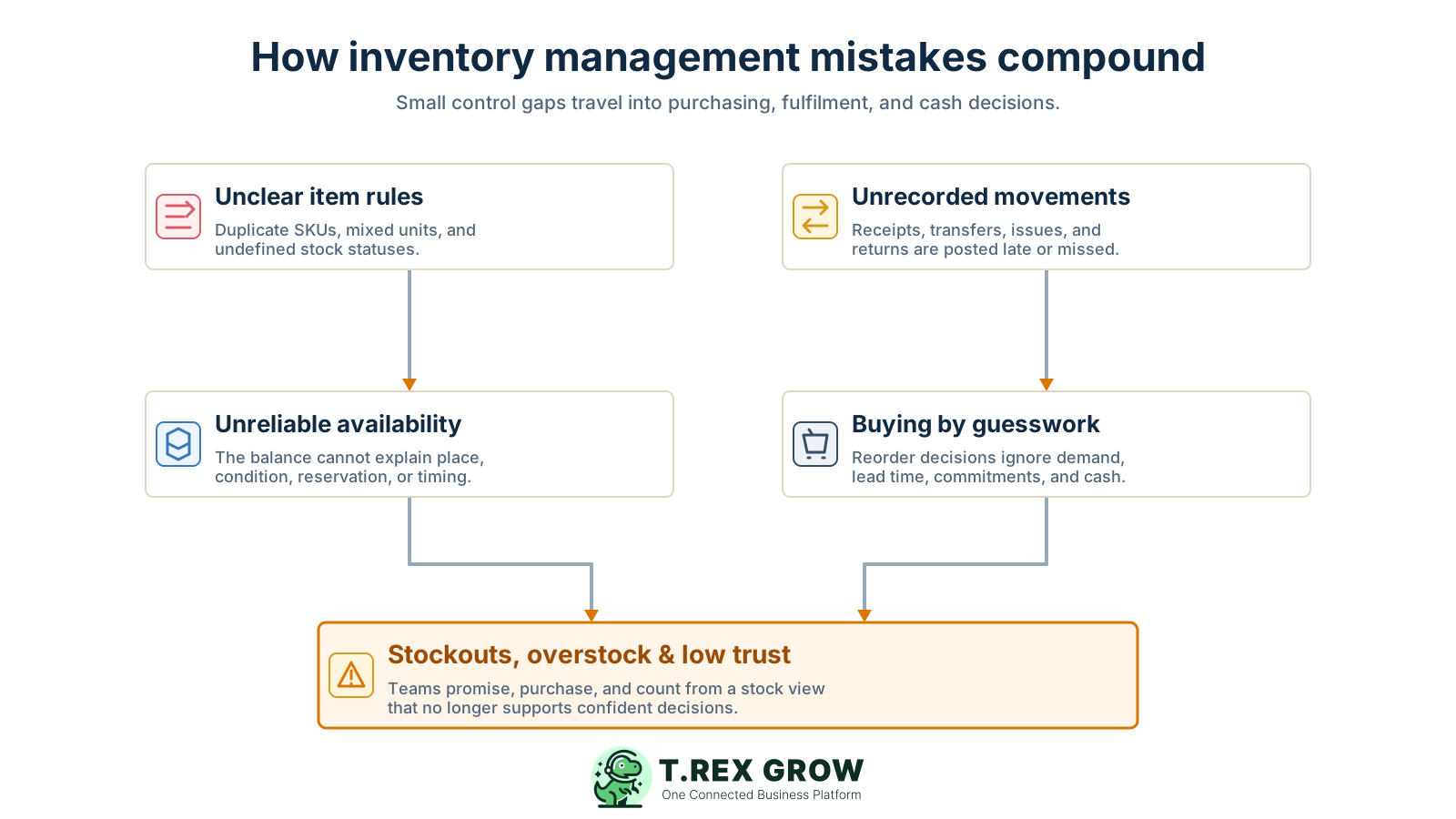
A weak inventory process does not stay inside the warehouse. It changes what sales promises, what purchasing buys, when suppliers are chased, how much working cash sits in stock, and how often staff stop normal work to investigate a quantity.
Operational pressure
When records live in different places, the person responsible has to reconstruct what happened before they can make a confident decision or follow up.
The business holds too much of slow or unsuitable products while fast-moving, customer-critical, or long-lead items run short because every item follows the same review rule.
Purchasing reacts to memory, supplier discounts, minimum order pressure, or one recent sale without checking current availability, open commitments, incoming supply, demand pattern, and cash priorities.
A company-wide total may include reserved, damaged, returned, quarantined, expired, or misplaced units that cannot fulfil the order from the required location.
Instead of receiving, picking, packing, and transferring stock, staff search shelves, messages, paper notes, and spreadsheets to explain which number is current.
The team corrects the total after each count but does not repair the receiving, issuing, unit, location, return, cut-off, or ownership rule that allowed the variance.
A dashboard can show exact totals while the underlying item identity, status meaning, timing, source evidence, and exception ownership remain inconsistent.
Inventory management is not one spreadsheet, count, or reorder formula. It connects controlled definitions, completed movement events, operating decisions, and a review loop. A weakness in an earlier layer travels into every decision above it.
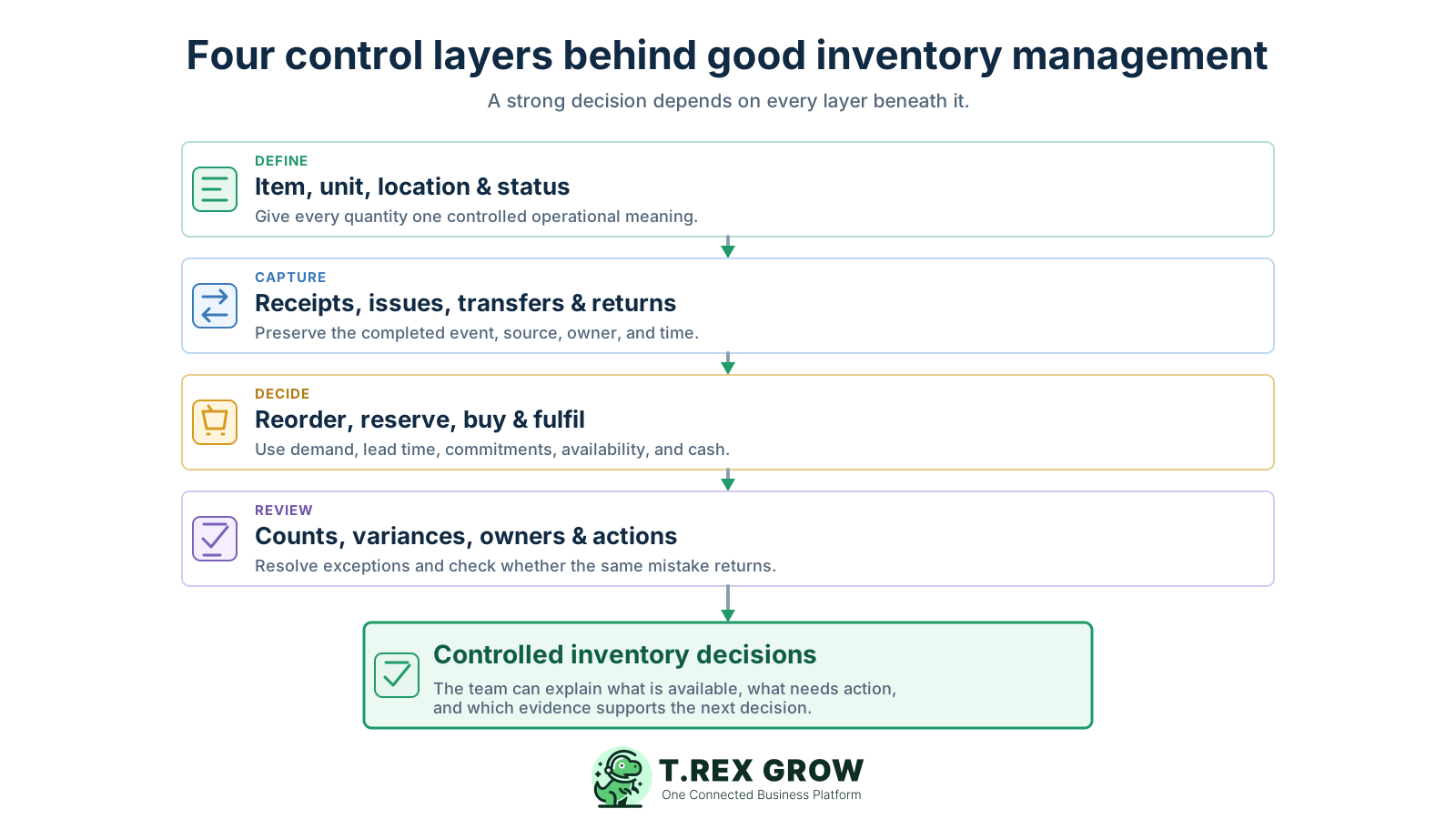
Establish the exact item identity, base unit, useful locations, quantity meanings, stock statuses, and point at which a planned document becomes an effective stock event.
Record actual receipts, issues, transfers, returns, internal use, damage, expiry, write-offs, reversals, counts, and reviewed adjustments close to the physical event.
Use current demand, customer commitments, available stock, incoming supply, supplier lead time, order constraints, risk, and cash before buying or promising units.
Find material exceptions, reconcile priority items, name an owner and action, then check whether the same cause returns after the correction.
These mistakes often look harmless when transaction volume is low. They become expensive when more products, locations, suppliers, customers, and staff depend on the same stock information.
Recurring issues usually point to workflow-control gaps, not one isolated data-entry mistake.
A fast-moving, high-value, long-lead, customer-critical item should not receive the same count, review, and reorder attention as a low-risk item that rarely moves.
A supplier promotion or memorable stockout can distort the next order. Review demand pattern, commitments, current usable stock, incoming supply, lead time, order constraints, and cash together.
A purchase order states an expectation. Partial delivery, rejection, damage, substitution, or a later balance means the actual accepted receipt may be different.
Units can exist in the business without being usable for the next sale. Define quantity states and stock statuses so each team understands what can be promised.
Two item records can split one stock position, while cartons, packs, pieces, kilograms, metres, or litres can make correct arithmetic describe the wrong quantity.
Physical stock changes before the record does. Every purchasing, fulfilment, and count decision made during that delay starts from an outdated position.
A direct adjustment can make today's total match the count while preserving the weak receipt, issue, transfer, return, unit, timing, or ownership rule behind it.
Waiting months to inspect exceptions allows repeated errors to accumulate. Risk-based cycle counts and short exception reviews expose problems while evidence is still easier to trace.
A short review should focus on decisions and exceptions that matter, not recount every normal movement. Use a consistent cut-off, bring the relevant teams together, and leave each material issue with a named action and owner.
Record the current facts in one shared place.
Confirm what is known and what needs attention.
Make the next decision or follow-up accountable.
Complete the next task and record the outcome.
Refresh the shared view when facts change.
A dependable workflow keeps the shared record and the next action aligned.
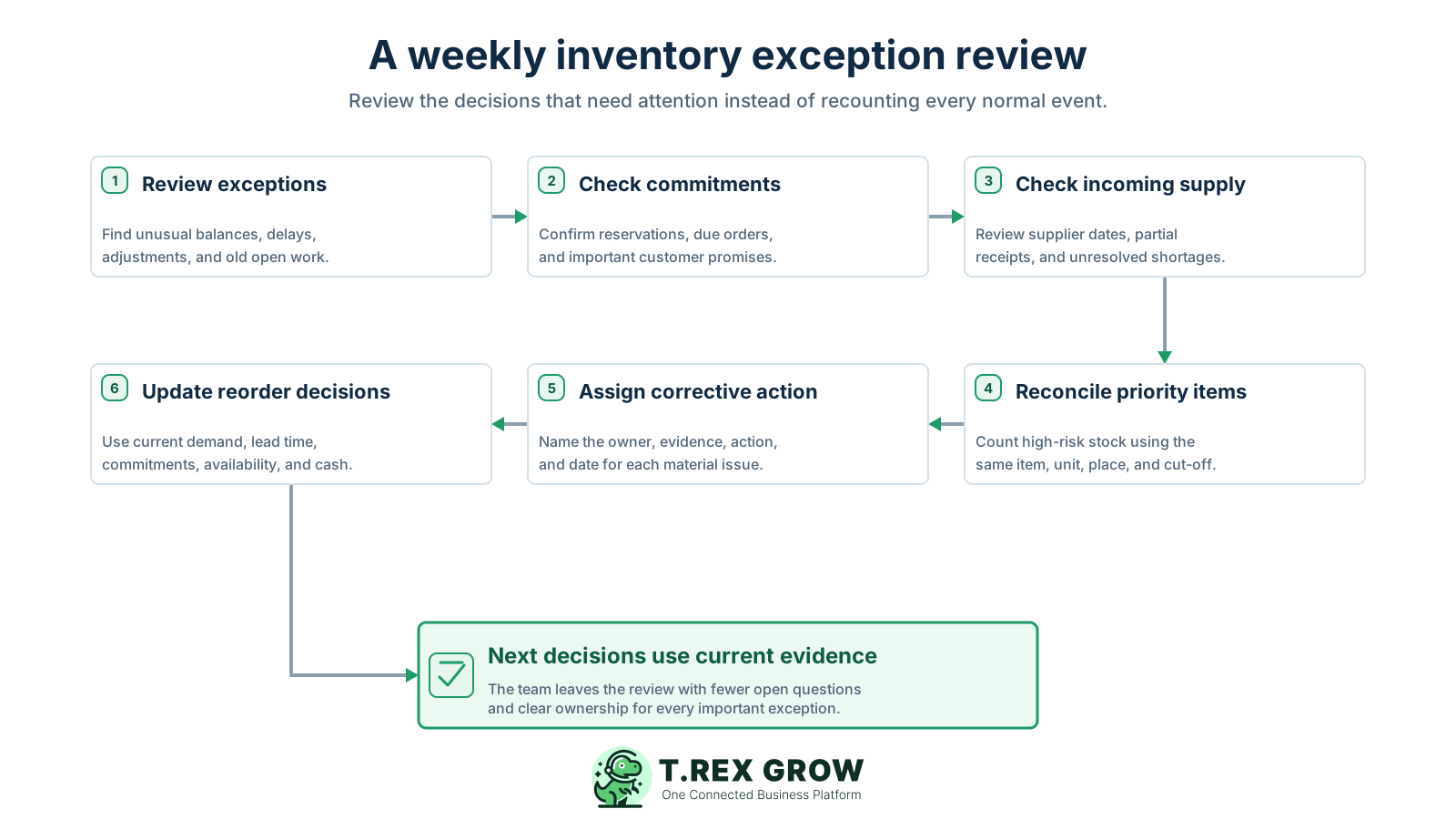
Review the exception list: look for unexpected or negative quantities, old pending movements, unusual adjustments, repeated stockouts, slow-moving excess, location mismatches, and unresolved returns.
Check customer commitments: confirm reservations, due orders, important customer promises, partial fulfilment, and items that sales expects to use before the next review.
Check incoming supply: review open purchase orders, supplier dates, partial receipts, rejected quantities, long-lead items, and shortages that may change the current plan.
Reconcile priority items: count only the items that need immediate evidence using the same SKU, unit, location, stock status, and cut-off as the shared record.
Assign corrective action: state the likely cause, supporting evidence, owner, next action, and due date. Correct the source event where appropriate and use a reviewed adjustment only when necessary.
Update reorder and fulfilment decisions: combine current demand, commitments, usable stock, incoming supply, lead time, purchasing constraints, and available cash before changing the order or customer promise.
Not every difference deserves the same investigation depth. Start where an inventory mistake can interrupt customers, tie up material cash, create repeated handling, or weaken an important operating decision.
Prioritise items linked to due orders, service commitments, recurring customers, project deadlines, or products that block a wider delivery.
Review high-value stock, large purchase commitments, slow-moving excess, obsolete items, and products whose minimum order quantity creates a significant cash decision.
Fast-moving items and records with repeated variances, reversals, late postings, duplicate codes, or unexplained adjustments deserve more frequent control.
Give more attention to long-lead, imported, constrained, seasonal, or single-supplier items where a late reorder has fewer recovery options.
Investigate stock that exists in the wrong branch, van, project site, return area, quarantine area, damaged status, or another place that prevents normal fulfilment.
A broken unit conversion, receiving rule, transfer process, status definition, or ownership handoff may be more important than one large variance because it can repeat across the catalogue.
A useful control changes what staff do and leaves evidence another person can review. Keep the response proportionate, assign an owner, and monitor whether the mistake returns instead of adding a policy that exists only on paper.
Define how the team identifies an item, uses pack conversions, interprets available, incoming, reserved, and held stock, and retires duplicate or inactive records.
Provide a clear way to capture receipt, issue, transfer, return, damage, internal use, write-off, count, and correction close to the movement.
Show current demand, commitments, usable stock, incoming supply, lead time, order constraints, and cash context rather than relying on one unexplained reorder number.
Use a daily, weekly, or other suitable routine based on volume and risk so important issues receive attention before the next full stocktake.
Preserve the count, source records, reason, owner, date, approval, and link to the original event when an adjustment or reversal changes the balance.
Measure late postings, duplicate products, unresolved movements, repeated variance causes, unusual adjustments, stockouts, and slow-moving excess so the control can improve.
Use this table to turn a recurring inventory problem into a specific operating rule and review signal.
| Common mistake | Better control | Evidence to review |
|---|---|---|
| Every item follows one review rule | Group attention by value, movement, lead time, customer impact, and repeated variance risk | Item risk group, count cadence, reorder rule, and exception history |
| Purchasing relies on instinct | Review demand, commitments, usable stock, incoming supply, lead time, constraints, and cash together | Sales demand, reserved quantity, open orders, supplier dates, order quantity, and decision owner |
| Ordered quantity becomes stock | Post only the quantity physically received and accepted | Purchase or delivery reference, accepted quantity, rejected quantity, outstanding balance, receiver, and date |
| All physical units look available | Separate location and stock status from company-wide quantity | Available, reserved, returned, quarantined, damaged, expired, and location-specific quantities |
| Movements are posted late | Capture the event at the handoff or use a short defined posting window | Physical event time, posting time, owner, pending queue, and unresolved delay |
| Count differences are adjusted immediately | Compare like with like, trace the earliest unmatched movement, and document the correction | Count cut-off, movement history, source evidence, cause, reviewer, and adjustment reference |
| Inventory is reviewed only annually | Use risk-based cycle counts and a recurring exception review | Count schedule, exception list, repeated causes, assigned actions, and completion dates |
| No one owns the next action | Name an owner and due date for every material exception | Issue, evidence, owner, action, due date, status, and follow-up result |
The best practice is to make the next action clear before the situation becomes urgent.
Once the operating rules are clear, TREX Grow can help keep product identity, quantity states, supported movement history, source documents, responsibility, and plan-dependent warehouse controls connected. The software supports the workflow; the team still defines and follows the control.
Manage product names, codes, optional SKU and barcode fields, units of measure, categories, suppliers, reorder information, approval status, and archive state from one product context.
Review available, incoming, and reserved quantities distinctly so expected supply and supported commitments are not mistaken for freely usable stock.
Review stock entries, delivery orders, inventory adjustments, sales returns, and purchase returns with quantities, dates, creators, statuses, and source links where supported.
Use permission- and plan-aware create, view, edit, approve, archive, transfer, and warehouse actions to make ownership and sensitive changes clearer.
Plan-dependent warehouse workflows can add custom locations, transfers, product or location ledgers, picking, and structured inventory count sessions for deeper control.
Choose the inventory problem that has repeated most often in the last month. Trace its decision, source records, owner, and handoffs; define one observable control; and review whether the same cause returns. See how TREX Grow can keep the supporting product and movement records connected.
A frequent root mistake is managing the latest quantity without controlling the item identity, unit, location, stock status, source movement, owner, and timing behind it. The exact visible problem may be a stockout, excess stock, or count variance, but the weak operating rule often began earlier.