The inbox becomes the register
An invoice is considered tracked because someone received the email. Other staff cannot see whether it was captured, checked, returned, approved or handed to the next process.

Proper tracking starts before payment. Each supplier bill needs one controlled record of its identity, received and invoice dates, source purchase, review state, exception owner, due date, current payable position and supporting evidence. The aim is simple: no invoice should be missing, duplicated, blocked without an owner or marked complete for the wrong reason.
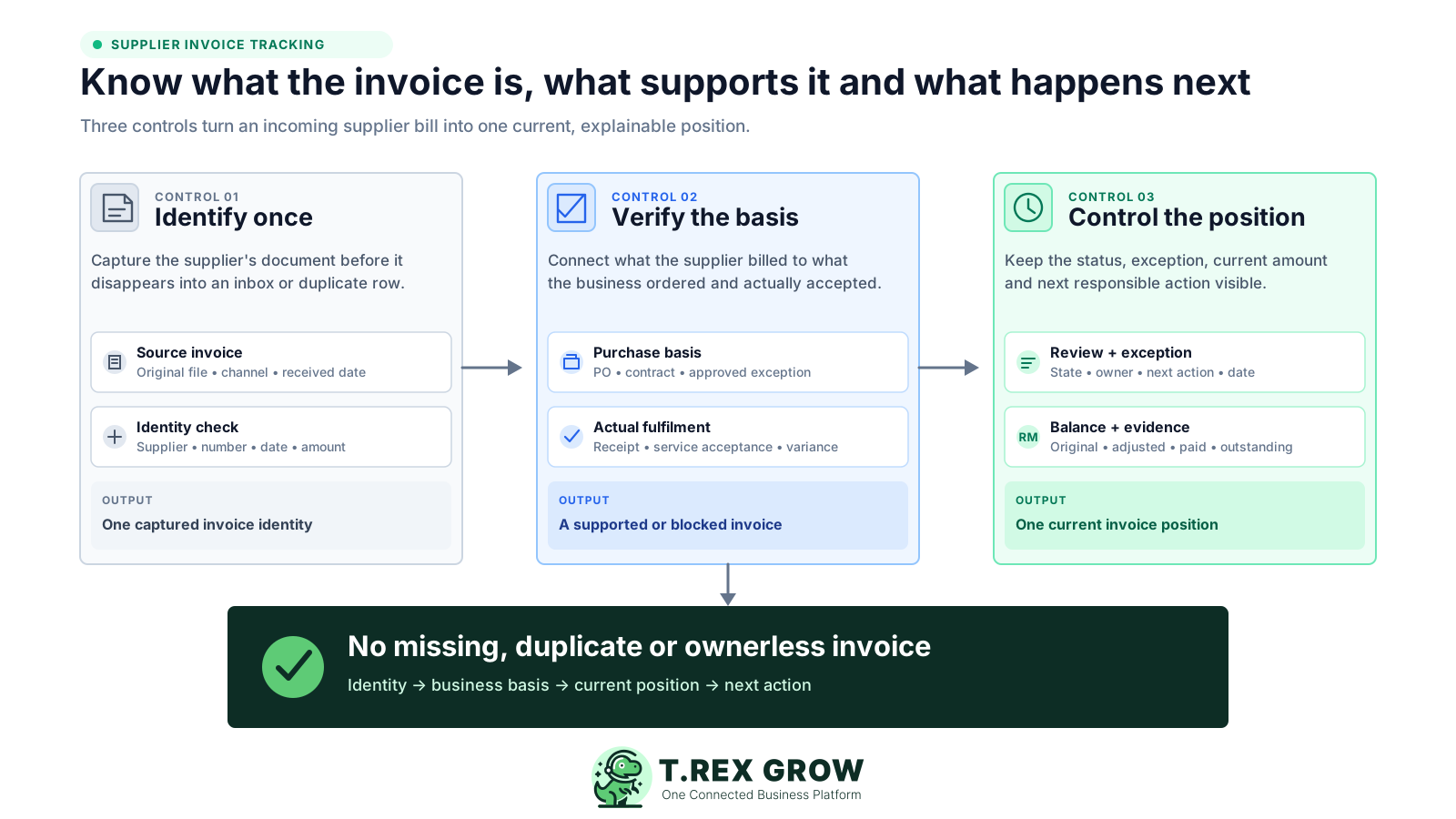
Supplier-invoice tracking fails when the source file, register row, review discussion, payable amount and evidence are treated as separate jobs. A list of invoice numbers is not enough if the next person still has to search email and chat to understand what is true.
Operational pressure
When records live in different places, the person responsible has to reconstruct what happened before they can make a confident decision or follow up.
An invoice is considered tracked because someone received the email. Other staff cannot see whether it was captured, checked, returned, approved or handed to the next process.
The supplier resends the bill, the filename changes or two employees enter it independently. Without an identity check, the same obligation can appear more than once.
The invoice date replaces the received date, the due date is inferred from memory and the supply or acceptance date disappears, making timing and follow-up difficult to explain.
A status is moved forward while a price, quantity, supplier, tax, delivery or supporting-document question still lives in a private message.
The register says unpaid or paid but cannot show whether the invoice is still being checked, awaiting information, approved, partly settled, adjusted or archived.
A supplier, buyer, receiver or reviewer needs to respond, but the invoice has no named owner, next action or target date for resolving the exception.
Supplier-invoice tracking is the operating layer that keeps every bill visible from intake to its final retained position. Approval, payment and accounting sit inside or beside that layer, but each answers a different question. Define the boundaries so one status does not pretend to cover the whole payable process.
Confirm that the invoice was received, belongs to the stated supplier, has a usable supplier invoice number and has not already been captured.
Connect the invoice to the purchase order, contract or approved non-PO route and to actual goods receipt or service acceptance where relevant.
Show whether the invoice is being prepared, checked, awaiting information, authorised, finalised, returned or archived under the SME's process.
Keep the discrepancy type, owner, next action, target date and resolution evidence visible without rewriting the supplier's original invoice.
Preserve the original invoice value, valid adjustments, recorded payments and current outstanding balance as separate layers.
Keep the source invoice and the records needed to explain its purchase, review, adjustment and settlement history under the business's current policy.
Use these boundaries to keep ownership clear without breaking the relationship between records.
| Control layer | Question it answers | Do not confuse it with |
|---|---|---|
| Invoice tracking | Where is this supplier invoice now, and what happens next? | A folder containing the supplier's PDF |
| Invoice review or approval | Has the proposed payable passed the company's required decision? | Proof that the supplier has been paid |
| Supplier payment tracking | What settlement was recorded, and what balance remains? | Proof that the purchase and invoice details were valid |
| Accounting and tax records | How is the transaction recorded and supported for reporting? | The operational owner or next action |
A useful register is more than supplier, invoice number and amount. It combines stable identity and source fields with live status, exception and balance fields. The source invoice remains the supplier's document; the tracking record explains how the SME is handling it.
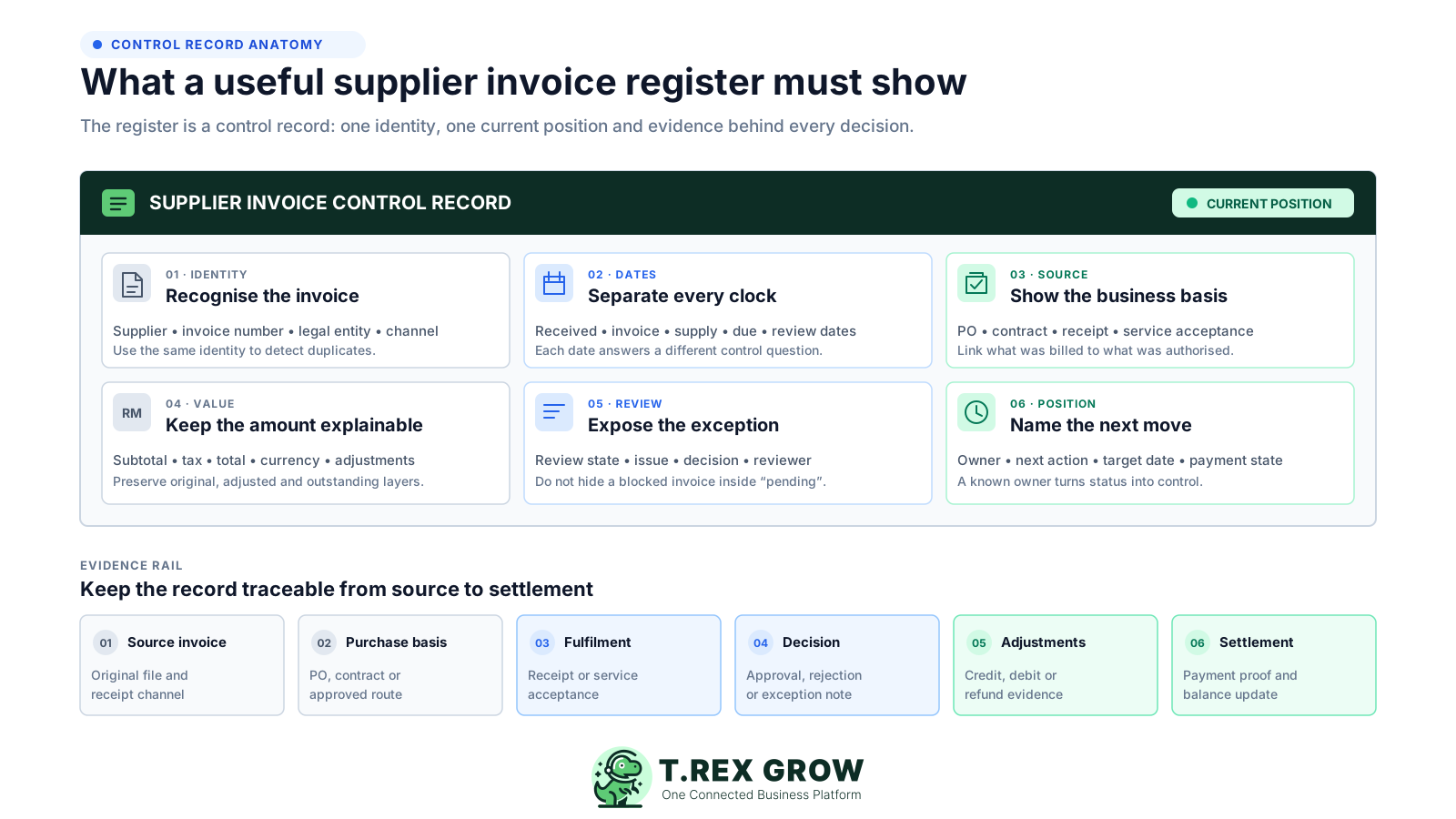
Record the supplier invoice number exactly as received, supplier identity, internal capture reference if used, received channel and received date.
Keep the supplier's invoice date, due date, payment terms and relevant supply, receipt or service-acceptance date as distinct facts.
Link the PO and receipt evidence, or record the approved contract, recurring expense or other non-PO basis defined by the SME's policy.
Preserve currency, line quantities and prices, subtotal, tax, discount, invoice total, valid adjustments, paid amount and current outstanding balance.
Show review status, payment position, exception type, named owner, next action and next review date without forcing them into one ambiguous label.
Keep the original invoice file, PO or approved basis, receipt or acceptance evidence, decision context, supplier communication, adjustment notes and payment proof retrievable.
Adapt the fields to invoice volume, purchase type and risk. The register should answer the management question without reconstructing private messages.
| Field group | Minimum tracking fields | Management question |
|---|---|---|
| Identity | Supplier, supplier invoice number, internal reference, received channel and received date | Is this the right invoice, and was it captured once? |
| Timing | Invoice date, supply or receipt date, due date, terms and relevant period | What happened when, and which deadline applies? |
| Source | PO, contract or approved non-PO basis plus receipt or service evidence | What purchase and fulfilment support the bill? |
| Value | Currency, quantities, prices, tax, discount, total, adjustments, paid and outstanding | What is the original and current payable position? |
| Control | Review status, payment position, exception, owner, next action and review date | What is blocking progress, and who acts next? |
| Evidence | Invoice file, decision, receipt, communications, notes and payment proof | Can the invoice history be explained and retrieved? |
The purpose is not to add six approvals. It is to make every invoice pass through the same minimum capture, checking, exception and retention logic before the record disappears into payment or accounting work.
Record the current facts in one shared place.
Confirm what is known and what needs attention.
Make the next decision or follow-up accountable.
Complete the next task and record the outcome.
Refresh the shared view when facts change.
A dependable workflow keeps the shared record and the next action aligned.
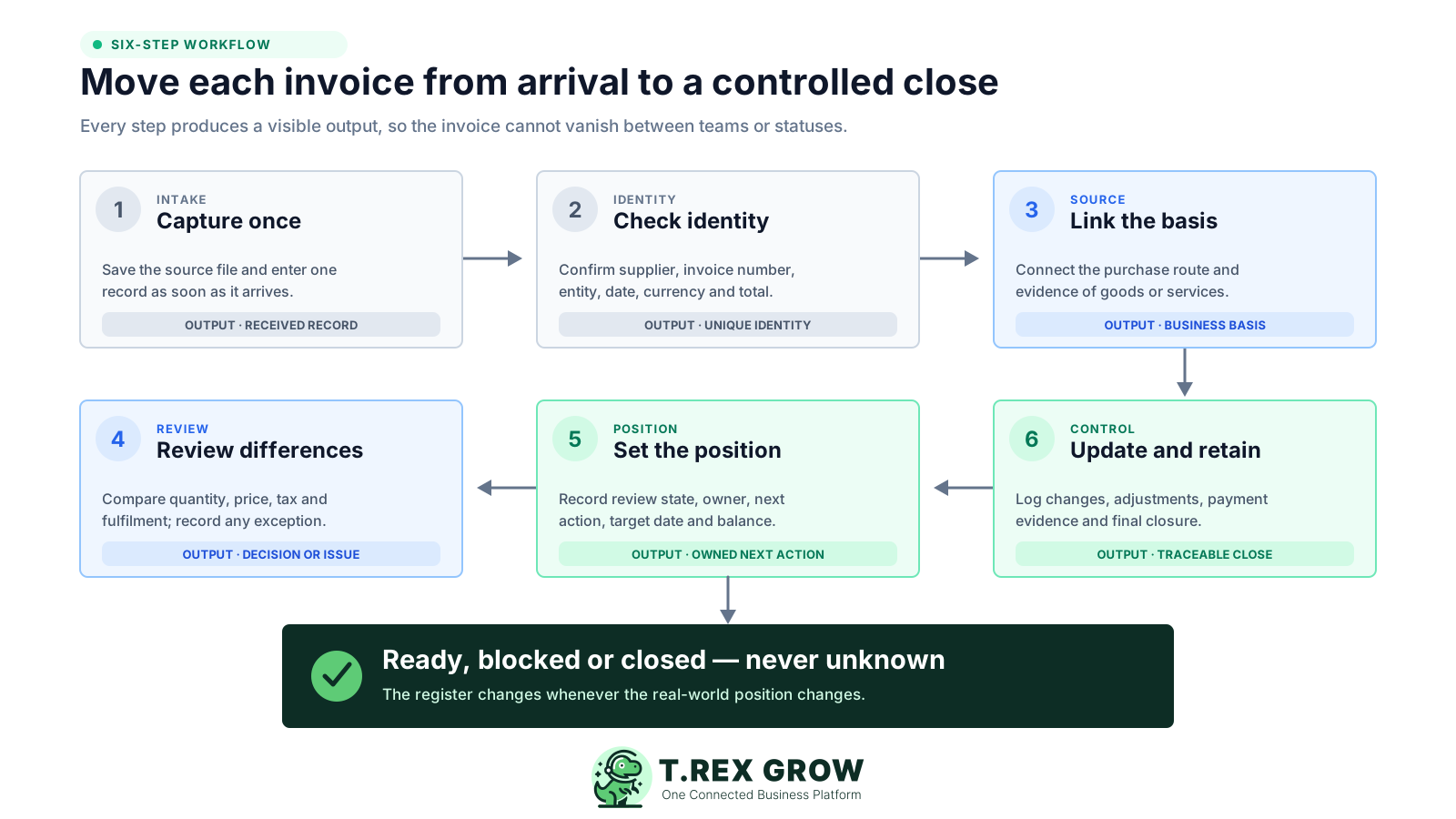
Capture the invoice once: save the original supplier file, record the received date and channel, enter the supplier and invoice number exactly, and check the register for a duplicate before creating another record.
Confirm identity and basic completeness: verify the supplier, invoice number, invoice date, due date, currency, descriptions, quantities, prices, tax, total and contact details needed under the SME's process.
Link the purchase and fulfilment basis: connect the current PO and actual receipt or service acceptance, or record the approved non-PO basis and evidence used for that purchase category.
Review the invoice and expose differences: compare the bill with the source and actual fulfilment, assign every missing document or price, quantity, date, tax or supplier discrepancy to a named owner and next action.
Set the current position and handoff: record the review outcome, due date, valid adjustments and current net payable, then pass only a ready invoice into the SME's authorised payment and accounting process.
Update, close and retain: append payment or adjustment evidence without erasing earlier facts, keep partial or disputed balances visible, and archive or close only under a documented ending and retention policy.
One status should not answer two different questions. Review state describes whether the invoice is acceptable for the next process. Payment position describes recorded settlement against the current payable. Keep both so Approved is never mistaken for Paid and Partially Paid never hides a review or adjustment issue.
The labels are examples. Define the wording and transition rules used by the SME and its software.
| Layer | Example states | Question answered |
|---|---|---|
| Review state | Received, checking, awaiting information, authorised, finalised, returned or archived | May this invoice move into the next authorised process? |
| Exception condition | Missing PO, receipt pending, quantity difference, price difference, supplier detail query or tax query | What prevents clean progress, who owns it and when is it reviewed? |
| Payment position | Unpaid, partially paid or paid | What recorded cash settlement remains outstanding? |
| Adjustment position | No adjustment, credit expected, debit expected, note applied or separately settled | Why does the current net payable differ from the original invoice total? |
| Retention state | Active, archived or closed under policy | Is more operational action expected, and where is the history retained? |
The best practice is to make the next action clear before the situation becomes urgent.
Dates are control facts, not interchangeable labels. Keep each one only when it serves a clear operating or reporting purpose, and do not overwrite the supplier's date with the day finance happened to enter the invoice.
When the SME first received the supplier invoice through the recognised intake channel. This helps find missing captures and measure internal handling time.
The date stated by the supplier on the invoice. Preserve it as a source-document fact rather than replacing it with the data-entry date.
When the goods or services were supplied, received or accepted under the relevant evidence. The correct field depends on what the SME buys.
The agreed payment deadline derived from the supplier document and terms under the SME's review. Keep the underlying terms visible if a date needs clarification.
When the authorised reviewer approved, finalised, returned or otherwise decided on the invoice record. Connect it to the reviewed facts.
When a settlement or adjustment event occurred. Append each event separately instead of replacing the invoice date or earlier history.
The most damaging shortcuts create a false sense of completion. They make the register look tidy while the underlying purchase, exception or balance remains unclear.
Recurring issues usually point to workflow-control gaps, not one isolated data-entry mistake.
A tidy filename cannot provide a dependable status, owner, duplicate check, due date, linked source or current balance.
Suppliers can reuse number patterns or format them differently. Check supplier identity, number, date, amount and source context together.
Record what the supplier actually invoiced. A partial, changed or incorrect invoice should remain visibly different from the original order until resolved.
The supplier's bill does not by itself prove that goods arrived in the stated quantity or that the service was accepted.
Keep what differed, who resolved it, the outcome and any linked credit, debit or replacement record rather than erasing the reason for the delay.
A payment row explains settlement evidence. It does not automatically prove that every invoice, adjustment, return or accounting action was correct and complete.
Update at the event, then use short reviews to catch missing records and stalled exceptions. The right frequency depends on invoice volume and cash sensitivity; consistency matters more than a complicated dashboard.
Capture the source invoice, received date, supplier, invoice number and duplicate check before the file leaves the recognised intake queue.
Complete the source, date, value and status fields; expose any discrepancy; and assign an owner and next action while the evidence is still easy to find.
Separate invoices that are ready for the authorised payment process from those blocked by missing evidence, approval, supplier response or an unresolved difference.
Update the issue, owner, supplier or internal response, next action and expected resolution without silently changing the original invoice facts.
Look for uncaptured invoices, duplicate identities, old received items, inconsistent dates, blocked records, open adjustments and balances that do not match the supporting history.
Confirm that the invoice, vouchers, receipts, agreements, decision and settlement evidence remain retrievable under the company's current Malaysian record-keeping and professional-advice requirements.
The best practice is to make the next action clear before the situation becomes urgent.
TREX Grow supports a PO-linked supplier-invoice record for Essential and Premium companies. The SME still defines intake channels, duplicate checks, non-PO policy outside TREX Grow's current invoice creation route, review responsibilities, supplier communication, bank execution, accounting treatment and retention requirements.
The current TREX Grow workflow creates the supplier invoice from the relevant purchase order and carries the supplier, PO reference, document currency and PO item set into the record.
Capture the supplier's invoice number, invoice date, due date, payment terms, quantities, unit prices, tax, discount, milestone detail, general attachments and internal remarks.
A user can request approval for an authorised reviewer or finalise directly according to assigned permissions, without claiming multi-level or threshold routing.
The supplier-invoice list shows invoice number, status, PO, supplier, invoice date, linked notes and total, with search and filters for created date, status and supplier.
Payment-history rows can retain amount, date, method, reference, bank, person-in-charge, remarks and attachments, while linked supplier credit, debit and supported refund notes remain separate adjustment records.
The invoice number cannot change after finalisation, paid records become read-only, supplier invoices cannot be deleted, and archiving is restricted when linked notes or payment status prevent it.
Choose ten recent supplier invoices and test whether the register can show each identity, received and due dates, source evidence, review state, exception owner, current payable position, next action and supporting history. The first answer that requires an inbox search is the first tracking field or handoff to fix.
Supplier invoice tracking is the operating process used to capture each supplier bill once, preserve its identity and dates, connect it to the purchase and fulfilment basis, record review and exception status, maintain the current payable position and retain the evidence needed to explain what happens next.