The due queue is rebuilt from memory
Finance searches inboxes, chat messages or a spreadsheet each time cash becomes available. Valid invoices, disputed items, upcoming due dates and partial balances cannot be prioritised from one current worklist.

A supplier payment workflow should show more than Paid or Unpaid. It should explain which invoice was ready, what amount was actually due, who authorised the settlement, where the money was sent, what evidence was retained, how much remains and which exception needs the next action.
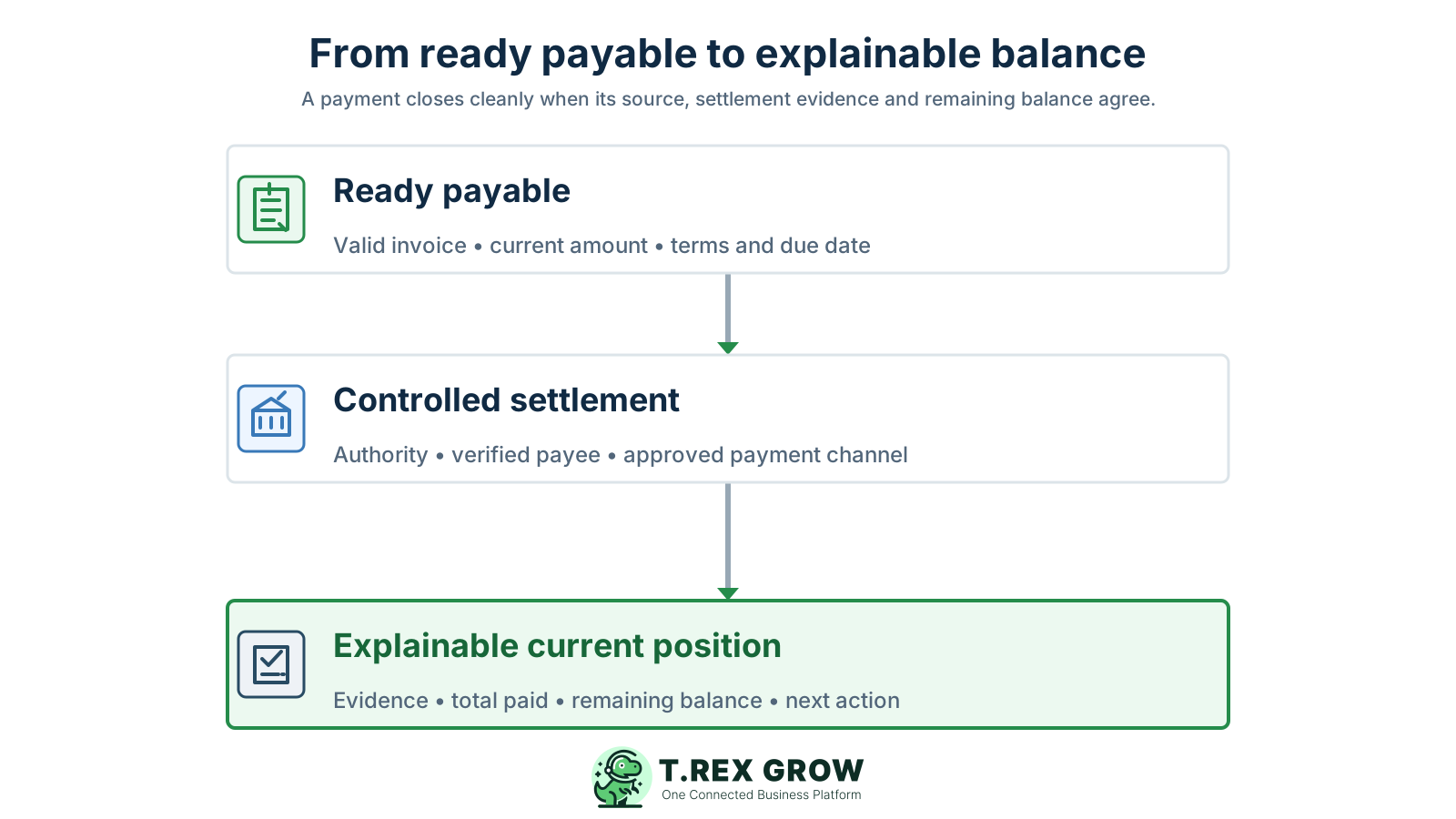
The payable may be valid, but several business events still have to agree before the current position is trustworthy. Tracking fails when payment preparation, bank execution, settlement evidence and balance updates happen in separate tools with no shared owner or status meaning.
Operational pressure
When records live in different places, the person responsible has to reconstruct what happened before they can make a confident decision or follow up.
Finance searches inboxes, chat messages or a spreadsheet each time cash becomes available. Valid invoices, disputed items, upcoming due dates and partial balances cannot be prioritised from one current worklist.
Approval means the payable may proceed under the SME’s authority rules. It does not confirm that money left the approved account, reached the intended supplier or was recorded against the correct invoice.
A credit note, debit note, refund, withholding treatment, supported deduction or earlier partial payment may change what remains. Paying the original invoice total can overstate the actual cash settlement required.
An email or message asks finance to replace the payee account shortly before payment. Without an independent verification route, the team may act on a compromised or incorrect instruction.
The team replaces one Paid Amount cell instead of adding a separate settlement row. Nobody can later reconstruct payment dates, methods, references, evidence or the balance after each event.
A bank receipt sits in a download folder while the invoice stays open in another register. The supplier, approver and finance reviewer each see a different version of the payment position.
Rejected transfers, short payments, duplicate requests, supplier disputes and missing evidence remain as notes without an owner, action or review date.
This workflow starts when a supplier invoice has enough verified business context to enter payment planning. It ends when the settlement is recorded against the right payable, the remaining balance is current, evidence is retained and any exception has a named next action. The bank transfer, accounting entry and supplier relationship remain connected but distinct activities.
The invoice identity, supplier, source purchase or contract where applicable, actual receipt or service acceptance, current adjustments, terms, due date and payable amount have been reviewed under the SME’s policy.
The payment has a proposed date, amount, source account or channel and owner, but money has not yet been sent. Planned should never be reported as settled.
The appropriate person has approved the payment instruction or bank action. This is an authority state, not proof of transfer or receipt.
The company initiated payment through its approved channel and retained the transaction reference or bank evidence, but final status may still need confirmation.
Valid settlement rows reduce the current payable. Partially Paid means an amount remains; Paid means the supported cash settlement and active adjustments explain a zero balance under the SME’s rules.
The payment cannot proceed or close because a bank-detail change, mismatch, failed transfer, dispute, duplicate, missing evidence or other issue needs a decision.
A dependable record connects the payable amount, timing, authority, payee instruction, settlement evidence and current balance without forcing them into one status. Each field should answer a specific operating question and remain traceable after the next payment occurs.
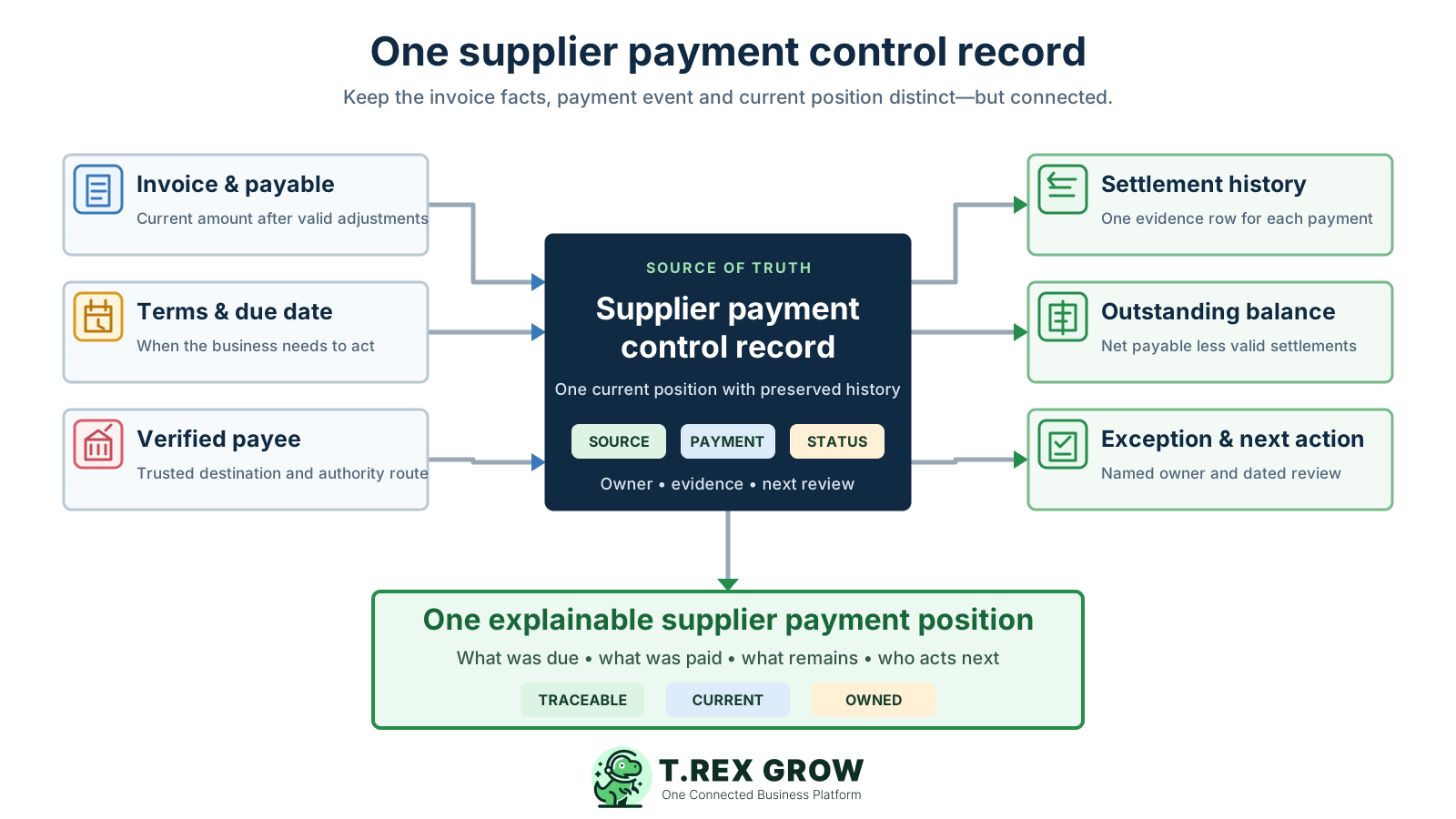
Keep supplier name, supplier invoice number, invoice date, source purchase or agreement, currency, original amount and current net payable together.
Record payment terms, due date, any agreed revised date, operational impact and the owner responsible for the next decision.
Identify the verified supplier payment destination, the person who prepared the instruction and the person authorised to release it under the SME’s policy.
Add one row for each real payment with amount, date, method, source account or bank context, transaction reference, responsible employee, remarks and evidence.
Show net payable, valid total paid, outstanding balance, latest payment date, payment count and whether the next action is payment, verification, correction or closure.
Use the smallest set that lets another authorised person understand the current position without searching private messages or replacing earlier evidence.
| Record group | Minimum fields | Question answered |
|---|---|---|
| Supplier payable | Supplier, invoice number, current payable, currency | What obligation is this payment for? |
| Timing | Terms, due date, proposed payment date | When should the business act? |
| Authority | Prepared by, authorised by, decision date | Who permitted the settlement? |
| Payee control | Verified account or channel, verification date and method | Where should the money go? |
| Settlement | Amount, date, method, reference, evidence | What money was actually sent? |
| Current position | Total paid, outstanding, status, owner, next action | What remains unresolved? |
The sequence is a practical control routine, not a universal banking or accounting rule. Adapt authority, review depth and payment timing to the value, risk, supplier relationship, cash position and staffing of the SME.
Record the current facts in one shared place.
Confirm what is known and what needs attention.
Make the next decision or follow-up accountable.
Complete the next task and record the outcome.
Refresh the shared view when facts change.
A dependable workflow keeps the shared record and the next action aligned.
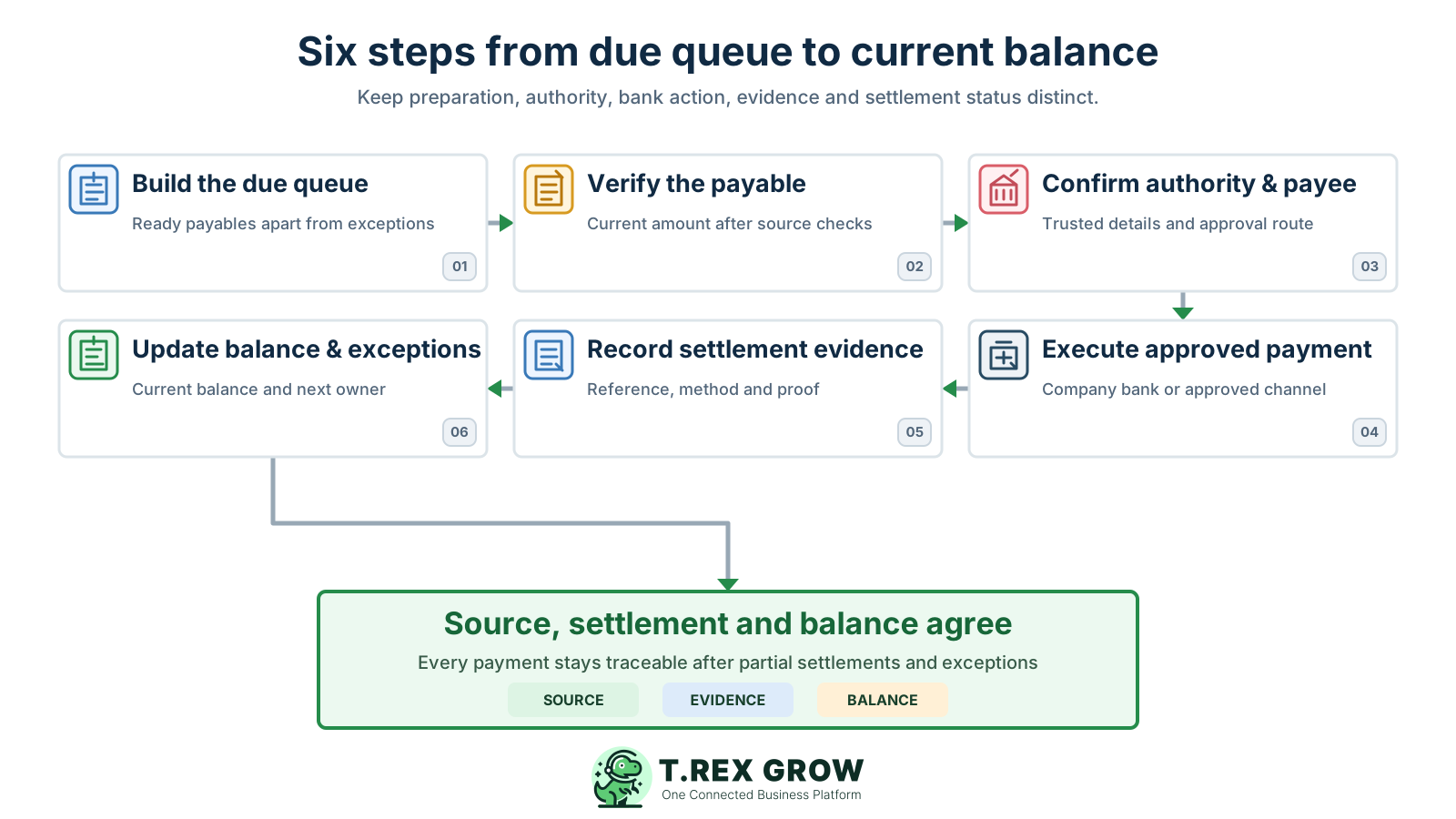
Build the due queue: list valid supplier invoices by current payable, due date, status and owner; separate disputes, missing evidence and already planned or partially paid items before deciding what to pay.
Verify the payable: confirm supplier and invoice identity, receipt or service acceptance where applicable, current credit or debit adjustments, prior payments, currency and the amount that is genuinely ready for settlement.
Confirm authority and payee details: follow the SME’s payment-authority rules and independently verify new or changed bank details through a known contact route rather than relying only on the request that introduced the change.
Execute through the approved channel: the authorised person sends the agreed amount through the company’s bank or other approved payment method and retains the transaction response without marking the invoice paid prematurely.
Record one settlement row: attach the amount, date, method, transaction reference, responsible employee, remarks and appropriate evidence to the correct supplier payable without overwriting earlier partial payments.
Update and review the position: recalculate total paid and outstanding balance, classify the item as partial, paid or exception, reconcile relevant supplier or bank evidence and assign any unresolved difference to an owner and review date.
A fast payment routine is useful only when another authorised person can still explain the source, authority, destination, evidence and balance. These shortcuts make the queue look cleaner while moving uncertainty into the bank account or supplier relationship.
Recurring issues usually point to workflow-control gaps, not one isolated data-entry mistake.
An invoice may contain payment instructions, but the SME should follow its verified supplier and bank-detail control, especially when the destination is new, changed or presented with unusual urgency.
Ready, approved, sent, processing, partially paid, paid and exception answer different questions. One Paid checkbox hides the point where the workflow actually stopped.
Replacing the old amount removes the history needed to explain multiple settlements. Append each payment as a separate record and calculate totals from the active evidence.
Adjustments can change the net payable, while payment history records money actually settled. Keep both visible and separate so the balance can be explained correctly.
The visible bank balance does not explain upcoming commitments, uncleared transactions or disputed payables. Review the due queue and short-term cash needs together.
A transaction reference does not guarantee successful settlement. Keep failed, returned or uncertain payments as exceptions until the company confirms the appropriate outcome.
The supplier may receive a remittance note while the internal payable remains overdue. Record the payment against the source before the next review.
Timely payment depends on timely invoice handling, not last-minute bank work. Review frequently enough to resolve exceptions before the due date, use agreed terms consistently and communicate early when the business cannot meet an expected date.
The due queue shows valid payables ready for a timing decision. The exception queue shows items blocked by missing, disputed, changed or failed information. Mixing them makes both queues harder to act on.
A small SME may review daily, twice weekly or weekly depending on volume and cash sensitivity. Leave enough time for verification and authority before the bank cut-off or agreed due date.
Call a known supplier contact using an established number or use another trusted route. Do not use only the contact details supplied in the same change request.
For higher-impact or unusual payments, a second appropriate person can review the source, amount, destination and authority before bank release, even when a small team cannot fully separate every role.
Add the settlement row and evidence as soon as the approved channel responds. Delayed updates create duplicate payment risk and misleading outstanding balances.
Compare the supplier payable, payment history, supplier statement or confirmation where relevant and bank evidence. Investigate differences instead of forcing the register to equal the expected number.
The best practice is to make the next action clear before the situation becomes urgent.
Every exception should show the affected supplier and invoice, the reason payment cannot close, the amount exposed, the owner, the next action and the next review date. The queue exists to drive resolution rather than collect permanent notes.
Hold the payment until the destination is independently verified through the company’s trusted supplier-contact process.
Identify whether the difference comes from receipt, price, quantity, tax, currency, an adjustment or an earlier payment before recalculating the amount.
Keep the invoice open or excepted, retain the bank response and decide whether to correct, retry, replace or escalate the payment instruction.
Return the item to the responsible person instead of accepting a chat message or later signature as a substitute for the required decision.
Trace the bank reference, payee destination, amount and date, then compare the supplier’s allocation before sending another payment.
Use a simple owner question and closure condition so the item cannot disappear behind a vague On Hold status.
| Exception | Owner question | Closure evidence |
|---|---|---|
| Changed payee details | Who verified the destination through a trusted route? | Verification record and approved current instruction |
| Amount mismatch | Which source fact or adjustment explains the difference? | Correct payable and supporting record |
| Failed transfer | Did money leave, return or remain pending? | Bank outcome and next settlement record |
| Partial settlement | Is the remaining amount planned, disputed or not yet due? | Current balance and dated next action |
| Supplier allocation issue | Which invoice did the supplier apply the payment to? | Supplier confirmation or corrected allocation |
The best practice is to make the next action clear before the situation becomes urgent.
After the SME defines its payment authority, verified payee process, bank channel, accounting treatment and review cadence, TREX Grow can keep the supplier-invoice settlement history easier to follow. It records the operational evidence around payment; it does not send or schedule money through the bank.
Review supplier, purchase-order context, payment term, invoice date, due date, paid status, item total and current payment summary before recording a settlement.
Keep the supplier invoice’s active amount understandable alongside supported supplier-side adjustment notes instead of treating every change as a cash payment.
Record separate partial or full payment events so an earlier settlement is preserved when the next amount is added.
Keep payment amount, date, method, reference, bank context, responsible employee, remarks and appropriate attachment evidence with the supplier-invoice history.
Use the current net payable and active payment records to show total paid, remaining balance, last paid date, payment count and latest method.
The company continues to verify payees, authorise payments, execute through its approved bank channel, reconcile bank activity and complete its accounting process outside the tracking record.
Choose five invoices that were paid, partly paid, changed or disputed. Check whether another authorised person can trace the payable, due date, authority, destination, settlement evidence, remaining balance and next action without opening several inboxes or overwriting history.
It is the controlled sequence used to move a valid supplier payable through due-date review, amount verification, payment authority, bank or payment-channel execution, settlement evidence, balance update and exception closure. It explains what is due, what was paid, what remains and who acts next.