Customer promises become unreliable
Sales may confirm a quantity that exists only in the system, belongs to another location, is already reserved, or sits in a damaged or held state.

A stock discrepancy is rarely created by the stocktake that reveals it. The difference usually begins earlier, when an item is identified incorrectly, a physical quantity is assumed, a movement is recorded late, stock status is mixed, or an exception enters the balance without review.
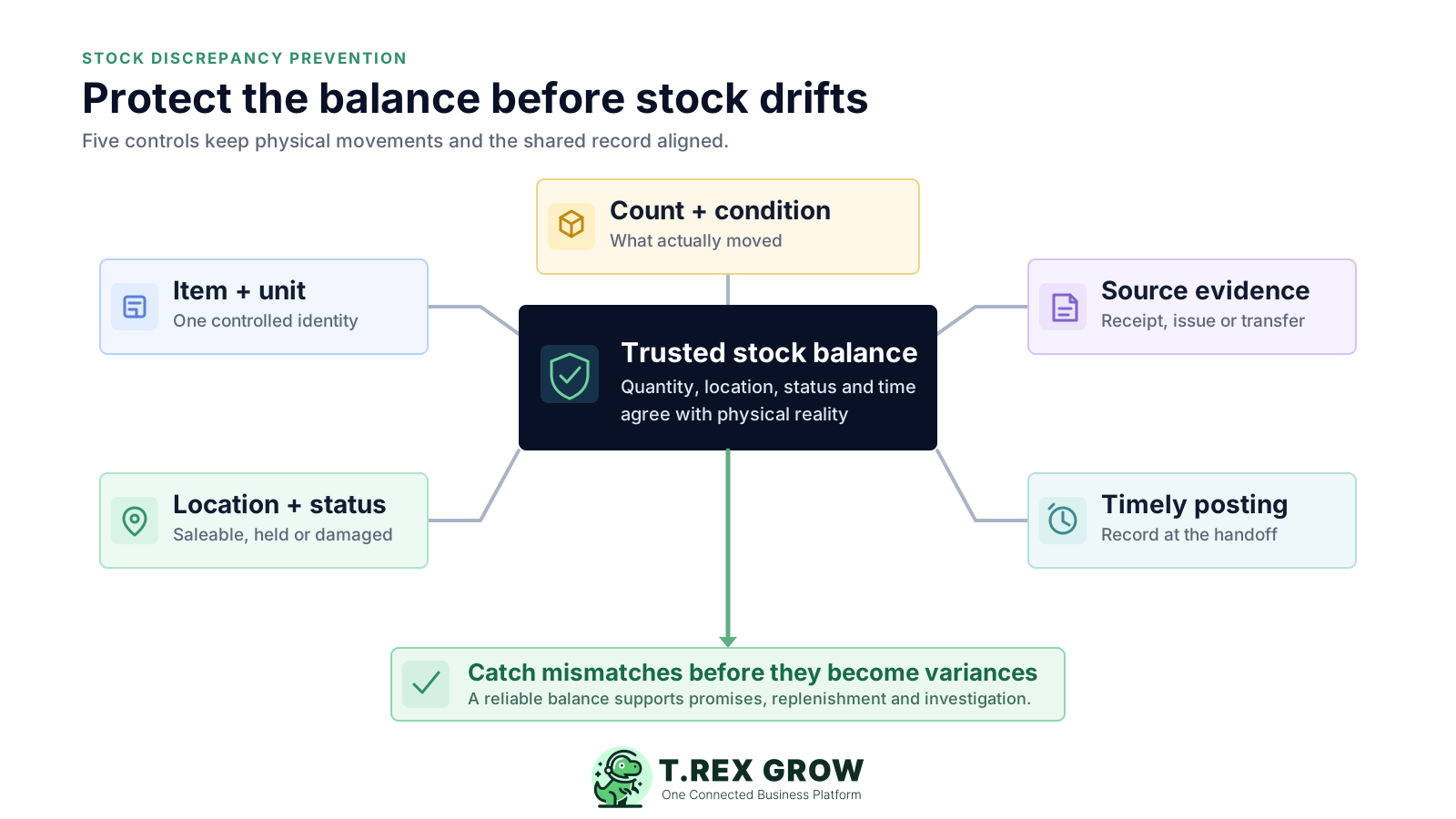
The visible difference is the final symptom. By the time a count shows 97 units while the shared record shows 104, several later decisions may already depend on the wrong balance. Prevention starts by controlling the event that changes stock, not by waiting for a periodic correction.
Operational pressure
When records live in different places, the person responsible has to reconstruct what happened before they can make a confident decision or follow up.
Sales may confirm a quantity that exists only in the system, belongs to another location, is already reserved, or sits in a damaged or held state.
A low or inflated balance can trigger an unnecessary purchase, delay a needed reorder, distort supplier urgency, or tie up cash in duplicate stock.
Posting the ordered quantity instead of the accepted quantity can place short, damaged, rejected, or undelivered units into the stock balance.
A transfer, pick, delivery, return, sample, or internal issue that happens before it is posted makes the physical and recorded positions describe different moments.
Warehouse staff may separate returned or quarantined goods physically while another team still treats the same quantity as saleable and available.
Changing the closing quantity without tracing the first unmatched event may make today's report agree while leaving the same process ready to create tomorrow's discrepancy.
Once staff stop trusting the shared balance, spreadsheets, chat messages, shelf notes, and private counts create more cut-offs and more versions of the truth.
Before a movement changes the shared balance, compare what physically happened, which business record supports it, and which stock transaction will be posted. If the three facts disagree, keep the exception visible and out of unrestricted stock until someone resolves it.
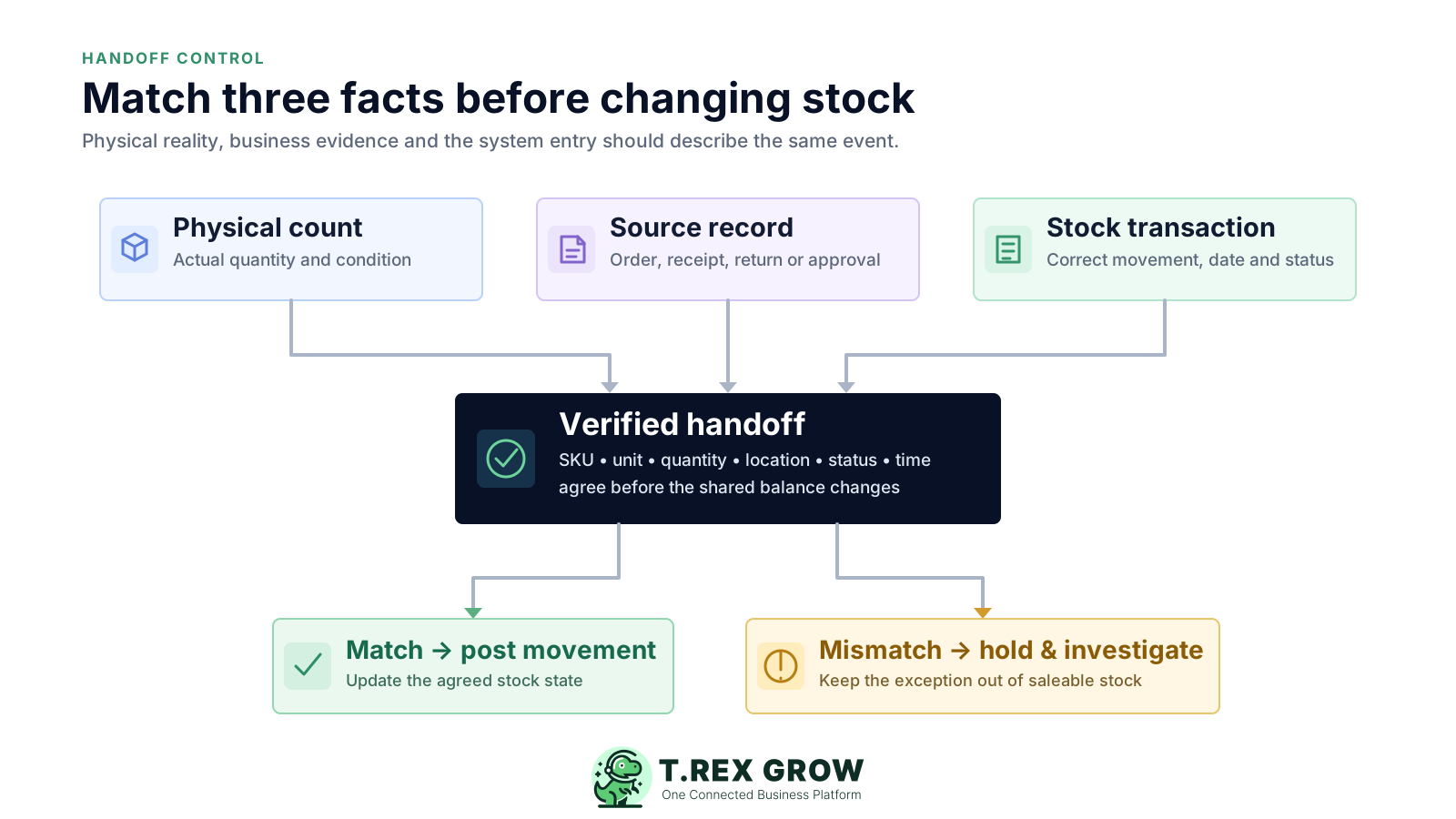
Count or measure the quantity that actually crossed the handoff and note its condition, package state, location, and any rejected or held portion.
Use the supported purchase, customer order, delivery, transfer, return, internal request, count sheet, or approved correction behind the movement.
Choose the correct item, base unit, quantity direction, effective date, source and destination, stock status, and transaction type for the event.
When all three facts agree, post the movement and leave enough evidence for another person to understand what changed and why.
When any fact disagrees, separate the affected quantity where appropriate, preserve the open balance or exception, and assign an owner to investigate.
The count and the record must use the same moment. Include movements completed before the cut-off, exclude later events, and identify anything still in progress.
Prevention does not require treating every product or movement as high risk. It requires clear definitions, evidence at important handoffs, and a proportionate review routine that stops unsupported quantities from becoming normal stock.
Use one active product identity, a defined base unit, approved pack conversions, clear descriptions, and rules for duplicate, substitute, inactive, or supplier-specific codes.
A quotation, purchase order, pick instruction, or transfer request may express intent. Increase or decrease on-hand stock only when the supported physical event reaches the business's defined completion point.
Check the actual quantity and condition when goods are received, transferred, picked, delivered, returned, damaged, repacked, or moved into another stock state.
Record the movement at the handoff or within a short operating window that the team can monitor. A pending queue should show what moved physically but is not yet posted.
Keep saleable, reserved, returned, rejected, quarantined, damaged, expired, and other meaningful states distinct so a company-wide quantity is not mistaken for usable stock.
Keep the source, receiver or issuer, time, location, reason, reviewer, and supporting note or document behind sensitive movements and corrections.
If the order is for 80 cartons but only 78 arrive intact, one arrives damaged, and one remains missing, do not receive all 80. Record 78 in the accepted state, hold the damaged carton, keep one carton outstanding, and retain the receiver and evidence behind each quantity.
Apply the controls in sequence. The team should know what the item means, what event is authorised, what physically happened, when the record changed, which exceptions remain open, and how a repeated cause will be removed.
Record the current facts in one shared place.
Confirm what is known and what needs attention.
Make the next decision or follow-up accountable.
Complete the next task and record the outcome.
Refresh the shared view when facts change.
A dependable workflow keeps the shared record and the next action aligned.
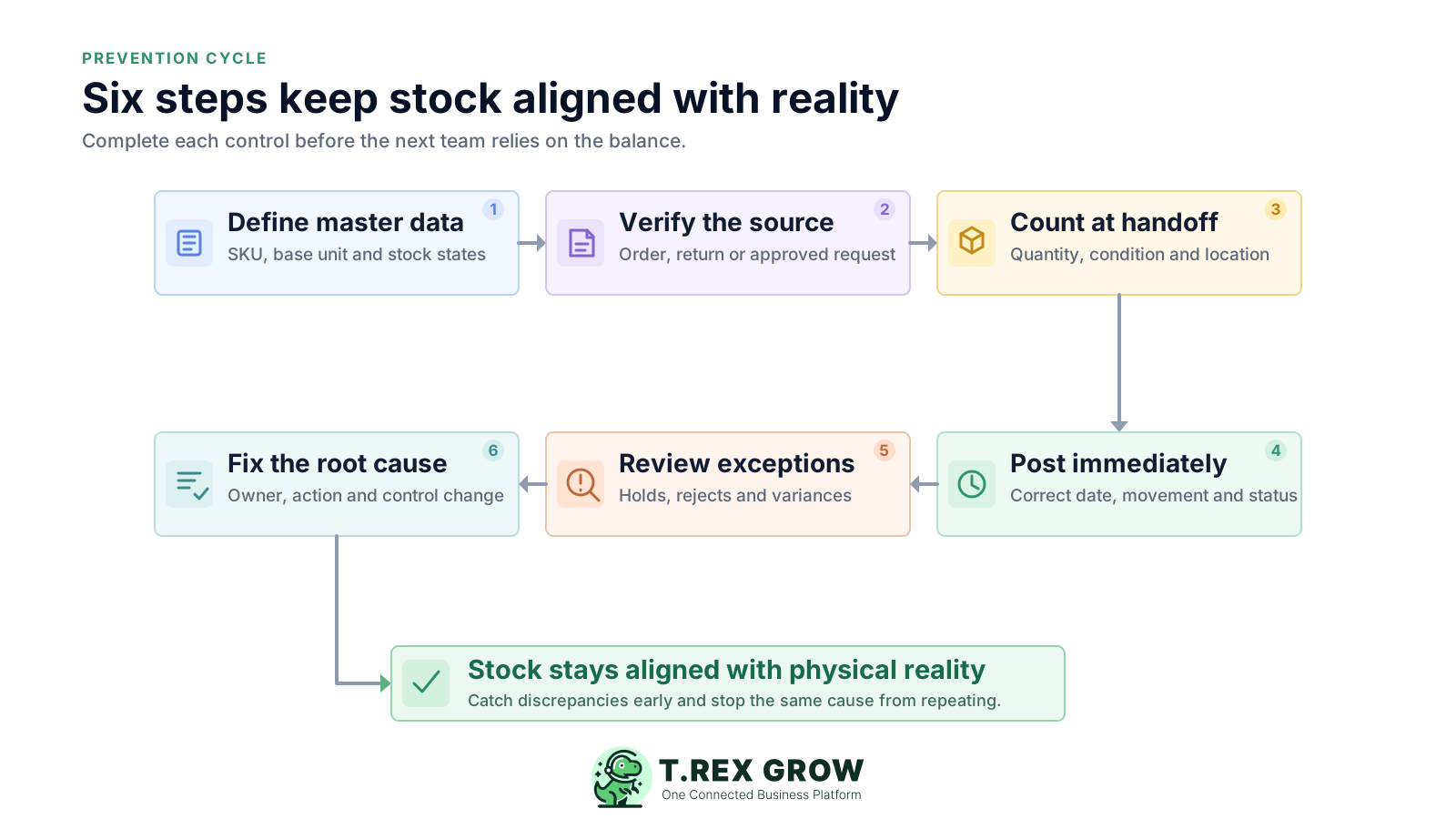
Define the controlled stock language: confirm the item code, description, base unit, pack conversion, active locations, stock statuses, and event that makes each movement effective.
Verify the source before work begins: connect the purchase, customer order, delivery, transfer, return, internal request, count, or approved correction to the intended item and quantity.
Count at the physical handoff: verify actual quantity, unit, condition, source or destination, and any accepted, rejected, damaged, partial, or outstanding portion.
Post the completed movement promptly: use the correct transaction type, direction, effective date, quantity, location, status, owner, and source reference without turning expected supply into on-hand stock.
Review exceptions on a suitable cadence: investigate pending movements, negative or unusual balances, high adjustments, repeated variances, open returns, partial receipts, stockouts, and location mismatches.
Fix the root cause and confirm the control: correct the supported source event where appropriate, use a reviewed adjustment only when necessary, assign an owner and due date, then check whether the same cause returns.
Many shortcuts save a few minutes at one handoff but move the work into a later reconciliation. The most damaging shortcuts make an unsupported quantity look complete, available, or explained when it is not.
Recurring issues usually point to workflow-control gaps, not one isolated data-entry mistake.
The ordered quantity describes expected supply. Post only what was physically received and accepted, while preserving rejected quantities and the remaining open balance.
Entering all transfers, picks, returns, or issues at the end of the day or week leaves other teams using a balance that ignores completed physical events.
A count without a controlled cut-off, freeze, or complete movement log compares quantities from different moments and creates a variance that is only a timing difference.
Returned, held, rejected, damaged, expired, reserved, or location-restricted quantities should not silently re-enter unrestricted saleable stock.
A blind adjustment may close the current variance before the team checks the item, unit, source, location, timing, transfer pair, return, or reversal that caused it.
High-value, fast-moving, long-lead, theft-prone, perishable, regulated, or customer-critical items usually need different review attention from stable low-risk items.
A damaged receipt, open transfer, disputed return, missing pick, or count variance remains part of the operating risk until someone owns the evidence, decision, and completion date.
A preventive control should change what happens at a handoff and leave evidence another person can review. Keep the control proportionate to item risk and movement volume, then watch whether it reduces recurring discrepancies instead of only increasing paperwork.
State who confirms the physical quantity, who posts the movement, who reviews exceptions, and who approves sensitive corrections or status changes.
Count higher-value, faster-moving, customer-critical, theft-prone, long-lead, perishable, or repeatedly inaccurate items more often than stable low-risk stock.
Freeze movements where practical or keep a complete log of events during the count. Compare the same item, unit, location, status, and moment.
Require a reason, evidence, owner, effective date, and proportionate approval for unusual corrections, reversals, write-offs, or transfers between restricted states.
Track posting delay, pending movements, partial receipts, unresolved returns, unusual adjustments, repeated cause categories, count accuracy, stockouts, and fulfilment exceptions.
After changing a rule, sample the next few affected movements. Confirm the evidence exists, the physical state matches, and the discrepancy cause has not shifted elsewhere.
Use this table to define the minimum check, evidence, and escalation point for each common inventory handoff.
| Inventory handoff | Preventive check | Evidence to retain | Escalate when |
|---|---|---|---|
| Supplier receiving | Count accepted, damaged, rejected, and missing quantities against the correct item and unit | Purchase or delivery reference, receiver, time, condition, accepted quantity, and open balance | Actual quantity, condition, unit, or product identity differs from the source |
| Put-away or transfer | Confirm source, destination, quantity, stock status, and completion at both ends | Transfer reference, sender, receiver, locations, timestamps, and outstanding quantity | One location decreases without the other confirming receipt, or the status changes unexpectedly |
| Reservation and picking | Use available stock for the correct order, item, unit, location, and due date | Customer source, reserved quantity, picker, pick location, partial quantity, and backorder status | The pick differs from the supported commitment or uses held, damaged, or already reserved stock |
| Delivery or issue | Confirm the quantity that physically left and the recipient or purpose | Delivery or issue reference, recipient, issuer, time, quantity, and partial or failed status | Goods leave without a supported source, recipient confirmation, or timely stock movement |
| Customer or supplier return | Inspect the returned quantity and condition before deciding its final stock state | Original source, return reason, inspector, quantity, condition, disposition, and follow-up owner | Returned units are placed into saleable stock before inspection or the source cannot be traced |
| Count and adjustment | Compare the same cut-off, item, unit, location, and status; trace the earliest unmatched event first | Count sheet, movement log, cause, reviewer, correction source, approval, and effective date | The cause is unclear, the variance is material or repeated, or evidence does not support the correction |
The best practice is to make the next action clear before the situation becomes urgent.
Once the operating controls are defined, TREX Grow can help keep product identity, quantity states, source documents, supported stock movements, responsibility, and plan-dependent warehouse workflows connected. The software supports evidence and visibility; it does not replace physical verification or guarantee perfect accuracy.
Keep product names, codes, optional SKU and barcode fields, units of measure, categories, supplier context, reorder information, approval status, and archive state together.
Review available, incoming, and reserved quantities distinctly so expected supply and supported commitments are not mistaken for unrestricted on-hand stock.
Review stock entries, delivery orders, inventory adjustments, sales returns, and purchase returns with quantities, dates, creators, statuses, and source links where supported.
Use permission- and plan-aware create, view, edit, approve, archive, transfer, and warehouse actions to make sensitive stock changes and responsibility clearer.
Plan-dependent warehouse workflows can add custom locations, transfers, product or location ledgers, picking, and structured inventory count sessions for deeper control.
Choose a recent receipt, transfer, pick, return, or adjustment. Match the physical quantity, source record, and stock transaction; note any unsupported difference; then improve the control before the same handoff repeats. Explore how TREX Grow can keep the supporting inventory records connected.
A stock discrepancy is a difference between a quantity or stock state in the shared record and the quantity or state verified physically at the same item, unit, location, status, and cut-off. The physical quantity may be lower or higher than the record; the important next step is to trace which event, definition, timing gap, or correction created the difference.