The stock scope is not comparable
The count covers one product, unit, location, or saleable state while the system total includes another pack size, warehouse, damaged state, reserved quantity, or movement still in progress.

A count difference is a signal to investigate, not permission to overwrite the closing quantity. Match one stock scope, trace the first unmatched event, correct the source where possible, and adjust only the confirmed residual with evidence and review.
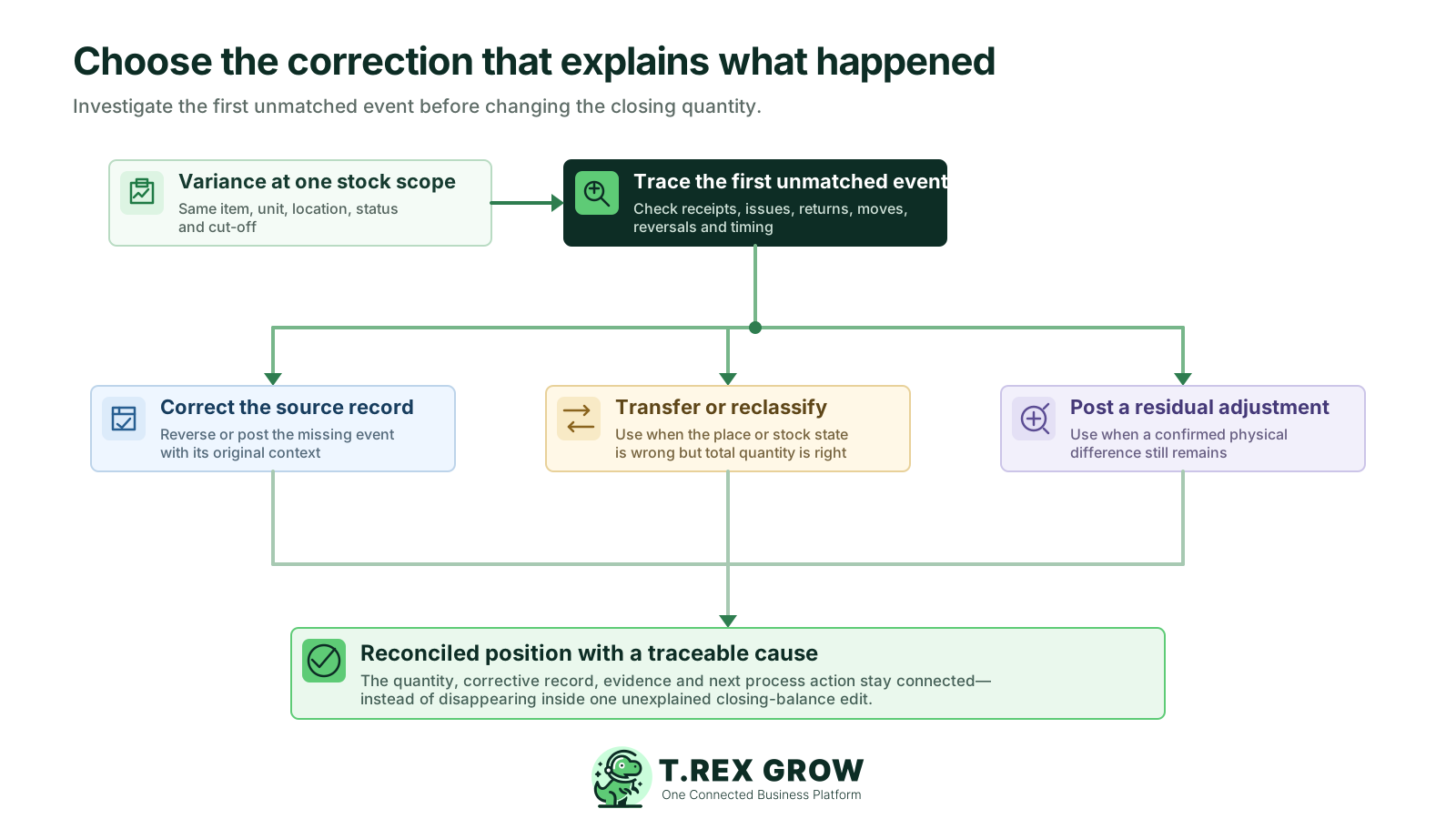
If the record says 120 units and the shelf shows 111, a minus-nine adjustment makes the numbers agree. It does not prove whether nine units were lost, five were delivered but never posted, four were damaged, the wrong location was counted, or the two quantities used different cut-offs.
Operational pressure
When records live in different places, the person responsible has to reconstruct what happened before they can make a confident decision or follow up.
The count covers one product, unit, location, or saleable state while the system total includes another pack size, warehouse, damaged state, reserved quantity, or movement still in progress.
Goods were received, delivered, returned, transferred, consumed, sampled, or scrapped physically, but the supported event was never completed in the shared record.
A receipt, issue, return, or transfer used the wrong item, quantity, direction, location, date, or duplicate entry. A compensating adjustment hides the erroneous source instead of correcting it.
Stock sits in another bin, branch, van, quarantine area, or return holding space. Adjusting the total up in one place and down in another can distort company-wide quantity instead of recording the movement or status change.
A label such as stock correction, variance, or other does not show the count, cut-off, source records checked, quantity direction, evidence, owner, reviewer, or physical cause.
The closing balance is corrected, but delayed receiving, unposted deliveries, unclear return ownership, poor unit control, or an unsuitable count rule remains in daily work.
An inventory adjustment is a signed increase or decrease used to reconcile a confirmed stock exception or residual difference. It should not replace the transaction that actually explains a receipt, issue, return, transfer, reversal, or stock-state change.
If goods arrived, left, returned, moved, or changed custody through a supported workflow, complete the relevant receipt, delivery, return, transfer, issue, or other source record.
When an existing movement contains the wrong quantity, item, direction, or context, preserve its history through the supported cancellation or reversal path and post the corrected event where the workflow allows.
If the stock exists but sits in the wrong location or stock state, use the supported location movement or status decision rather than creating an artificial company-wide gain and loss.
Customer and supplier returns should remain connected to the original operating context, inspected quantity, condition, disposition, and direction instead of becoming an unexplained adjustment.
A documented adjustment is appropriate when a real physical difference remains after recounting and tracing—for example confirmed damage, loss, write-off, count variance, or another approved exception under the SME's policy.
When the displayed quantity is unsafe, hold the affected stock, restrict promises, or mark the exception visibly where practical. An urgent safeguard should preserve the evidence and investigation rather than turn a blind edit into the final explanation.
The adjustment record should let another person reconstruct the decision without relying on the preparer's memory. The exact fields vary by business and application, but the same operating questions still need answers.
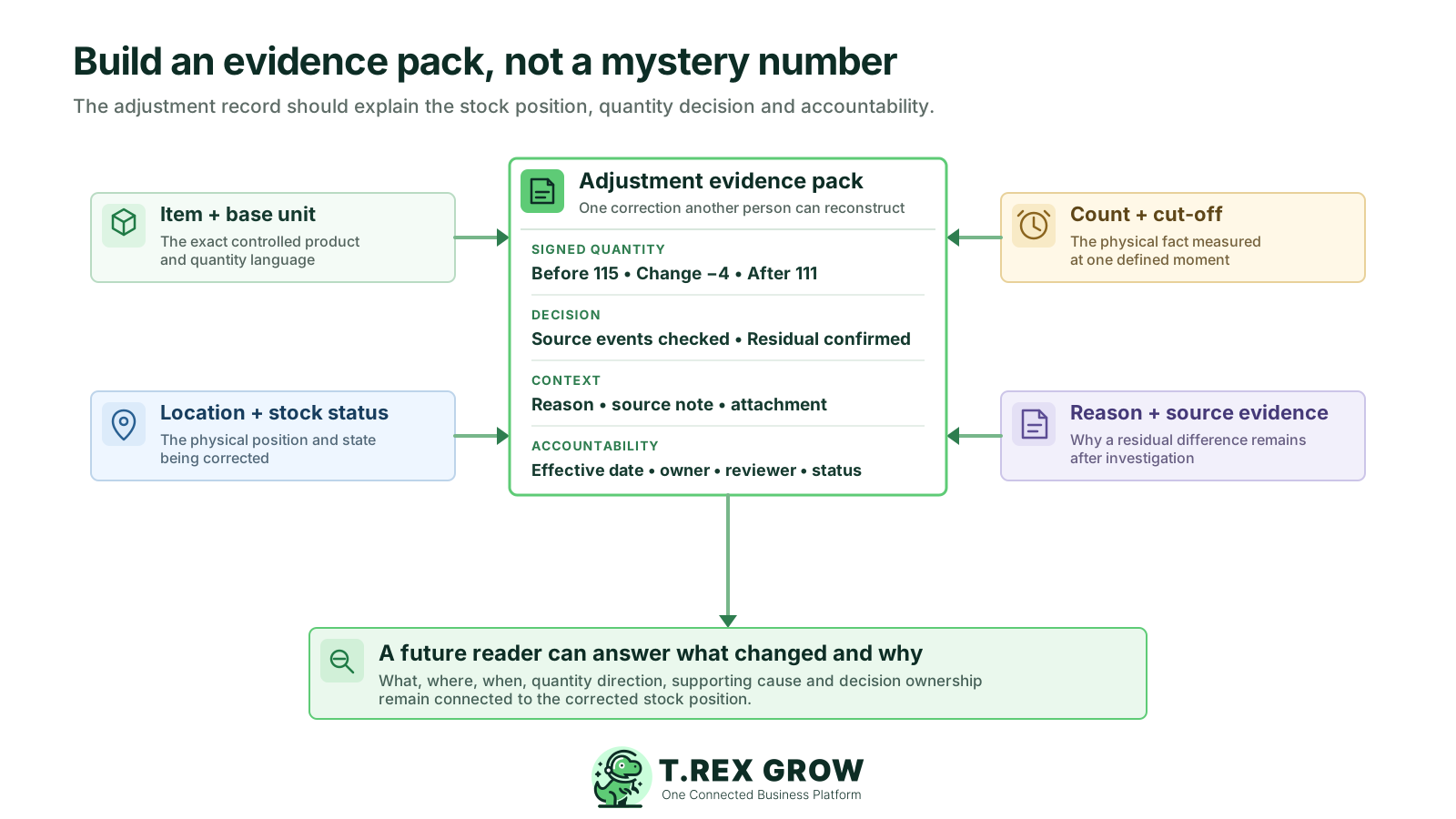
Record the controlled product, item code where used, and base unit or approved conversion so the counted and recorded quantities mean the same thing.
State the affected warehouse, branch, bin, vehicle, quarantine area, or other controlled position and whether the quantity is saleable, damaged, returned, held, reserved, or another relevant state.
Keep the physical count, counter, count time, recount result, movement freeze or log, and the recorded quantity calculated at that same moment.
Show the corrected quantity before adjustment, the positive or negative change, and the resulting quantity. Do not make the reviewer infer direction from an unsigned total.
Use a specific cause category, note which receipts, issues, returns, transfers, reversals, and timing events were checked, and attach supporting evidence where proportionate.
Keep the preparer, reviewer or approver where required, decision date, effective stock date, and status close to the correction.
Assign the receiving, fulfilment, return, transfer, master-data, access, or counting change intended to stop the same difference from becoming another routine adjustment.
The workflow separates physical verification, transaction tracing, record selection, and approval. Smaller SMEs can keep it proportionate, but every sensitive correction should still preserve the logic between the observed difference and the final quantity.
Record the current facts in one shared place.
Confirm what is known and what needs attention.
Make the next decision or follow-up accountable.
Complete the next task and record the outcome.
Refresh the shared view when facts change.
A dependable workflow keeps the shared record and the next action aligned.
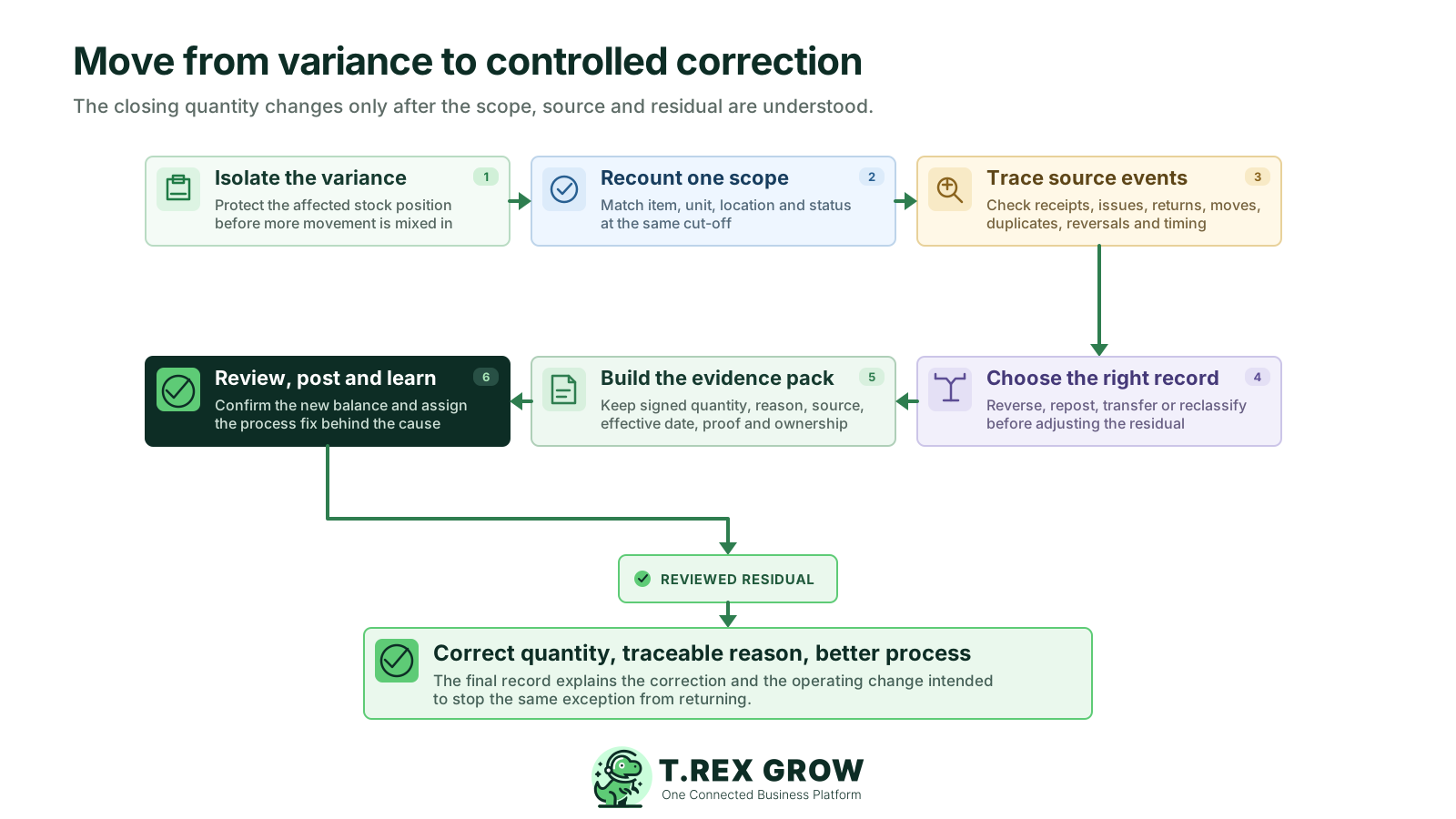
Isolate the variance: identify the exact item, unit, location, status, and cut-off; pause or log relevant movements where practical; and prevent the questionable quantity from driving unsafe customer or purchasing decisions.
Recount the same stock scope: verify the physical quantity, package or unit conversion, condition, location, and stock state. Use a second counter or supervisor for high-value, unusual, repeated, or sensitive differences.
Trace the first unmatched event: review receipts, deliveries, issues, returns, transfers, status changes, reversals, duplicates, and timing around the cut-off until the earliest unsupported difference is understood.
Choose the corrective record: complete or reverse the source transaction when it explains the event; use a transfer or reclassification for a place or state mismatch; and calculate an adjustment only for the residual that remains.
Build the evidence pack: record the before quantity, signed change, resulting quantity, specific reason, source references checked, supporting note or attachment, effective date, preparer, and reviewer where required.
Review, post, and learn: confirm permission and approval requirements, post the supported correction, verify the resulting position, communicate any operational effect, and assign the process change behind the root cause.
The fastest-looking correction often moves the real work into the next count. Watch for practices that make a quantity agree without preserving the physical event, decision boundary, or owner behind it.
Recurring issues usually point to workflow-control gaps, not one isolated data-entry mistake.
A wrong item, unit conversion, hidden carton, mixed stock state, or simple counting error becomes an official quantity change before the physical fact is confirmed.
The count reflects 3:00 p.m. while the record includes a 4:00 p.m. receipt or excludes a noon delivery posted later. The apparent variance is a timing mismatch.
Adding stock to the found location and removing it from the expected location can imitate a transfer but lose the relationship between the two positions.
A generic reason prevents the SME from seeing whether differences come from receiving, fulfilment, returns, damage, theft risk, unit setup, transfers, timing, or counting quality.
Changing the effective date without rebuilding the stock position at that cut-off can place later transactions on top of an unsupported opening quantity.
Unexpected extra stock can signal a missing receipt, duplicate issue, wrong location, incorrect unit, return, or earlier over-adjustment. A gain deserves the same investigation discipline as a loss.
The physical counter, adjustment preparer, and final reviewer can be the same person in a very small team, but high-value, unusual, repeated, or material corrections need stronger proportionate review.
A monthly routine of large or repeated adjustments is an operating signal. Treat the cause category, owner, and prevention action as part of completion.
The right corrective path keeps the operational story intact. Exact document names differ between businesses and applications, so use this table as a decision aid and confirm the available reversal, return, transfer, approval, and posting rules in the SME's own workflow.
Use value, quantity, percentage variance, product sensitivity, recurrence, location, and cause to decide when a second count, evidence attachment, manager review, or restricted permission is required.
Keep categories specific enough to improve the process—such as confirmed damage, count error, missing source event, unit issue, location issue, duplicate posting, or unexplained residual—without creating an unusable list.
Where supported, correct the original event through its linked cancellation, reversal, receipt, return, or transfer path so later review can follow what happened.
A reviewer should see the stock scope, before-and-after quantity, reason, source checks, evidence, and operational effect before accepting a sensitive correction.
Review adjustment count, signed quantity, value where appropriate, repeated products, locations, users, reason categories, time-to-resolution, and recurrence after a process fix.
After improving receiving, delivery, return, transfer, product setup, or count rules, sample the next affected events and confirm that the source and physical state now agree.
Start from the physical event and preserve its source. Use an adjustment only when a confirmed residual still needs a signed quantity correction.
| What investigation finds | Preferred corrective path | Why it preserves the story |
|---|---|---|
| Supplier goods were accepted but the receipt was never posted | Complete the supported receipt or stock-entry record | Keeps supplier, purchase, date, accepted quantity, and receiving evidence attached to the increase |
| A receipt, issue, delivery, or return was posted with the wrong quantity or item | Use the supported reversal or cancellation, then repost correctly | Shows the original error and the corrective event instead of hiding both inside a balancing number |
| The company total is right but stock is in the wrong location or state | Use a supported transfer, relocation, or reclassification | Changes place or status without inventing a net company-wide gain or loss |
| Goods physically returned to or from a customer or supplier | Use the supported sales or purchase return workflow | Retains original transaction, counterparty, inspected quantity, direction, condition, and disposition |
| The apparent difference is caused by movement timing around the count | Complete or log the movement and recalculate the same cut-off | Removes a timing mismatch before it becomes a false physical variance |
| Damage, loss, write-off, count gain, or another real residual remains after tracing | Post a documented positive or negative inventory adjustment | Connects the confirmed residual to its reason, evidence, owner, review, and resulting quantity |
The best practice is to make the next action clear before the situation becomes urgent.
A Malaysian SME's shared record shows 120 receipt rolls in the General location. A controlled count at the same cut-off confirms 111 saleable rolls. A direct minus-nine adjustment would reconcile the total but erase the path behind the difference.
The team verifies the same product, roll unit, General location, saleable status, and cut-off. A second count still finds 111.
Product and fulfilment records show that five rolls were delivered to a customer before the cut-off, but the supported delivery event was never completed in the shared stock record.
The team completes the supported delivery record for five rolls. The corrected recorded position becomes 115, preserving the customer and fulfilment context behind that decrease.
Receiving evidence and a supervisor check confirm that four rolls were crushed and separated earlier, but no approved quantity correction was recorded.
A reviewed minus-four adjustment records the affected product and location, reason, remarks, evidence, effective date, preparer, and reviewer. The resulting position becomes 111.
The SME assigns one action for delivery completion and another for damaged-stock handling. The next review checks whether either cause appears again.
After the SME defines its investigation and review rules, TREX Grow can keep supported inventory adjustments connected to the affected product, signed quantity direction, reason, remarks, evidence, responsibility, status, and related stock context. The software supports the record; it does not replace the physical count or guarantee the cause is correct.
Create an inventory adjustment from supported product or stock-entry context and record whether quantity is being added or removed.
Use a reason code, remarks, and supporting attachments so the adjustment carries more context than a closing-balance edit.
Keep the affected product and available location or source context with the record, according to the current plan and configured workflow.
Where configured, a requester can submit an adjustment into Pending Approval and an authorised user can review it before the stock effect is applied.
Supported records retain creator and date context, while approval-required records can retain approval status, approver, and approval time after authorisation.
Review supported stock entries, deliveries, returns, adjustments, and product history together; current plans may add deeper location, ledger, transfer, and inventory-count workflows.
Choose one positive or negative adjustment. Rebuild the item, unit, location, status, and cut-off; check the source events; confirm whether the chosen record matched the physical cause; and assign any missing process action. Then see how TREX Grow can support the shared evidence and review workflow.
It is the controlled process used to investigate a difference between recorded and verified physical stock, choose the correct source, transfer, return, reversal, or adjustment record, document the signed residual, review the decision, post the correction, and improve the failed operating control.