Scope is assumed instead of agreed
Teams count the main warehouse but overlook service stock, returns, off-site storage, goods held for others or inventory held by a third party because the population was never documented.

Audit preparation is more than arranging a stocktake. Define the count population, control movements around the cut-off, issue written instructions, preserve count evidence and show how the final inventory record was reconciled. Confirm the engagement-specific requirements with your finance adviser or auditor.
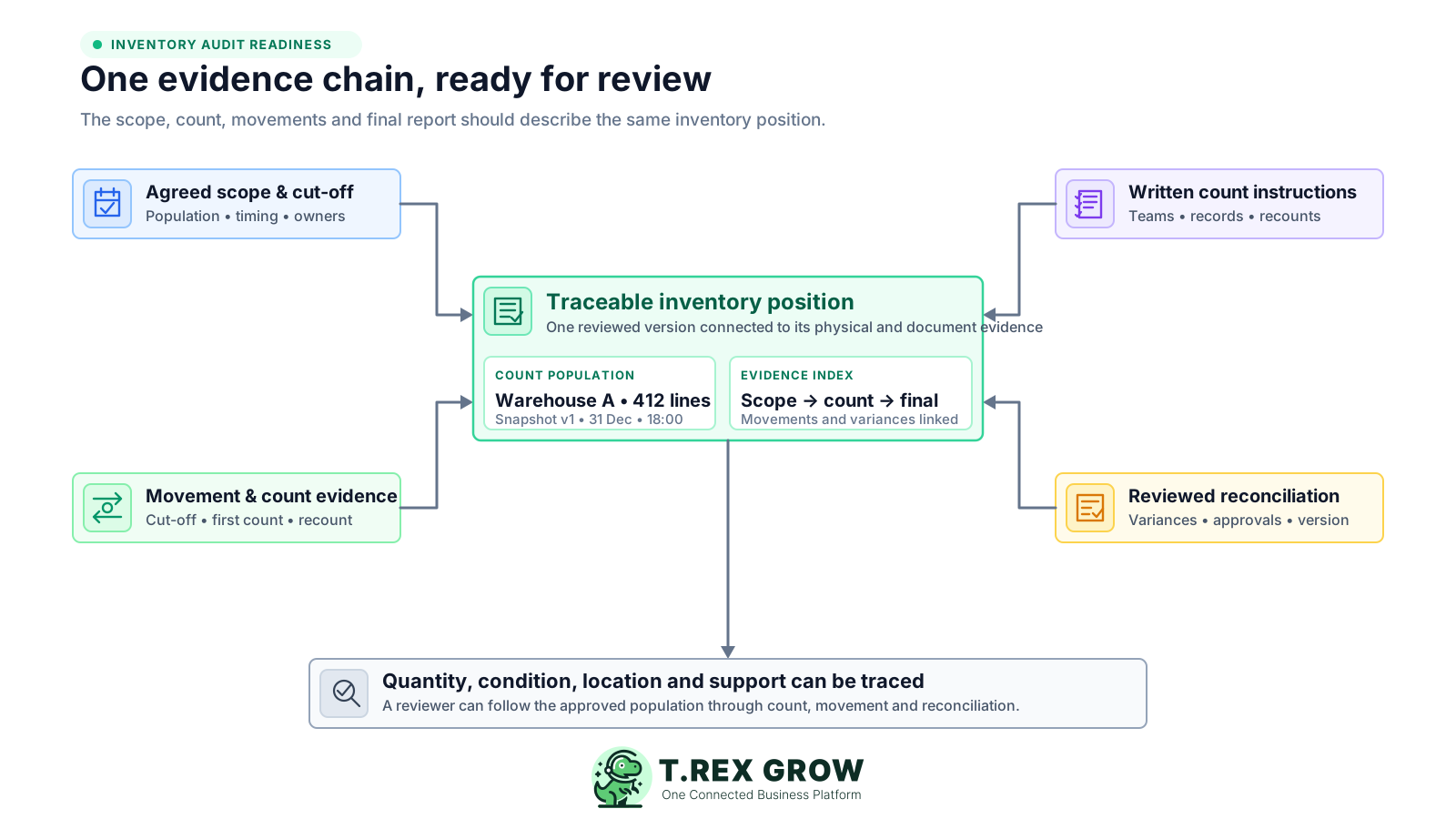
A physical count can be accurate at the shelf and still be difficult to support if the population, timing, movements and final record are unclear. The aim is to make each material change from the agreed cut-off through reconciliation visible enough for finance and the auditor to test.
Operational pressure
When records live in different places, the person responsible has to reconstruct what happened before they can make a confident decision or follow up.
Teams count the main warehouse but overlook service stock, returns, off-site storage, goods held for others or inventory held by a third party because the population was never documented.
Physical labels, count sheets, product codes and the inventory export describe locations or units differently, leaving unmatched lines before variance work begins.
A receipt, dispatch, transfer or return crosses the count window without a logged document reference, so the same units may be omitted, counted twice or assigned to the wrong period.
Loose worksheets, overwritten files and unsigned recounts do not show who counted, where, when, under which instruction or why the quantity changed.
Damaged, ageing, slow-moving, held or third-party stock is identified only after totals are produced, forcing finance to reconstruct the physical context later.
Differences are posted without a documented explanation, linked evidence and approval, so the final record cannot be followed back to the original count and movement history.
Before designing the count, ask the finance lead, accountant or auditor what the engagement needs. Record the agreed date, population, locations, statuses, count method, expected reports and evidence owner instead of relying on a generic checklist as the final authority.
State whether the work supports an external financial statement audit, internal control review, financing request or management reconciliation, and identify who will confirm the required evidence.
List every warehouse, shop, vehicle, project site, service area and external custodian that may hold in-scope inventory, including temporarily closed or low-activity locations.
Snapshot the item codes, descriptions, units and active or inactive status used by the count. Separately identify work in progress, returns, damaged, slow-moving, obsolete, held or unidentified items where relevant.
Flag goods held for another party and the SME's goods held by a third party. Do not include or exclude them by location alone; record the arrangement for finance or auditor review.
Define when the count population is taken, which movements can continue, how exceptions are authorised and which last-before and first-after document references will be retained.
Agree the required inventory export, count sheets, test-count support, movement log, variance file, adjustment approvals, final reconciliation and named sign-off owners.
Keep the preparation evidence in one controlled pack with an index and version owner. Each component should connect the physical count to the final inventory record without turning the pack into an accounting conclusion.
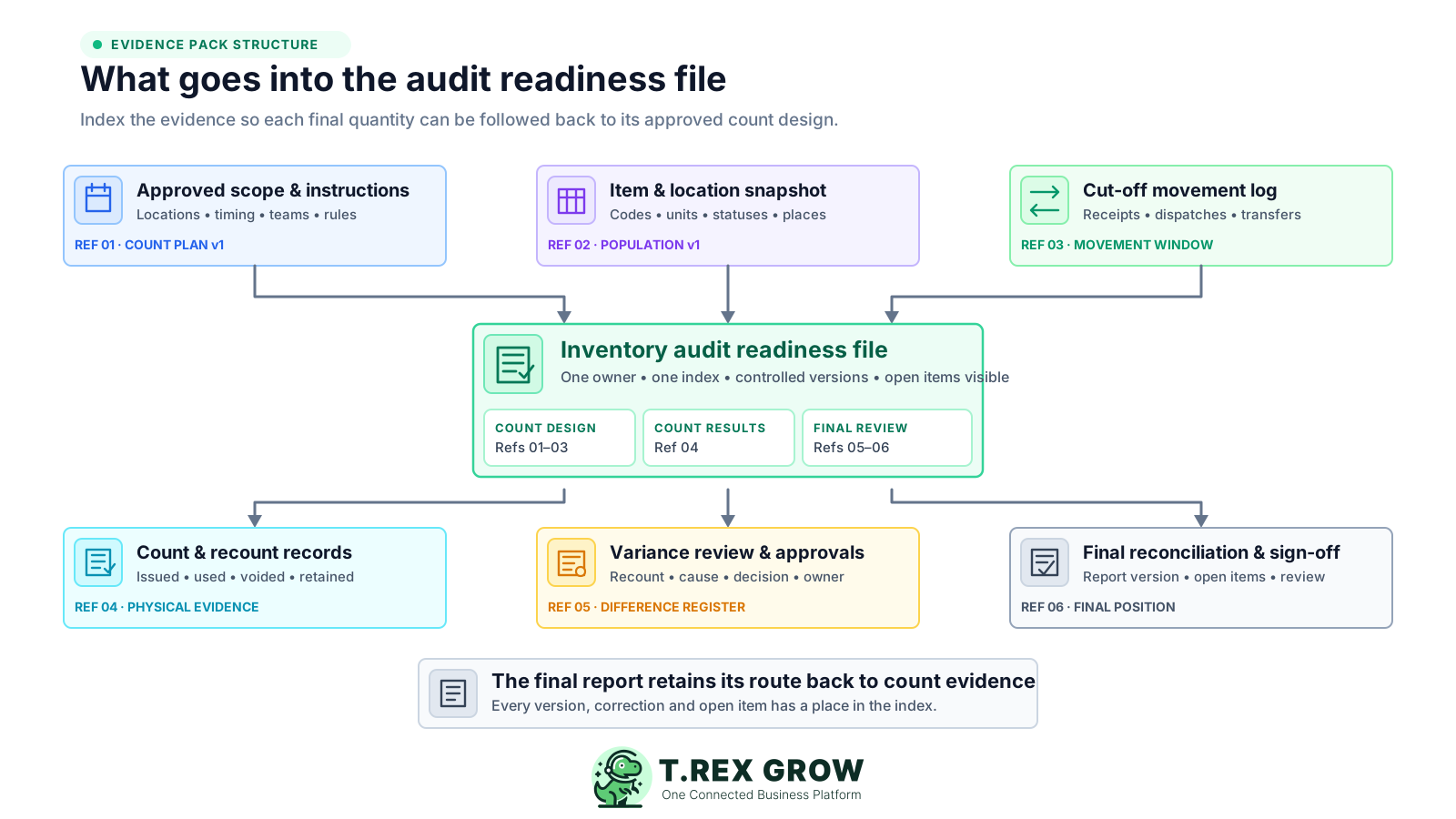
Keep the signed or approved count plan, location coverage, team assignments, independence rules, sheet control, recount triggers, movement process and escalation contacts.
Preserve the exact product, unit and location population used to prepare the count, plus a list of excluded, inactive or exceptional records and the reason for each treatment.
Record receipts, dispatches, transfers, returns and other stock changes around the count window with timestamps, source documents, origin, destination and count treatment.
Retain issued, used, voided and unused sheets or controlled digital records, with counters, times, locations, quantities, condition notes and authorised corrections visible.
For each investigated difference, connect the first count, recount, relevant movement or master-data evidence, explanation, decision and approval rather than storing only the posted adjustment.
Show how the approved count results and movements tie to the final inventory record, with unresolved items, report version, preparer, reviewer and sign-off date clearly stated.
Work backwards from the agreed review date. Freeze the evidence population before the count, control changes through the count window, and close every difference into either a supported resolution or a clearly open item.
Record the current facts in one shared place.
Confirm what is known and what needs attention.
Make the next decision or follow-up accountable.
Complete the next task and record the outcome.
Refresh the shared view when facts change.
A dependable workflow keeps the shared record and the next action aligned.
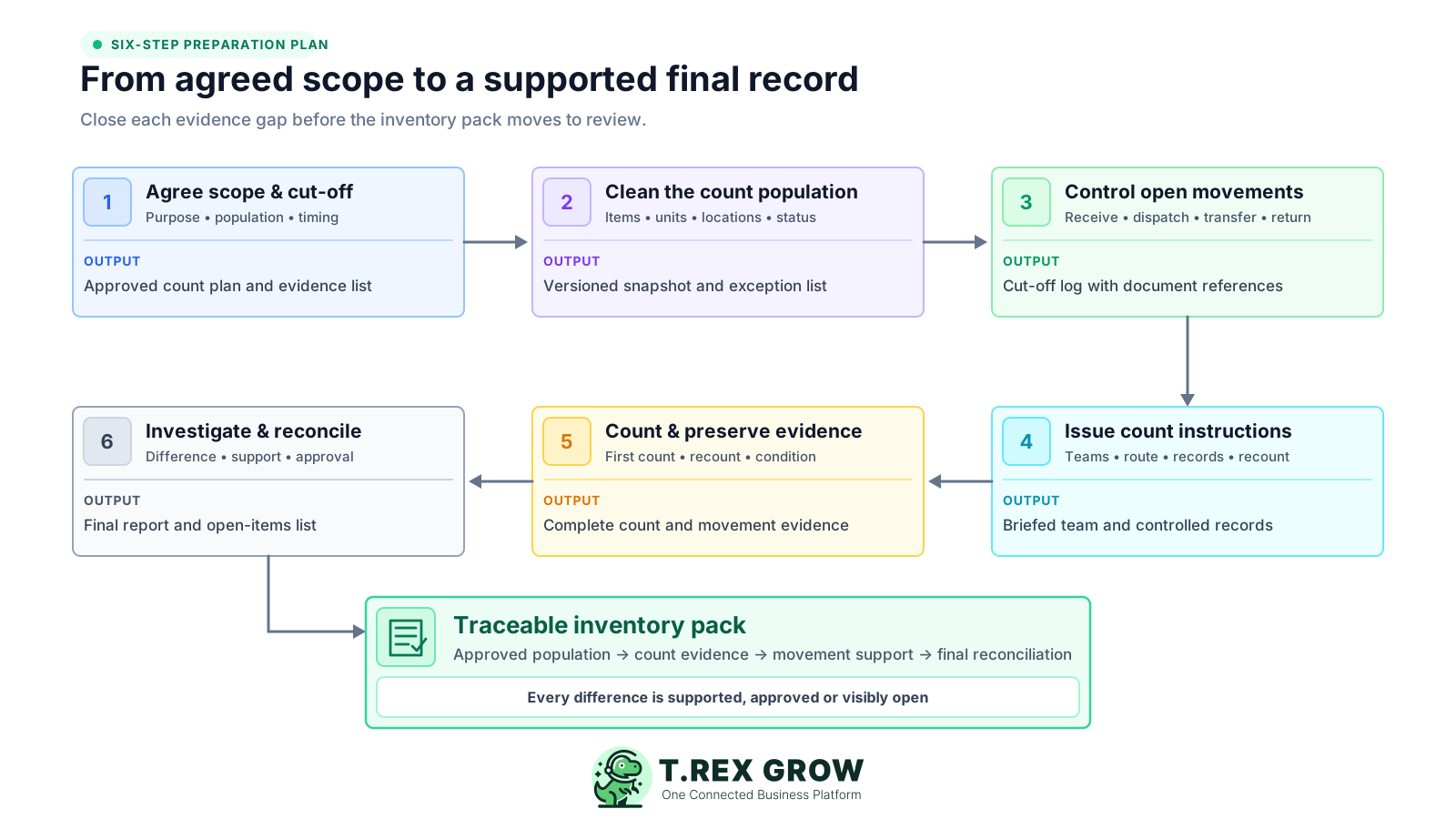
Agree scope and cut-off: confirm the purpose, locations, products, ownership boundaries, count timing, movement policy, evidence requirements and review contacts with finance or the auditor.
Clean the count population: resolve duplicate or unclear item and location records, confirm units, map exceptional stock and retain the approved pre-count snapshot rather than silently changing it later.
Control open movements: clear completed receipts, dispatches, transfers and returns where practical, then list every remaining or permitted movement with the document reference and its treatment in the count.
Issue count instructions: assign supervisors and teams, define the route, sheet or digital-record control, blind or visible quantities, count and recount method, condition notes, corrections and escalation rules.
Count and preserve evidence: mark covered areas, record counters and times, retain first counts and authorised recounts, log cut-off movements and keep exceptions separate for follow-up.
Investigate and reconcile: trace each material or selected difference to recounts, movements, units, locations or source records, approve any correction, tie to the final inventory report and list unresolved items.
The most damaging mistakes are often small changes that cannot be reconstructed later. Design the process so corrections remain visible and every count area, worksheet and movement has an owner.
Recurring issues usually point to workflow-control gaps, not one isolated data-entry mistake.
Adding, deleting or renaming products and locations after count records are prepared breaks the link to the approved snapshot unless the change is logged and reissued visibly.
A full operational shutdown is not always practical, but unlogged movement is avoidable. Every permitted receipt, dispatch, return or transfer needs a controlled treatment around the cut-off.
Loose pages cannot show whether every location was covered or whether missing, voided and unused sheets were accounted for. Apply equivalent control to digital count records.
Replacing an original quantity with a recount hides the variance and the reason for change. Retain both results, the recount owner and the resolution.
A quantity-only count misses damaged, ageing, slow-moving or otherwise exceptional items that may need separate finance or auditor review. Identification is not the same as deciding valuation.
Goods held for another party and the SME's goods held elsewhere need separate identification and supporting records; their physical location alone does not determine the reporting treatment.
An immediate adjustment can make the system match the count while erasing evidence of a unit, location, timing or process problem. Complete the review and approval trail first.
A large collection of files is not yet an audit-ready pack. Name the owner, version, period and relationship between scope, count, movements, variances and final report.
A short readiness review exposes gaps while they are still fixable. Mark an area ready only when its owner can point to the evidence, not simply say the task has been discussed.
One coordinator should control the checklist, versions, open questions and evidence index while operational, finance and external review responsibilities remain distinct.
Run the instructions on a small area before count day. Test the route, item identity, unit, sheet control, movement exception, recount and evidence hand-off.
Use controlled references for count sheets, exports, movement logs and reconciliation versions so a reviewer can identify what was issued, changed, voided or superseded.
Where staffing allows, avoid asking one person to prepare the record, count the same area and approve the difference. Agree the practical segregation with the review owner.
Do not hide uncertainty inside a narrative. Record the item, quantity or location affected, owner, evidence requested, next action and status through sign-off.
Adapt the evidence and approval columns to the engagement agreed with your finance adviser or auditor.
| Readiness area | Evidence to prepare | Ready when | Typical owner |
|---|---|---|---|
| Scope and timing | Approved locations, products, statuses, ownership boundaries, date and cut-off | Review owner confirms the population and requested deliverables | Finance lead and count coordinator |
| Master data | Versioned item, unit and location snapshot with exception list | Count labels and records map to one approved population | Inventory controller |
| Count instructions | Teams, routes, record control, count method, corrections, recount and escalation rules | Supervisors and counters are briefed and the pilot works | Count coordinator |
| Movement cut-off | Open-movement list, last-before and first-after references, exception log | Every movement in the window has an agreed count treatment | Warehouse and document owners |
| Physical evidence | Issued, used, voided and unused records, first counts, recounts and condition notes | Every in-scope area is covered and corrections remain traceable | Count supervisors |
| Variance review | Difference list, supporting movements, recounts, explanations and approvals | Selected differences are resolved or listed as open with an owner | Inventory and finance reviewers |
| Final pack | Indexed reconciliation, report version, adjustments, open items and sign-off | Final inventory records tie to supported count results and movements | Finance lead |
The best practice is to make the next action clear before the situation becomes urgent.
For financial statement audits, ISA 501 describes auditor attention to management's count instructions, observation, inspection, test counts and whether final records reflect the physical count. The SME's role is to preserve a population and evidence trail that can be followed without inventing records after the event.
A selected item on the count record should lead to the labelled physical location, identifiable product, unit, quantity and visible condition recorded under the count instruction.
A selected physical item should lead back to an in-scope item and location record or a documented exception, helping reveal stock that the prepared population did not capture.
A movement selected near the count time should show its document, physical status, timestamp and whether it belongs in the counted or post-count population under the agreed rule.
The final report should retain the path through any recount, movement correction, unit conversion, approved adjustment or open issue instead of displaying only the last number.
Items identified as damaged, ageing, slow-moving, held for others or held off-site should be listed separately with the supporting operational facts for professional review.
TREX Grow can contribute operational records to an evidence pack, but it does not define audit scope, materiality, valuation, sample selection or the auditor's conclusion. Availability varies by plan, so confirm the current feature matrix and the engagement requirements before relying on any export or workflow.
Use supported product codes, names, units and inventory context as part of the controlled count population, then resolve unclear records before the snapshot is issued.
The current Essential plan includes stock entries and inventory adjustments that can contribute source context when supported stock changes are investigated.
The current Premium plan adds custom locations, a location ledger and a product location ledger that can help trace supported quantities and movements by warehouse position.
Premium inventory count sessions can support a controlled count workflow and reconciliation, subject to the business's instructions, evidence-retention needs and current product behaviour.
The SME still needs documented cut-off rules, ownership and condition exceptions, review approvals and any additional evidence requested by its accountant or auditor.
Test the required report and one complete count-to-reconciliation path before count day, and recheck the current pricing page because inventory and warehouse features differ by plan.
Pick one in-scope location and ask whether the team can show its approved population, cut-off movements, issued count record, first count, recount where applicable, variance decision and final quantity. Each broken link becomes a preparation task before the full count.
Inventory audit preparation is the work of defining the inventory population and cut-off, preparing count instructions and records, controlling movements, preserving physical-count evidence, investigating differences and reconciling the final inventory report. The exact requirements should be confirmed with the SME's finance adviser or auditor.