Phase 1 Warehouse Guide

Warehouse Workflow for SMEs

A practical warehouse workflow tells the team what work is expected, what physically happened, where each item belongs, who owns the next handoff, what complete means, and where shortages, damage, returns or unclear records should wait for review.

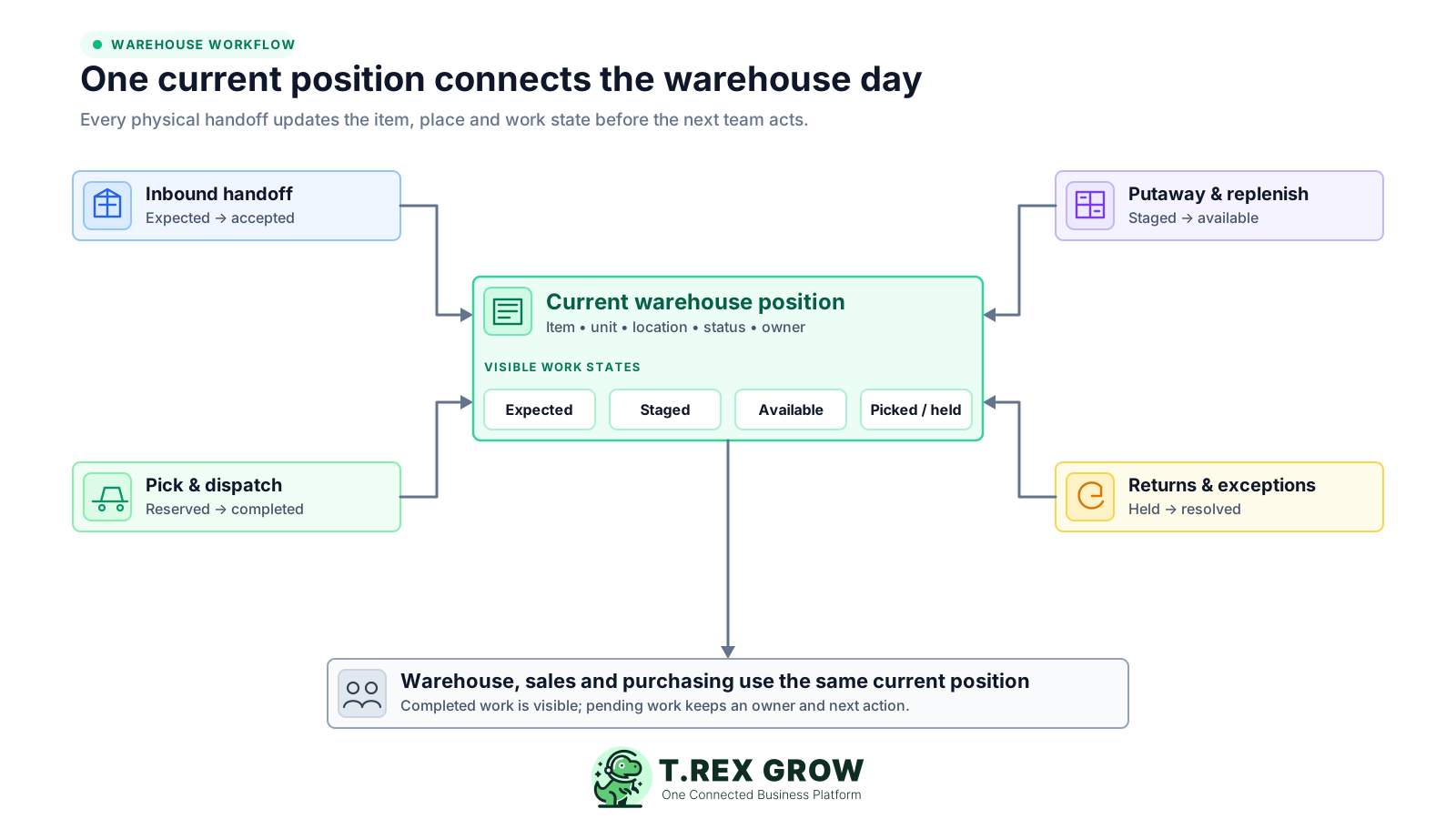
SME warehouse control map connecting inbound receiving, putaway and replenishment, picking and dispatch, and returns or exceptions to one current warehouse position
Problem

A busy warehouse can still have an undefined workflow

Warehouse problems rarely begin with one dramatic error. They accumulate when receiving, storage, fulfilment and review use different completion rules. Each team may finish its own task while the shared warehouse position remains incomplete or unclear.

Operational pressure

The next action is easy to lose when context is scattered.

When records live in different places, the person responsible has to reconstruct what happened before they can make a confident decision or follow up.

Scattered recordsUnclear ownershipAvoidable surprises
High risk

Expected quantity becomes received quantity

A purchase order describes what should arrive. The accepted warehouse receipt may be partial, damaged, substituted, rejected or delivered in several batches, so the physical result must be confirmed separately.

Staging becomes an invisible warehouse

Goods are unloaded but not assigned to a storage, picking, return or hold location. Staff can see the cartons physically, yet the shared record cannot explain whether they are available.

Putaway and replenishment are treated as the same task

Putaway moves received stock into its intended storage position. Replenishment moves existing stock into a place that supports picking. Combining them hides why the move happened and which demand it serves.

High risk

Picking starts from an informal request

A chat message or copied spreadsheet may omit the current document status, item unit, source location, outstanding quantity, customer priority or change made after the list was shared.

Dispatch closes before the evidence does

Packed goods leave the warehouse, but the delivery handoff, actual quantity, completion time or exception remains unrecorded. Sales and customers then ask warehouse staff to reconstruct the event.

Returns re-enter available stock too early

A returned item may need identification, inspection, repacking, repair, supplier return or another disposition before it can be treated as normal pickable stock.

High risk

Pending work disappears at day end

Unreceived deliveries, staging backlog, short picks, held items and incomplete dispatches remain in messages or memory instead of one queue with an owner and next action.

Education

Define the warehouse workflow as states and handoffs

A useful workflow does not treat every unit inside the building as one kind of stock. It separates what is expected, physically received, waiting for a decision, available in a known place, reserved for work, completed, or held as an exception.

A useful record supports the next decision

The work is easier when the team can see the current facts, the responsible person, and the next action without reconstructing the history from separate tools.

Shared operating context
Clear ownership and status
A visible next action

Set up the team view

1

Define the shared fields

  • - Use current facts
  • - Keep details consistent
2

Assign the next action

  • - Name an owner
  • - Set a review date
3

Keep it current

  • - Record changes
  • - Resolve exceptions

Expected

The supplier delivery or fulfilment request is planned, but the physical warehouse event has not yet happened. Keep the source, due date, item and expected quantity visible without changing the completed position.

Received and staged

The goods crossed the receiving boundary and the actual item, unit, quantity and condition were checked, but final availability or location may still depend on inspection and putaway.

Available in a known place

The accepted units are stored in a defined location and status that allows the business to use them for supported demand. Physical presence alone does not make every unit available.

Reserved, picked or packed

The stock is assigned to confirmed work and progresses through fulfilment. Keep reservation, physical picking, packing and final dispatch distinct so staff can see the remaining task.

Dispatched or otherwise completed

The physical handoff and required record are complete according to the SME's operating rule. The warehouse should not close a task merely because goods have moved out of sight.

Held for exception review

Shortages, damage, mismatched items, unclear sources, unapproved changes and returns wait in a visible queue with a reason, owner and next review point instead of contaminating normal work.

Education

Every warehouse handoff needs six facts

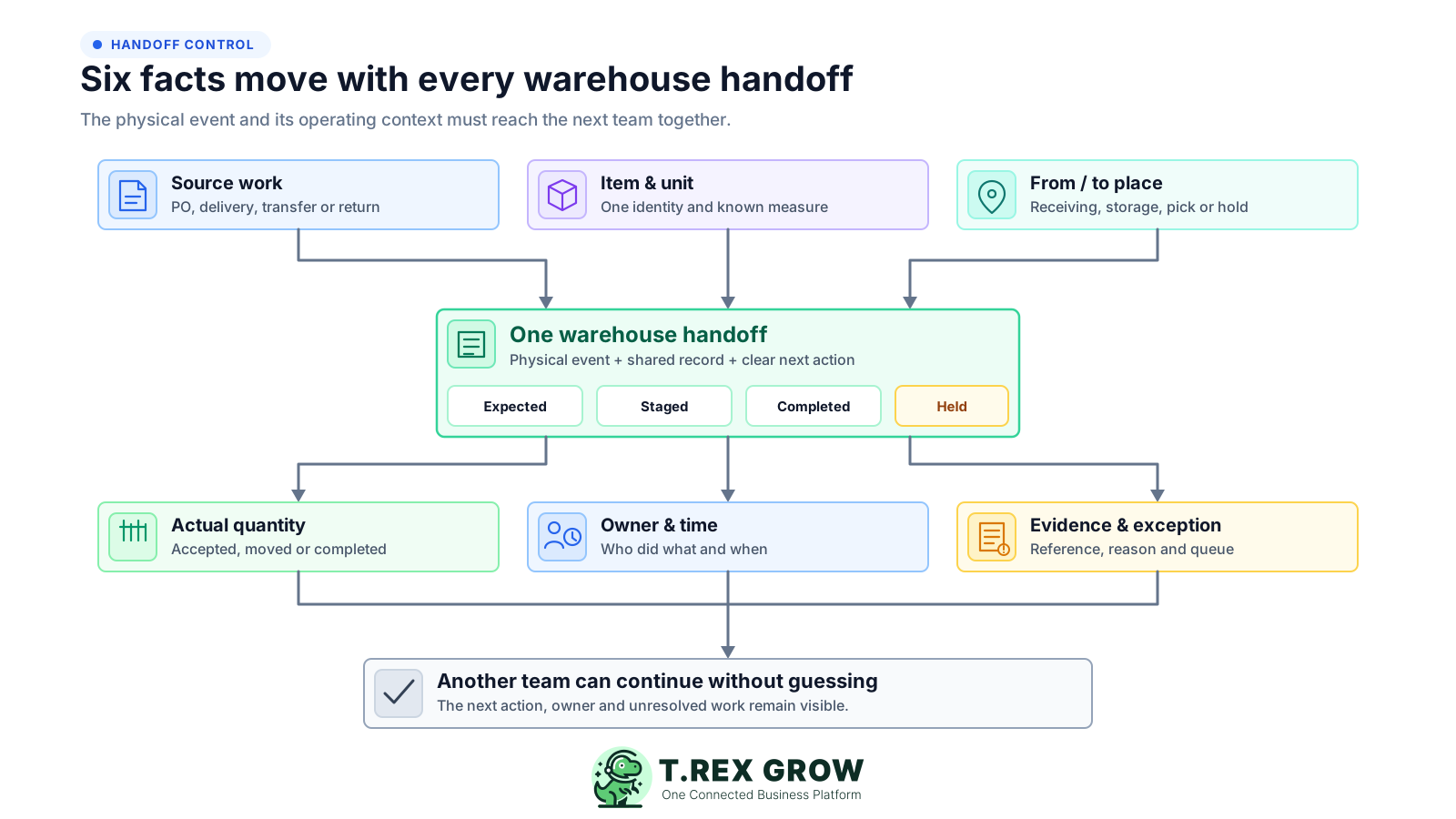
The next person should be able to continue without asking what the previous person meant. Preserve the source work, controlled item and unit, place, actual quantity, ownership and evidence at the point where responsibility changes.

A useful record supports the next decision

The work is easier when the team can see the current facts, the responsible person, and the next action without reconstructing the history from separate tools.

Shared operating context
Clear ownership and status
A visible next action

Set up the team view

1

Define the shared fields

  • - Use current facts
  • - Keep details consistent
2

Assign the next action

  • - Name an owner
  • - Set a review date
3

Keep it current

  • - Record changes
  • - Resolve exceptions
Warehouse handoff structure linking source work, item and unit, location, actual quantity, owner and time, and exception evidence to one clear warehouse event

Source work

Identify the purchase order, stock entry, customer order, delivery work, transfer, return, count or approved reason that created the warehouse task.

Item and unit

Use one controlled product identity and a known unit. A carton, pack and piece must not become interchangeable because different teams use different shorthand.

From and to place

Record the receiving area, storage location, picking area, dispatch point, return zone or other controlled place involved in the handoff.

Actual quantity and condition

Capture what was physically accepted, moved, picked, packed, dispatched, returned or held rather than copying an expected quantity from the source document.

Owner and effective time

Keep who completed or confirmed the event and when it became operationally effective, especially when the physical and recorded times differ.

Evidence and exception

Retain the relevant reference, note, attachment, reason, status and next action so a reviewer can understand both normal completion and unresolved work.

Workflow

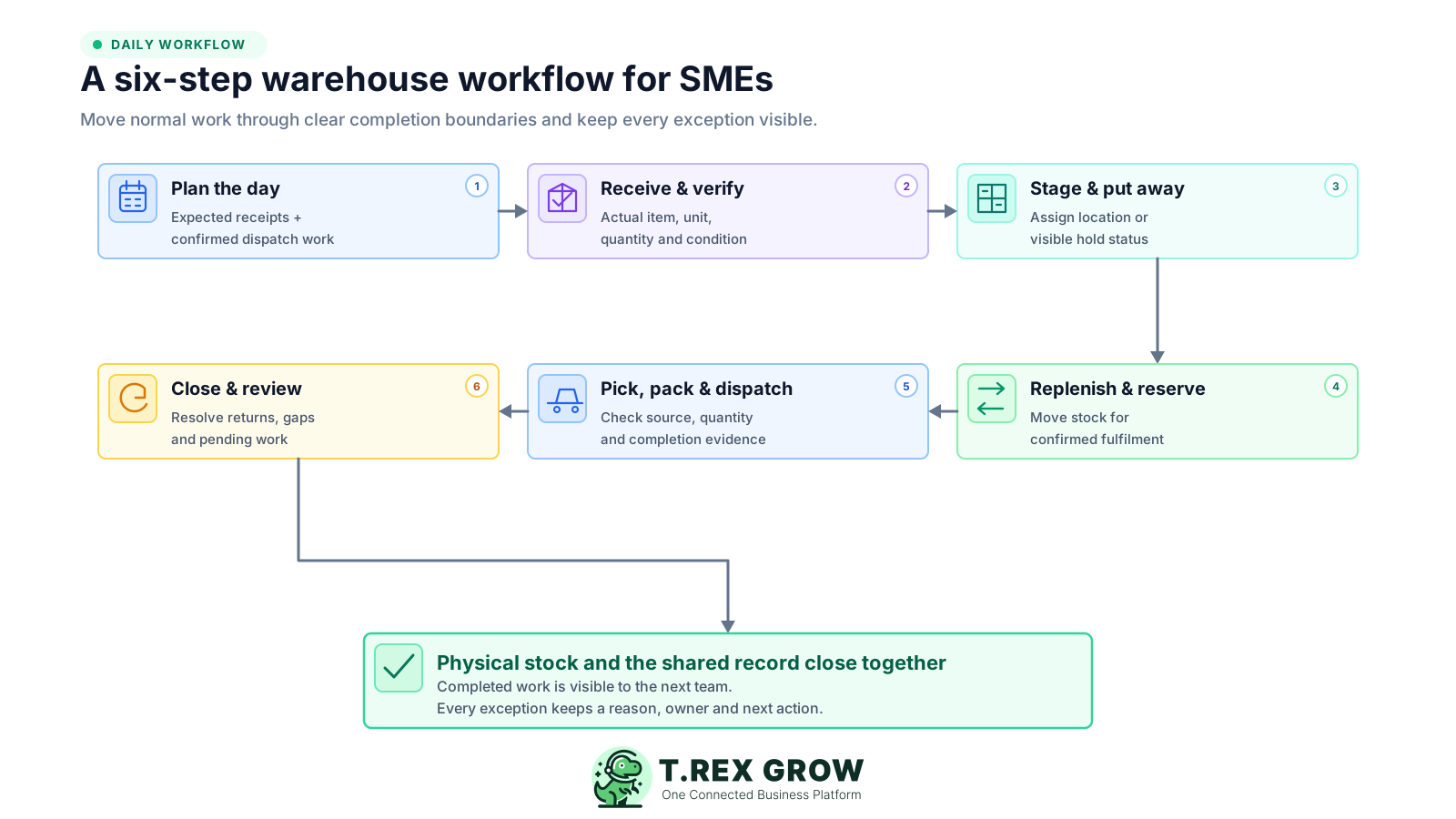
A six-step warehouse workflow for SMEs

Use the sequence as a practical operating model, then adapt the completion rules to the products, locations, order volume and controls your SME actually needs. The workflow begins with released work and closes with visible review, not with an unexplained balance change.

A repeatable operating workflow

Capture

Record the current facts in one shared place.

Check

Confirm what is known and what needs attention.

Assign

Make the next decision or follow-up accountable.

Act

Complete the next task and record the outcome.

Review

Refresh the shared view when facts change.

A dependable workflow keeps the shared record and the next action aligned.

Six-step SME warehouse workflow from planning the day through receiving, putaway, replenishment, picking and dispatch, and exception review
1

Plan and release the day's work: list expected receipts, confirmed fulfilment demand, priority replenishment, returns, pending exceptions and the cut-off for each queue. Release only work with enough source detail for the warehouse to act.

2

Receive and verify the physical result: match the source, controlled item, unit and expected quantity, then record what actually arrived, what was accepted, what remains outstanding and what needs a visible hold or follow-up.

3

Stage and put away deliberately: assign a temporary staging status when another check is required, then place accepted stock into its defined storage, picking or other allowed location. Complete the handoff only when the destination and status are recorded.

4

Replenish and reserve for confirmed demand: move existing stock toward the supported picking need without treating the move as new stock. Keep the source and destination visible and distinguish available, reserved, held and already picked quantities.

5

Pick, pack and dispatch against the current source: verify the item, unit, location and outstanding quantity; record shortages or substitutions as exceptions; and close the task only when the physical handoff and required dispatch evidence are complete.

6

Close returns, discrepancies and pending work: review unreceived balances, staged goods, short picks, undelivered packages, returns, damage and unexplained differences. Correct a source event where appropriate and carry every unresolved item into a named queue with an owner and next action.

Mistakes

Warehouse workflow habits that create hidden queues

A warehouse can look organised while its information flow remains fragmented. These habits make work disappear between physical locations, informal requests and delayed updates.

Recurring issues usually point to workflow-control gaps, not one isolated data-entry mistake.

Common

Using one status called in warehouse

Expected, received, staged, available, reserved, picked, packed, held and returned units need different next actions. One broad label cannot tell staff what remains to be done.

High risk

Treating staging as a permanent location

Staging should have a reason, owner and exit rule. Without those controls, goods accumulate between receiving and putaway while reports and staff disagree about availability.

Common

Overwriting quantities after a move

Changing two location totals removes the event that explains who moved which item, in what quantity, from where, to where and when. Preserve the transfer or movement evidence.

High risk

Picking from chats and memory

Informal instructions are easy to change and hard to reconcile. Release picking from a current supported source and keep any approved change with the task.

Common

Posting all warehouse work in one batch

End-of-day updates create hours when physical stock, locations and fulfilment states are behind reality. Record close to each handoff or keep a visible pending-posting queue.

High risk

Returning everything to available stock

Returned, damaged, mismatched or pending-repair goods need an inspection or decision boundary before they can re-enter a normal picking location.

Common

Closing the day with private exceptions

A shortage known only to one picker or an unreceived balance known only to purchasing cannot be managed. Put unresolved work into one shared queue before the handover ends.

Best practices

Practical controls for daily warehouse work

Keep the controls proportionate to the SME. The aim is not to add a form to every movement; it is to make the normal path fast, the completion boundary clear and the exception path visible.

Do this

Start with one daily work queue

Bring expected receipts, released fulfilment work, replenishment needs, returns and unresolved exceptions into one operating view before the warehouse day begins.

Do this

Define complete at every handoff

Write a short completion rule for receiving, putaway, picking, dispatch and return review so staff do not pass unfinished work forward under an ambiguous status.

Do this

Use stable item and location names

Keep one product identity, base unit and agreed location name across purchasing, storage, sales, delivery and review. Avoid local nicknames that cannot be traced.

Do this

Record close to the physical event

Capture the actual result at the handoff when practical. If a delay is unavoidable, define a short posting window, preserve the pending state and assign an owner.

Do this

Separate the normal and exception lanes

Let matching work move quickly. Route shortages, damage, mismatches, missing sources and unapproved changes into a visible queue without forcing a false completion.

Do this

Review pending work before the next shift

Use a short daily handover for urgent open work and a regular root-cause review for repeated staging delays, short picks, return backlogs and late records.

Warehouse stage and completion checklist

Use one clear ready state, completion state and exception trigger for each major warehouse handoff.

StageReady whenComplete whenMove to exception when
ReceivingThe expected source, item, unit and delivery context are availableActual accepted and outstanding quantities, condition, owner and receipt state are recordedItem, quantity, source, condition or evidence does not match
Staging and putawayAccepted stock has a defined interim state and destination ruleThe destination location and usable or held status are confirmedNo suitable location, inspection result or authority is available
ReplenishmentConfirmed demand and the source and destination quantities are knownThe existing stock move is recorded without changing company-wide quantitySource stock is insufficient or the requested move is unclear
Picking and packingCurrent supported demand, item, unit, source location and outstanding quantity are releasedActual picked and packed quantities and shortages are visibleStock, item, unit, location or source demand does not match
DispatchPacked work, destination and required handoff details are confirmedThe goods and required dispatch evidence leave togetherDelivery handoff, quantity, destination or completion evidence is missing
Return or hold reviewThe item is identified and separated from normal available stockInspection, disposition, location, reason and next action are recordedOwnership, condition, source or the allowed next step remains unclear

The best practice is to make the next action clear before the situation becomes urgent.

Education

Measure the queues and handoffs, not only the final balance

A closing quantity can look correct while work is late or exceptions are growing. Use a small set of operating measures to see where the warehouse workflow waits, repeats or loses context.

A useful record supports the next decision

The work is easier when the team can see the current facts, the responsible person, and the next action without reconstructing the history from separate tools.

Shared operating context
Clear ownership and status
A visible next action

Set up the team view

1

Define the shared fields

  • - Use current facts
  • - Keep details consistent
2

Assign the next action

  • - Name an owner
  • - Set a review date
3

Keep it current

  • - Record changes
  • - Resolve exceptions

Due receipts not completed

Count supplier receipts that were expected by the cut-off but remain unreceived, partially received or held without a clear next action.

Staging and putaway backlog

Track accepted goods that remain in staging beyond the SME's agreed operating window and group the reasons by missing location, inspection, capacity or ownership.

Short-pick frequency

Review how often released picking work cannot be completed from the expected item, unit, quantity or location, then investigate recurring causes.

Dispatch work not closed

Identify packed or physically handed-off orders whose required dispatch status or evidence remains incomplete at the agreed cut-off.

Return and hold ageing

Monitor how long returned, damaged, mismatched or pending-review units remain outside the normal available flow without a disposition.

Repeated exception causes

Group exceptions by source, item, unit, location, handoff and owner so the team can repair the operating rule instead of correcting the same symptom repeatedly.

Solution

How TREX Grow can support the warehouse workflow

Once the business defines its work states, completion rules and exception ownership, TREX Grow can help keep the supporting product, purchasing, stock, location, fulfilment and review records closer together. Available depth depends on the current plan and user permissions.

Operations work better when records and next actions are connected

Connect source records to warehouse work

Use supported purchase, stock, sales, delivery, return and adjustment records so the warehouse event can retain the business context that created it.

Keep product and quantity context visible

Structured product records and distinct available, incoming and reserved quantity views can help teams avoid treating every planned or physical unit as freely usable stock.

Add location control according to plan

Current plan definitions place General and BIN system-location handling in Essential, while Premium adds custom locations and deeper product or location visibility. Recheck pricing before rollout.

TREX Grow Operations Hub

Preserve movement and ledger evidence

Plan-dependent transfers and product or location ledgers can make the source, destination, quantity, reference, user and time behind warehouse movement easier to review.

Support picking and dispatch handoffs

Premium warehouse workflows include delivery picking and picking-list PDF support for eligible fulfilment sources, helping warehouse work stay connected to current demand.

Use structured inventory count sessions

Premium count sessions can support cycle-count or stock-take setup, optional location and product scope, counted quantities, variance review and approval as part of the review workflow.

Next step

Test the workflow with one warehouse day

Choose one expected receipt, one putaway, one fulfilment task and one exception. Write the completion rule, owner and minimum evidence for each handoff, then check whether another team member can explain what is done, what is pending and what happens next.

See How TREX Grow Works

It is the sequence that turns expected inbound and confirmed outbound work into controlled physical handoffs. A practical SME workflow covers receiving, staging, putaway, replenishment, picking, packing, dispatch, returns and exception review, with a clear owner and completion rule at each stage.