Phase 1 Procurement Problem Guide

Common Procurement Problems in Small Businesses

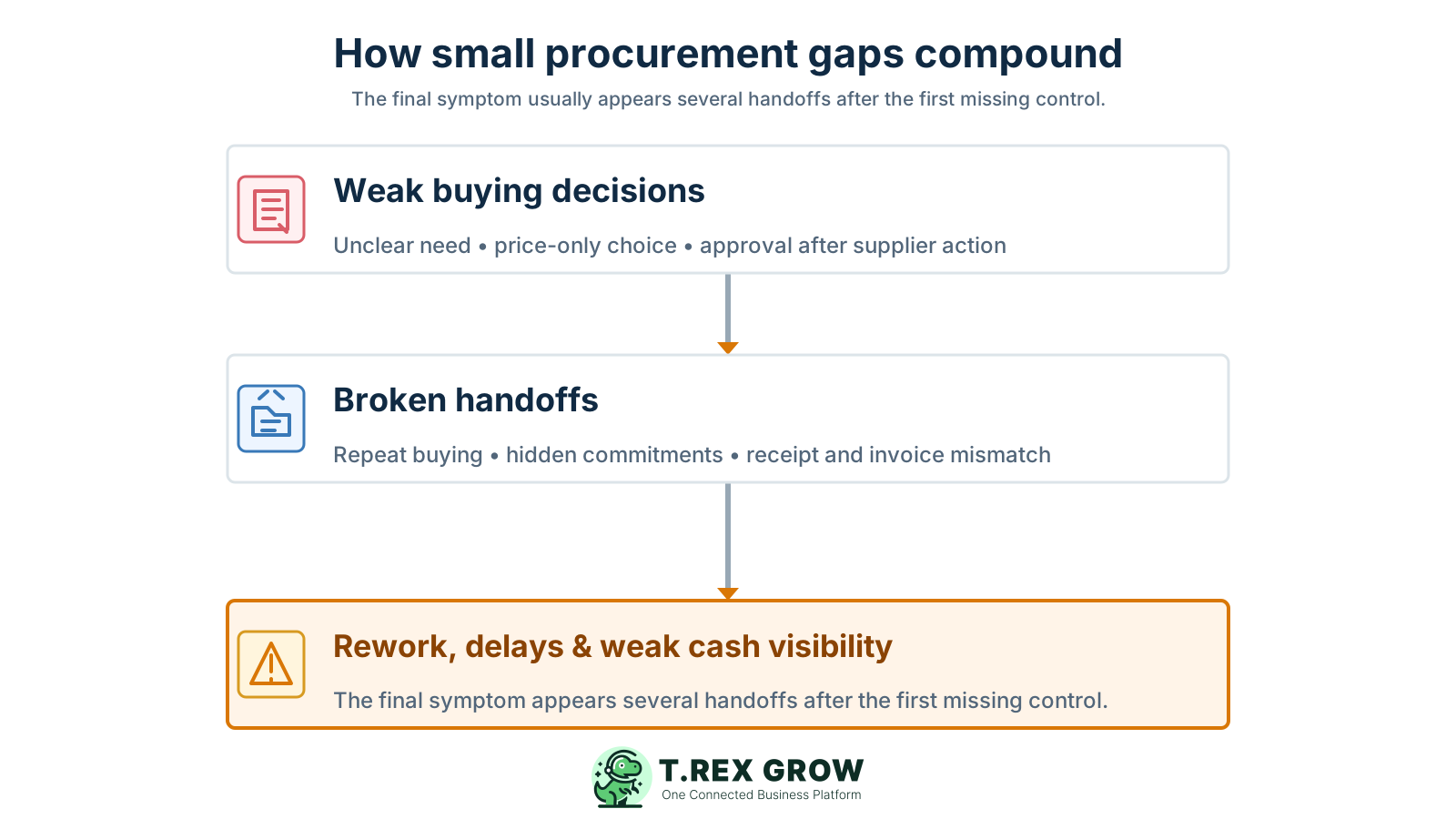
Procurement problems rarely begin at the supplier invoice. They usually start earlier: a vague need, an informal commitment, a supplier choice that considers price but not fit, or a missing handoff between purchasing, receiving and finance. This guide helps an SME find the first break instead of repeatedly fixing the final symptom.

Three-stage procurement problem cascade showing weak buying decisions creating broken handoffs and later rework, delays and weak cash visibility
Problem

Seven common procurement problems — and what they look like

The same failure can look different to each team. Purchasing sees a late supplier, the warehouse sees an unexpected delivery and finance sees an invoice mismatch. Start with the observable pattern, then trace it backwards to the first missing decision or record.

Operational pressure

The next action is easy to lose when context is scattered.

When records live in different places, the person responsible has to reconstruct what happened before they can make a confident decision or follow up.

Scattered recordsUnclear ownershipAvoidable surprises
High risk

Buying begins before the need is clear

A colleague asks for an item or service without a stable specification, quantity, timing, budget context, delivery point or acceptance rule. The supplier fills the gaps with assumptions, and changes arrive after price or delivery has already been discussed.

Supplier choice relies on price or habit

The SME reuses the familiar supplier or selects the cheapest quote without recording fitness for purpose, quality, lead time, service, delivery reliability, whole-life effort or the risk of depending on one source.

The commitment happens before the decision

A call, message or urgent request tells the supplier to proceed. Formal approval or a purchase order is created later, so the preventive decision becomes an after-the-event record.

High risk

Nobody can identify the current version

Supplier quotations, approvals, purchase orders and delivery changes live in separate chats, attachments and spreadsheets. Different people act on different quantities, dates or terms.

Ordered, received and invoiced become one number

Staff copy the ordered quantity into receiving or accept the supplier invoice as proof of fulfilment. Partial delivery, rejected goods, service acceptance and price differences disappear from the operating record.

Urgent and duplicate purchases become normal

Teams buy again because they cannot see an open request, active order, incoming supply, available stock or colleague action. Expedites and duplicates then make the underlying visibility problem worse.

High risk

Exceptions wait until payment day

A missing receipt, changed price, wrong quantity, duplicate invoice or disputed service remains unowned until finance must pay. The business reconstructs the purchase under time pressure instead of resolving the exception when it first appears.

Education

Why procurement breaks as a small business grows

Procurement is not one document or one person's task. It is a sequence of business decisions and handoffs that may involve the requester, owner, buyer, approver, supplier, receiver and finance team. A process that worked through memory at ten purchases a month can become unreliable when volume, staff, suppliers and locations increase.

The process is distributed across roles

The employee who understands the need may not know the supplier terms; the buyer may not witness receipt; finance may only see the invoice. Without a clear handoff, each role works from a partial story.

Rules arrive after the exceptions

The business adds approval, quote or PO rules only after a costly surprise. Staff then inherit isolated controls without a shared explanation of which purchase route applies and why.

Urgency becomes a permanent exception

A genuine emergency route can be useful, but if every request is urgent, the route replaces normal planning, comparison, approval and record keeping.

Information is stored by document, not decision

A quotation folder, PO spreadsheet, delivery note and invoice inbox may each be organised, yet the SME still cannot follow one purchase from the original need to the current unresolved action.

Small teams combine roles without compensating review

One employee may reasonably request, order or receive in a small operation. Problems grow when higher-impact or unusual purchases receive no proportionate independent check because full role separation is impossible.

Success is defined as placing the order

The process appears complete when the supplier confirms. Delivery quality, partial receipt, invoice accuracy, payment evidence, closure and supplier learning are treated as separate admin rather than part of the same management loop.

Education

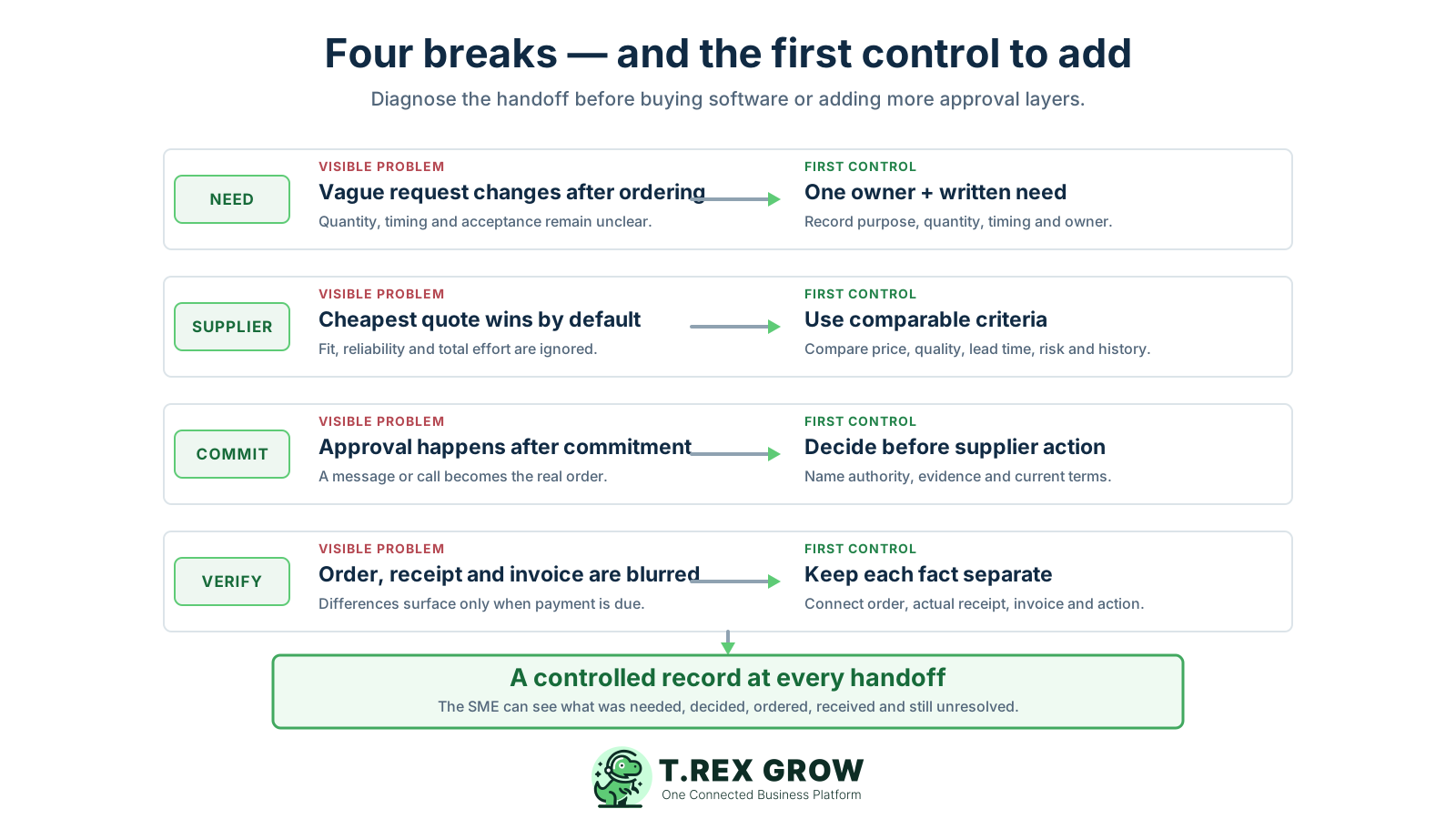
Diagnose the broken handoff, not only the final symptom

Treat the need, supplier decision, commitment, actual receipt, supplier invoice and payment evidence as distinct but connected facts. When a later team lacks context, ask which earlier handoff failed to pass a clear decision, current version, owner or supporting evidence.

Diagnostic procurement control map connecting vague needs, price-only supplier choices, after-the-event approval and blurred fulfilment records to practical first controls

Need handoff

Check whether the requester named the business outcome, item or service, quantity, timing, location, owner and acceptance requirement before supplier discussion began.

Supplier handoff

Check whether the selection compared consistent requirements and proportionate criteria such as price, quality, fit, lead time, performance history, support and relevant supply risk.

Commitment handoff

Check whether the authorised decision and current supplier-facing terms existed before the supplier acted, and whether later changes preserved the earlier version and reason.

Verification handoff

Check whether actual goods or service acceptance was recorded separately from the order and whether invoice differences have a named owner, next action and resolution evidence.

Workflow

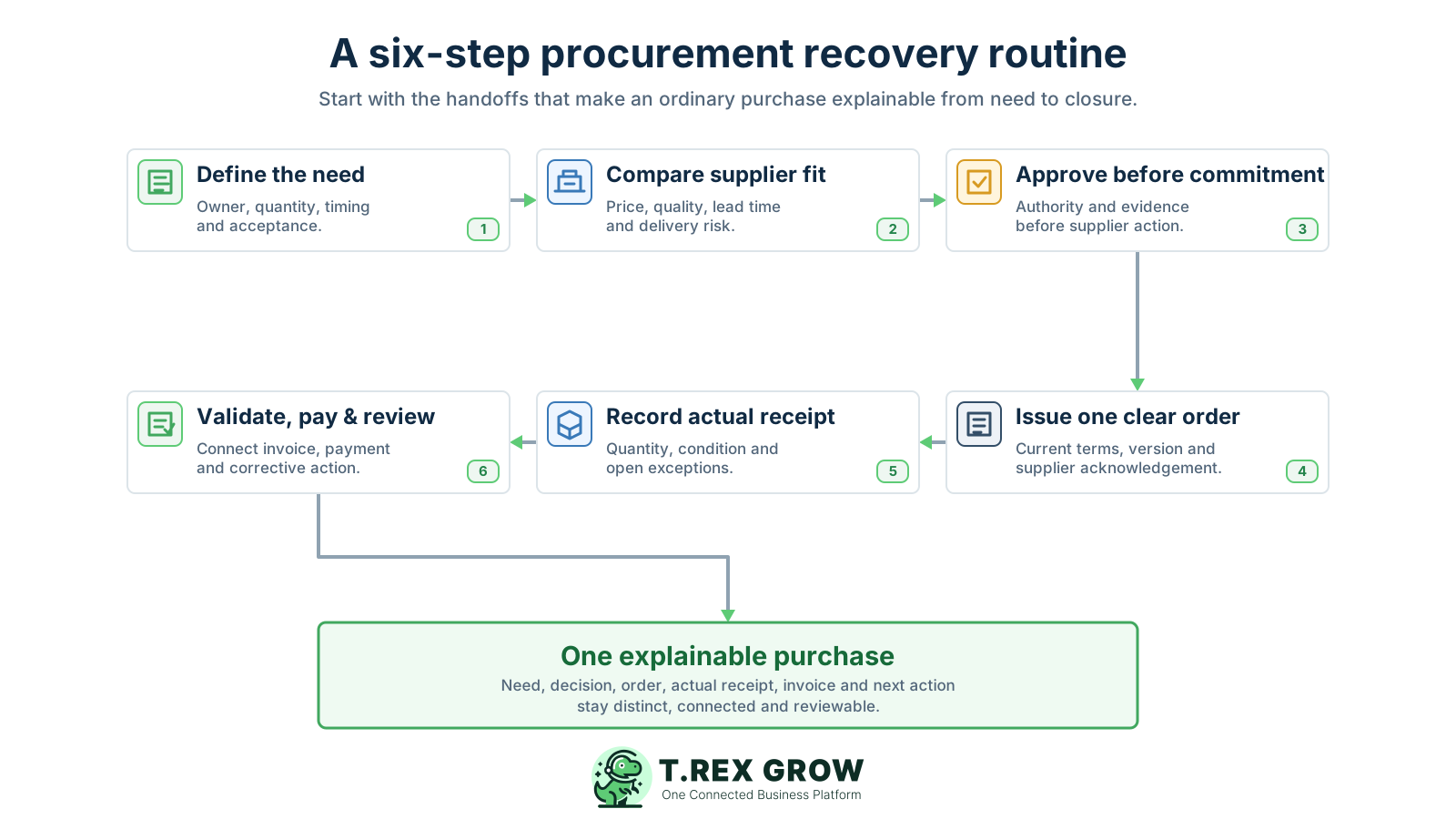
Use a six-step procurement recovery routine

This is a minimum control routine, not a replacement for the SME's detailed procure-to-pay process. It restores an explainable chain around an ordinary purchase and exposes where a specialist policy, stronger review or separate workflow is needed.

A repeatable operating workflow

Capture

Record the current facts in one shared place.

Check

Confirm what is known and what needs attention.

Assign

Make the next decision or follow-up accountable.

Act

Complete the next task and record the outcome.

Review

Refresh the shared view when facts change.

A dependable workflow keeps the shared record and the next action aligned.

Six-step procurement recovery routine from defining the need and comparing supplier fit through approval, a clear order, actual receipt, invoice validation, payment evidence and review
1

Define the need: name the owner, business purpose, product or service, quantity, timing, delivery point, budget context and what acceptable fulfilment looks like before asking a supplier to act.

2

Compare supplier fit: use consistent requirements and proportionate criteria covering price, quality, fitness for purpose, lead time, service, performance history, relevant risk and total effort over the useful life of the purchase.

3

Approve before commitment: identify who may decide, what evidence they need, which purchase route applies and whether the proposed supplier-facing terms are stable enough to authorise.

4

Issue one clear order: preserve the approved or finalised version, send the supplier the current quantity, price, dates, terms and delivery details, and record acknowledgement or any agreed change separately.

5

Record actual receipt: capture the goods or service actually accepted, including date, quantity, condition, location, partial balance, rejection, return or exception without rewriting the original order to make it agree.

6

Validate, pay and review: compare the relevant order, receipt and supplier invoice, assign differences, retain payment or adjustment evidence, close the purchase deliberately and feed recurring problems into the next supplier or process decision.

Mistakes

Avoid fixes that add activity without adding control

A weak process can become slower without becoming clearer. Before adding forms, approvals or software, define the decision the control supports, the evidence it should leave and the person who owns the exception.

Recurring issues usually point to workflow-control gaps, not one isolated data-entry mistake.

Common

Buying software before defining the handoff

A system can connect records, but it cannot decide which purchases need comparison, who may commit the business, what acceptance means or which exceptions require escalation.

High risk

Requiring the same route for every purchase

A blanket rule for quotations, POs or approvals can create work that staff bypass. Use proportionate routes based on value, operational impact, supplier risk, urgency and the type of purchase.

Common

Adding approval after the supplier has acted

An after-the-event signature may document awareness, but it does not recreate the preventive decision that should happen before commitment.

High risk

Treating lowest upfront price as best value

A lower quote can be outweighed by weak fit, quality, lead time, support, maintenance, switching effort, disposal cost or the operational cost of failure.

Common

Pretending one-person teams have full separation

Where roles must overlap, document that reality and add a proportionate independent review for higher-impact, unusual or exception purchases instead of designing a process nobody can follow.

High risk

Using ordered quantity as receipt evidence

The order is the expectation. Actual goods or service acceptance must record what happened so shortages, excesses, damage, rejected work and remaining balances stay visible.

Common

Overwriting an issued order or supplier decision

Silent edits remove the history needed to explain what was approved, what the supplier received and why the commitment changed. Preserve replaced versions and the change reason.

High risk

Measuring spend without owning exceptions

A dashboard does not resolve a partial delivery, disputed invoice or unacknowledged order. Every useful signal needs a named owner, next action and review date.

Best practices

Set proportionate rules a small team can actually follow

Good procurement control is not the maximum number of steps. It is enough clarity, evidence and review for the purchase's value and impact. Keep the standard route simple, document genuine exceptions and strengthen checks where failure would matter most.

Do this

Define a small number of purchase routes

Separate routine low-impact purchases, normal operational purchases, urgent exceptions and higher-impact or specialist purchases. State the owner, minimum evidence and approval point for each route.

Do this

Write evaluation criteria before choosing

For purchases that need comparison, decide what matters before opening the quotes. Criteria may include price, fitness, quality, timing, service, experience, sustainability and relevant supplier or concentration risk.

Do this

Keep one current supplier-facing version

Make the authorised order or agreement easy to identify, record who received it and preserve the earlier version and reason whenever quantity, price, delivery or scope changes.

Do this

Separate the business facts

Keep the request, supplier decision, purchase order, acknowledgement, actual receipt, supplier invoice, adjustment and payment evidence distinct while linking them to the same purchase.

Do this

Use proportionate independent review

When one employee performs several roles, ask another appropriate person to review higher-impact commitments, supplier changes, unusual exceptions or payment differences where practical.

Do this

Map critical suppliers before every supplier

Start with suppliers, products and services whose failure would disrupt customers, operations, data or cash. Record what they provide, the dependency, owner and review needs before expanding the supplier map.

The best practice is to make the next action clear before the situation becomes urgent.

Best practices

Review a small procurement exception queue

Do not review every purchase with equal effort. Use a short queue that highlights incomplete decisions, ageing commitments and mismatched evidence. The queue is useful only when each entry has an owner, next action and next review date.

Do this

Needs missing key facts

Requests without a stable owner, specification, quantity, timing, delivery point or acceptance rule should be clarified before supplier action.

Do this

Supplier decision pending

Show purchases waiting for comparable quotations, due diligence, a conflict check, specialist input or the recorded reason for selecting one supplier.

Do this

Commitment without a current order

Surface supplier actions, verbal agreements and changed terms that do not yet have an authorised current version or clear issue evidence.

Do this

Due, overdue or partly received

Track the expected date, actual receipt, remaining balance, operational impact, supplier response and employee responsible for the next follow-up.

Do this

Invoice or payment exception

Keep duplicate, price, quantity, tax, credit, bank-detail and evidence differences visible until the responsible person resolves or escalates them under the SME's policy.

Do this

Ready to close and learn

Close completed or cancelled purchases deliberately, then record recurring delay, quality, communication or internal handoff problems that should change the next decision.

A practical weekly exception review

Start with a small queue and tune it to the SME's volume. The goal is action, not a larger dashboard.

QueueOwner questionNext action
Incomplete needWho can clarify the requirement and by when?Complete, return or stop the request
Supplier decisionWhich criteria or evidence are still missing?Compare, approve the reason or seek specialist input
Unclear commitmentWhat did the supplier receive and is it authorised?Issue, revise, cancel or document the exception
Delivery exceptionWhat arrived, what remains and what is the impact?Follow up, accept, return, revise or close the balance
Invoice differenceDoes the invoice agree with the current order and actual receipt?Correct, credit, approve the supported difference or hold
Recurring patternIs the root cause the supplier, data, policy or handoff?Assign one process improvement and review its result

The best practice is to make the next action clear before the situation becomes urgent.

Solution

Where TREX Grow can support the control routine

TREX Grow can connect selected supplier, purchase-order, receiving, supplier-invoice and payment-history records after the SME defines its purchase routes, authority, supplier criteria and exception rules. It supports the operating record chain without claiming to replace sourcing judgement, contracts, bank execution or the final accounting close.

Operations work better when records and next actions are connected

Searchable supplier and product context

Keep active or archived supplier records, contacts, payment terms, lead-time context and eligible supplier-linked products available when preparing the purchase.

Structured purchase-order commitment

Record supplier, products, quantities, unit prices, currency, expected delivery, payment terms, tax, discount, delivery address, notes and supporting attachments in one PO.

Permission-based PO decision

Use the supported request-and-approve path or an intentional direct-finalisation path where the company's configured access permits it, without implying enterprise multi-level workflow rules.

TREX Grow Operations Hub

Clear draft and official documents

Generate a watermarked draft for review and an official PDF after supported finalisation or approval so preparation and supplier issue do not look identical.

PO-linked actual receiving

Create stock entries from an approved or finalised PO, enter what actually arrived and review ordered, received and outstanding quantities instead of posting the order as stock.

Connected supplier invoice and payment history

Start a supplier invoice from the PO context while retaining its own values, then keep paid amount, date, method, reference and supporting payment detail as separate history.

Next step

Fix one recurring procurement problem this week

Choose the exception your team reconstructed most often this month. Identify the first missing handoff, define the owner and minimum evidence, test the new control on the next five relevant purchases, and review whether the final symptom becomes easier to prevent or resolve.

See TREX Grow Procurement Workflow

Common problems include unclear purchase needs, supplier selection based only on price or habit, commitments made before approval, weak version control, poor visibility of open orders, ordered quantities being treated as receipts, invoice differences, duplicate purchases and exceptions with no owner.